In today’s fast-paced industrial environment, choosing the right industrial network switch is essential. Industry expert John Smith emphasizes, "A strong network is the backbone of any operation." His words highlight the critical role that a reliable industrial network switch plays in ensuring seamless communication between devices.
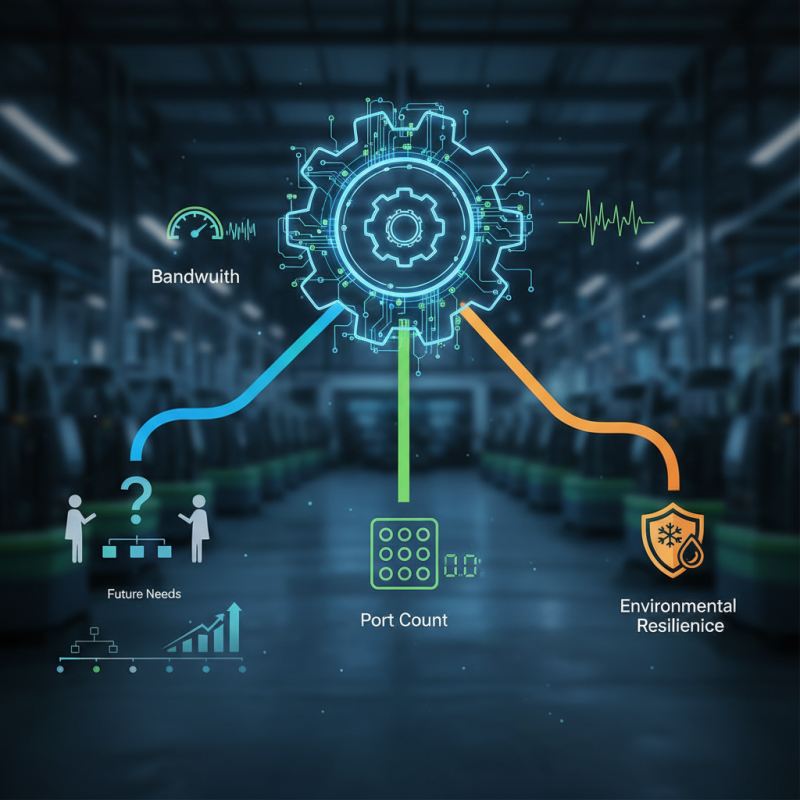
Selecting the best switch requires examining several factors. Not all switches are built the same. Some may offer features that your operation does not need. Think about your specific requirements. Bandwidth, port count, and environmental resilience are crucial aspects to consider. However, it’s easy to overlook these details when faced with a variety of options.
The goal should be to find a switch that meets your needs now and in the future. This task might seem straightforward, but it can become complex quickly. Take the time to reflect on your network’s demands. A thoughtful decision today will prevent costly upgrades tomorrow.
Industrial network switches play a pivotal role in automation systems. They enable communication between various devices, ensuring data flows seamlessly. These switches are designed to withstand harsh environments, making them suitable for factories and outdoor installations. They are built to resist extreme temperatures, dust, and moisture, which can disrupt operations.
Choosing the right industrial switch requires understanding your specific needs. Consider the number of devices needing connection. High device counts may require switches with more ports. The switch must support the required protocols. If real-time communication is necessary, low latency is crucial. However, not all switches can handle this flawlessly. Sometimes, users may overlook these aspects. A poorly chosen switch can lead to bottlenecks and downtime.
Budget is also a major factor. Higher-priced switches might offer better reliability, but this is not always the case. Some lower-cost options perform surprisingly well in certain conditions. It’s essential to weigh cost against device requirements. Think about future scalability, too. As automation grows, your network may need to expand. A lack of foresight here can result in extra costs later on. Evaluate your needs carefully.
Choosing an industrial network switch involves several key factors. One crucial element is the environment where the switch will operate. These devices often endure harsh conditions, including high temperatures and moisture. Consider selecting a switch that meets the needs of your specific surroundings.
Another essential aspect is the number of ports required. Assess how many devices will connect to the switch. Sometimes, it's tempting to buy a larger switch for future growth, but overestimating your needs may lead to unnecessary costs. Always evaluate your current and near-future demands.
Tips: Look for switches with redundancy features. This can help maintain network reliability.
It's also wise to choose models with robust security protocols. Network vulnerabilities can have serious consequences.
Lastly, think about scalability. Your initial choice should accommodate growth. However, not every switch will allow easy expansion. Remember, future-proofing should not come at the expense of current needs. Reflect on potential changes in your network layout as your business evolves.
When selecting an industrial network switch, understanding the various types is essential. Industrial Ethernet switches come in different forms, including managed, unmanaged, and PoE (Power over Ethernet) switches. Managed switches allow extensive control over network traffic, offering features like VLAN support and redundancy protocols. Unmanaged switches are simpler but lack the customization options. PoE switches power devices like IP cameras through the Ethernet cable, eliminating the need for separate power sources.
Each type of switch has unique applications. For example, managed switches are ideal for complex networks requiring enhanced security and traffic management. Unmanaged switches fit smaller, less demanding setups. According to a recent market analysis, the global industrial Ethernet switch market is expected to reach USD 2.56 billion by 2027, with a CAGR of 11.3%. This growth highlights the increasing reliance on robust network solutions.
However, choosing the right switch isn't always straightforward. Factors such as network size, environmental conditions, and data transmission speeds must be considered. For instance, in harsh conditions, you might need rugged switches that comply with strict standards. Sometimes, the hesitation stems from not fully understanding the operational requirements. Balancing performance, cost, and flexibility presents an ongoing challenge for businesses.
When evaluating industrial network switches, performance metrics are crucial. Look at speed, reliability, and capacity. The speed determines how quickly data moves across the network. A higher speed often ensures better performance, especially in busy environments. However, faster isn't always better if reliability suffers.
Reliability is also vital. Redundant power supplies can keep operations going during outages. Check for features that boost reliability, like industrial-grade components. Consider the switch’s capacity to handle high traffic. If you underestimate this, network slowdown can disrupt operations.
Temperature tolerance matters too. Some switches can operate in extreme conditions. If your factory environment fluctuates, ensure the switch can handle it. Reflecting on these factors will help you make a more informed decision. A balanced choice may improve efficiency in your operations.
When selecting an industrial network switch, reliability and redundancy play a crucial role. Reliability means the switch should consistently perform well, with minimal downtime. A good switch endures harsh conditions. Look for features that protect against power outages and environmental challenges. The switch’s construction, such as rugged housing, can enhance its durability.
Redundancy features are equally important. They ensure uninterrupted network service when failures occur. A switch with dual power supplies adds a layer of safety. If one power source fails, the other kicks in. Additionally, consider switches with dual network interfaces. This allows for failover capabilities. It’s a safety net, helping your network stay online.
However, it’s vital to reflect on your specific needs. Not every facility requires the same level of redundancy. Overengineering can lead to increased costs without tangible benefits. Assess your environment and operational demands carefully. Consider the balance between features and what you realistically need. This thoughtful approach will lead to a more effective choice.
„Thanks to the LUVIR technology, the solder resist process could be switched directly from the previously used mask exposure to direct exposure. As an outstanding digital solution on the market, this technology has been able to demonstrate fast process times and superior quality on our certified conventional ink in production. This allowed us to fully digitize the solder mask process at low cost – without process or ink adjustments. An excellent benefit to our production in Rot am See.“
Ralf Göhringer (Head of Production WE Rot am See)
I would definitely recommend the Limata machine and team for a future company purchase
Michael Greenaway
Compunetics Inc.
“The Limata ldi has been amazing!! Best thing we did was buy this machine”
Richard Brady
GM
Circuitlabs
“Since 2019, we have been running the Limata X1000 LDI system (including LUVIR for solder mask imaging) in daily production as an addition to our current process with film. The machine was capable of properly exposing Taiyo PSR-4000 BN (DI) solder mask types on normal to high-copper boards using a new and unique direct imaging process. The machine operating interface is very user friendly which allowed for a quick technical training curve. The pre-registration processing reduced several seconds of production time at every print. Limata support and service staff is incomparable. They supported our team every step of the way at basically any time of the day or night, with literally, an immediate response time, customizing the software interface to best fit our Operations and needs.
We have exposed more than 8,000 prints since end of October, on various solder mask colors and some resist film panels. Limata, has proven to be very capable and innovative. They are a strong contender in the industry.
We have very much enjoyed this project, and working with the team!
Thank you Limata for the continued support and being a part of our growth.”
Bill Sezate
Vice President, GM
Summit Interconnect
As a replacement to our current contact exposure process with film, the LIMATA X2000 system including LUVIR-Technology was capable of properly exposing non-LDI solder mask types using a direct imaging process. The machine offers cutting edge software with a very intuitive operating interface which allowed for quick technician training curve. The dual drawer system combined with pre-registration processing reduced several seconds of production time at every machine cycle. Limata support and service staff is world class. They added software patches to keep production running at shortest possible response times, customized the software interface to best fit our in-house Operations system, and even wrote a step-by-step machine processing manual. As a result of the project, we have exposed more than 16,000 times on various product types and solder mask brands/colors. Limata, in a very short timeframe as a company, has definitely shown they are truly innovative and will be challenging the industry of direct imaging for the top spot.
Kevin Beattie
Process Engineer
TTM Technologies
Forest Grove Division
