Choosing the best Laser Reflectors requires careful consideration. Laser reflectors play a vital role in directing and enhancing laser beams. The right reflector can significantly impact the efficiency and effectiveness of your laser applications.
When assessing laser reflectors, think about your specific needs. Different projects may require varying types of reflectors. Material quality, reflectivity, and durability must be evaluated for optimal performance. It’s critical to understand how each factor influences laser outcomes.
Discussion on laser reflectors often lacks detailed insights. Many users may overlook essential aspects like wavelength compatibility. This oversight could lead to reduced performance or even failure in a project. Reflecting on these details is crucial. Each choice you make should align with your laser's intended purpose, ensuring you select the best reflector for your needs.
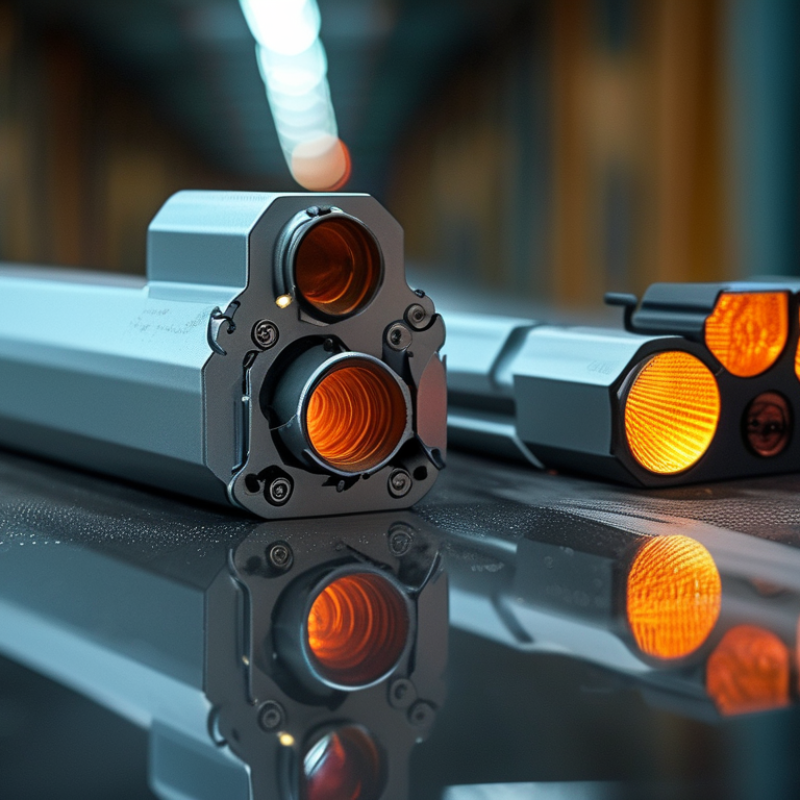
Laser reflectors are specialized devices that bounce laser beams back toward the source. Understanding their functionality is crucial when choosing the right one. Reflectors serve multiple purposes, from guiding precise laser paths to enhancing communication systems. The right reflector can significantly improve efficiency in various applications, such as surveying or industrial processes.
The construction of a laser reflector influences its performance. They vary in shape, size, and material, affecting light reflection. Some reflectors can distort beams, while others maintain shape without alteration. Knowing the specific requirements of your project is vital. Consider aspects like light wavelength and angle of incidence. Not every reflector fits every task, so careful selection is key.
Selecting a proper laser reflector often requires experience. Testing different options can reveal unexpected outcomes. The ideal choice may not always have the best specifications on paper. Sometimes, minor imperfections in a reflector can lead to more efficient results. Reflecting on various performance aspects is essential for optimal use.
When it comes to selecting laser reflectors, understanding the types available is crucial. Laser reflectors can be categorized into three main types: high-reflectivity, beam-splitters, and retroreflectors. High-reflectivity reflectors are often used in applications requiring maximum light intensity, making them ideal for precise measurements. They can bounce almost all light back toward the source.
Beam-splitters serve a different purpose; they divide incoming laser beams. This function is valuable in experiments where multiple paths are needed. Beam-splitters come in different designs, affecting how much light is transmitted versus reflected. Retroreflectors redirect light back to its source, regardless of the angle. This feature makes them excellent for safety applications.
Choosing the right laser reflector is not just about type. Consider material quality and coating specifications. Not all reflectors perform equally well under various conditions. Some may degrade with exposure to certain wavelengths. Exploring these nuances can feel overwhelming, but it is essential for achieving desired results. A well-informed choice will enhance performance and reliability, ultimately leading to successful outcomes in your projects.
When selecting laser reflectors, identifying key factors is crucial. Reflectors should have a high reflectivity to maximize energy efficiency. Industry reports indicate that the ideal reflectivity often ranges between 90% to 98%. Lower reflectivity can lead to energy loss, impacting overall performance.
Consider the material and durability of the reflector. Common materials include aluminum, glass, and specialized coatings like dielectric. A reflective layer with enhanced durability lasts longer, reducing replacement costs. Look for reflectors that withstand environmental factors, such as temperature fluctuations.
Tip: Analyze the specific application. Different applications may require distinct reflector designs. For instance, a focused beam might benefit from parabolic reflectors. On the other hand, a broad dispersion might require diffusive options.
Additionally, assess the size and shape to fit your laser system. An inappropriate shape may lead to inefficiencies. Review past projects or industry case studies that highlight successful reflector applications. This approach offers practical insights and helps avoid potential missteps.
Evaluating the performance of laser reflectors requires careful consideration of several factors. Look for the reflectivity rating. Higher reflectivity often translates to better performance. Check the wavelength compatibility. Different reflectors work best with specific wavelengths. This ensures maximum efficiency in your application.
Another critical factor is the material type. Common materials include glass and specialized plastics. Each has unique properties that affect performance. Glass reflectors may offer durability but might be heavier than plastic options. Assess the build quality. Look for solid construction that can withstand operational stresses.
Testing can provide invaluable insights. If possible, conduct side-by-side comparisons of different reflectors in real-world scenarios. Sometimes, reflectors that perform well in theory may not excel in practical uses. Frequent adjustments may be necessary based on performance feedback. Reflector alignment and environmental conditions can also impact results. Keep detailed notes on performance during testing. This data will help refine your choices as you gain experience.
Maintaining laser reflectors is crucial for optimal performance. Regular cleaning is essential. Use a soft, lint-free cloth to remove dust and debris. Avoid harsh chemicals that can damage the reflector's surface. A gentle soap solution often works well. Remember, quality matters in cleaning solutions, so choose wisely.
When using laser reflectors, always ensure they are positioned correctly. Misalignment can lead to poor performance and safety hazards. Regularly check the alignment, especially after moving equipment. Even minor shifts can impact effectiveness.
Here are some tips:
„Thanks to the LUVIR technology, the solder resist process could be switched directly from the previously used mask exposure to direct exposure. As an outstanding digital solution on the market, this technology has been able to demonstrate fast process times and superior quality on our certified conventional ink in production. This allowed us to fully digitize the solder mask process at low cost – without process or ink adjustments. An excellent benefit to our production in Rot am See.“
Ralf Göhringer (Head of Production WE Rot am See)
I would definitely recommend the Limata machine and team for a future company purchase
Michael Greenaway
Compunetics Inc.
“The Limata ldi has been amazing!! Best thing we did was buy this machine”
Richard Brady
GM
Circuitlabs
“Since 2019, we have been running the Limata X1000 LDI system (including LUVIR for solder mask imaging) in daily production as an addition to our current process with film. The machine was capable of properly exposing Taiyo PSR-4000 BN (DI) solder mask types on normal to high-copper boards using a new and unique direct imaging process. The machine operating interface is very user friendly which allowed for a quick technical training curve. The pre-registration processing reduced several seconds of production time at every print. Limata support and service staff is incomparable. They supported our team every step of the way at basically any time of the day or night, with literally, an immediate response time, customizing the software interface to best fit our Operations and needs.
We have exposed more than 8,000 prints since end of October, on various solder mask colors and some resist film panels. Limata, has proven to be very capable and innovative. They are a strong contender in the industry.
We have very much enjoyed this project, and working with the team!
Thank you Limata for the continued support and being a part of our growth.”
Bill Sezate
Vice President, GM
Summit Interconnect
As a replacement to our current contact exposure process with film, the LIMATA X2000 system including LUVIR-Technology was capable of properly exposing non-LDI solder mask types using a direct imaging process. The machine offers cutting edge software with a very intuitive operating interface which allowed for quick technician training curve. The dual drawer system combined with pre-registration processing reduced several seconds of production time at every machine cycle. Limata support and service staff is world class. They added software patches to keep production running at shortest possible response times, customized the software interface to best fit our in-house Operations system, and even wrote a step-by-step machine processing manual. As a result of the project, we have exposed more than 16,000 times on various product types and solder mask brands/colors. Limata, in a very short timeframe as a company, has definitely shown they are truly innovative and will be challenging the industry of direct imaging for the top spot.
Kevin Beattie
Process Engineer
TTM Technologies
Forest Grove Division
