Choosing the right pocket filter media is crucial for effective air filtration. Industry expert John Smith emphasizes, "The right filter media can significantly enhance air quality." Various options exist, each varying in efficiency and application. From synthetic fibers to fiberglass, understanding these choices is vital.
Selecting pocket filter media isn’t always straightforward. Some filters may be cost-effective but lack performance. Others might promise high efficiency but are not durable. Consider factors like particle size, flow rate, and maintenance requirements.
Practicing caution while choosing filter media is necessary. Small errors can lead to bigger issues down the line. A wrong selection could result in higher energy costs and lower air quality. Take the time to research and consult with experts to ensure the best fit for your needs.
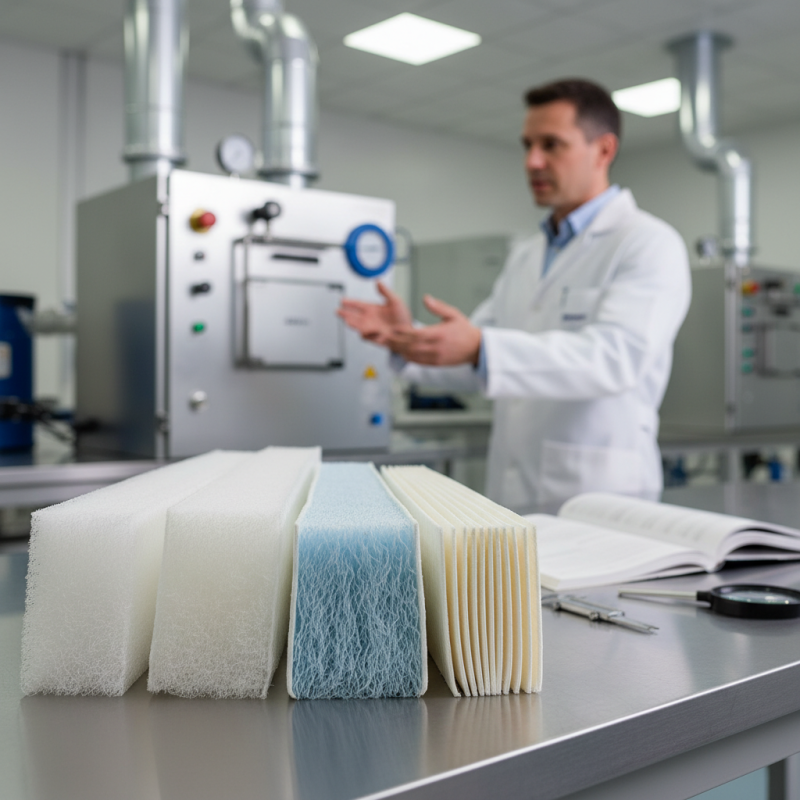
Pocket filters are essential in various industrial settings, providing critical air filtration solutions. Different types of pocket filter media serve unique purposes, driven by specific applications. For instance, synthetic media is lighter and often more efficient than traditional cotton or fiberglass options. According to industry data, synthetic media can capture particles as small as 0.3 microns with an efficiency rating of over 95%. This high efficiency is crucial in environments where air quality is a top concern.
Moreover, applications vary widely among sectors. In HVAC, for example, HEPA filters are frequently used, while industrial processes may rely on electrostatic filters. Each type has distinct benefits. Electrostatic filters often provide lower pressure drops and longer life spans. However, they may require frequent maintenance. Some users overlook this aspect, leading to inefficiencies. If filters are not maintained regularly, performance drops significantly.
The choice of pocket filter media can greatly impact operational costs. A study revealed that adequate filtration can reduce energy consumption by up to 30%. Yet, many facilities fail to monitor this metric closely. Understanding the specifics of filter types can lead to better decision-making. Knowledge gaps frequently exist in smaller operations, making it harder to choose effectively.
Choosing the right pocket filter media requires attention to several important factors. Material type is crucial. Different materials offer varying levels of filtration efficiency. It is vital to evaluate their effectiveness against the specific pollutants you aim to control. Consider your environment. Some filters perform better in industrial settings, while others suit residential spaces. It's about matching the filter’s capabilities to your needs.
The filter's lifespan is another essential aspect. A longer-lasting filter may save costs in the long run. However, you might sacrifice efficiency for durability. Regular maintenance can extend the filter's life, but it also adds to the workload. Think about the installation process as well. Some filters are user-friendly, while others might require professional help. This can lead to increased installation expenses.
Lastly, airflow resistance cannot be ignored. High resistance can impact performance. Filters need to allow adequate air flow while capturing particles. Balancing these factors is not easy. You might find yourself questioning your choices at times. Each decision can lead to unexpected outcomes, prompting a need for reevaluation. Keeping these considerations in mind can guide you towards making a more informed choice.
When selecting pocket filter media, material choice significantly impacts performance. Common materials include synthetic fibers and natural fibers. Synthetic options often offer higher efficiency. They trap smaller particles, enhancing air quality. Natural fibers can be cost-effective but may not filter as finely. This can present an issue in environments requiring strict air standards.
Another factor is the filter's thickness. Thicker filters may capture more dust but can restrict airflow. This limitation could lead to increased energy use. It's essential to balance efficiency with practical needs. Some users overlook this detail and face higher operational costs later.
Environmental conditions also play a role. Humidity, temperature, and dust load affect filter lifespan. A filter that performs well in one setting might fail in another. Regular testing and monitoring are needed to ensure effectiveness. Understanding these variables can lead to more informed choices. It’s a complex process and often requires adjustments along the way. Adaptation may be necessary as conditions change.
When selecting pocket filters, air flow and filtration performance are critical. Air flow dictates how efficiently air moves through the filter. A good balance is necessary. Too much resistance can hinder HVAC systems and increase energy use. Filters with too low resistance may not capture enough particles.
The filtration performance largely relies on the media type and its design. For instance, synthetic materials can provide higher dust holding capacity. However, not all synthetic options perform equally. Some may release particles back into the air after saturation. It's vital to assess their efficiency ratings. These ratings can often mislead users. Always look for lab-tested results in real scenarios.
Consider the maintenance aspect too. Some filters require frequent changes, which can incur higher costs over time. Monitoring the filter’s condition is beneficial. It can prevent poor air quality and protect equipment. The process might seem tedious, but it helps in refining your choice. After all, optimal air flow and filtration performance are not merely technical specifications; they directly impact indoor air quality.
Maintaining pocket filter media is crucial for efficiency and longevity. Regular inspection is vital. According to industry reports, improper maintenance can shorten filter life by 30%. Stale air quality can also cause filters to work harder, leading to more frequent replacements.
Tip: Keep a maintenance log. Track when filters are changed and when routine inspections occur. This habit allows for proactive measures, which can save costs.
Proper cleaning methods matter significantly. Over-washing or using harsh chemicals may damage filter fibers. Consider using mild detergents or water for cleaning, ensuring a gentle touch. Inadequate cleaning can lead to a buildup of contaminants. This can render the filter less effective.
Tip: Schedule seasonal deep cleans. Plan these during off-peak times to reduce operation disruptions. Seasonal cleaning can help prevent costly complications.
Lastly, airflow balance is essential. Filters should fit correctly within their frames. Gaps allow unfiltered air, which stains and damages systems. Misalignment might go unnoticed until it’s too late. Regular adjustments may be needed to maintain proper fit.
Tip: Regularly check alignment after filter installation. Small adjustments can prevent bigger issues later.
„Thanks to the LUVIR technology, the solder resist process could be switched directly from the previously used mask exposure to direct exposure. As an outstanding digital solution on the market, this technology has been able to demonstrate fast process times and superior quality on our certified conventional ink in production. This allowed us to fully digitize the solder mask process at low cost – without process or ink adjustments. An excellent benefit to our production in Rot am See.“
Ralf Göhringer (Head of Production WE Rot am See)
I would definitely recommend the Limata machine and team for a future company purchase
Michael Greenaway
Compunetics Inc.
“The Limata ldi has been amazing!! Best thing we did was buy this machine”
Richard Brady
GM
Circuitlabs
“Since 2019, we have been running the Limata X1000 LDI system (including LUVIR for solder mask imaging) in daily production as an addition to our current process with film. The machine was capable of properly exposing Taiyo PSR-4000 BN (DI) solder mask types on normal to high-copper boards using a new and unique direct imaging process. The machine operating interface is very user friendly which allowed for a quick technical training curve. The pre-registration processing reduced several seconds of production time at every print. Limata support and service staff is incomparable. They supported our team every step of the way at basically any time of the day or night, with literally, an immediate response time, customizing the software interface to best fit our Operations and needs.
We have exposed more than 8,000 prints since end of October, on various solder mask colors and some resist film panels. Limata, has proven to be very capable and innovative. They are a strong contender in the industry.
We have very much enjoyed this project, and working with the team!
Thank you Limata for the continued support and being a part of our growth.”
Bill Sezate
Vice President, GM
Summit Interconnect
As a replacement to our current contact exposure process with film, the LIMATA X2000 system including LUVIR-Technology was capable of properly exposing non-LDI solder mask types using a direct imaging process. The machine offers cutting edge software with a very intuitive operating interface which allowed for quick technician training curve. The dual drawer system combined with pre-registration processing reduced several seconds of production time at every machine cycle. Limata support and service staff is world class. They added software patches to keep production running at shortest possible response times, customized the software interface to best fit our in-house Operations system, and even wrote a step-by-step machine processing manual. As a result of the project, we have exposed more than 16,000 times on various product types and solder mask brands/colors. Limata, in a very short timeframe as a company, has definitely shown they are truly innovative and will be challenging the industry of direct imaging for the top spot.
Kevin Beattie
Process Engineer
TTM Technologies
Forest Grove Division
