Choosing the right Tungsten Carbide Ball can be a challenging process. As industry expert Dr. Emily Johnson notes, “Not all tungsten carbide balls are created equal.” This highlights the importance of understanding your specific needs before making a selection.
Tungsten Carbide Balls come in various sizes and hardness levels. They are used in different applications, from industrial machinery to precision equipment. Each application requires a unique type of ball for optimal performance. Consider factors such as wear resistance and load capacity. These will significantly influence your choice.
It's essential to consult with suppliers and review product specifications. A trusted supplier can provide valuable insights. Additionally, user feedback often reveals practical performance data. Sometimes, you may find that what seems ideal on paper doesn’t perform as expected in real-world scenarios. Take the time to evaluate your options thoroughly. This ensures that you select the best Tungsten Carbide Ball tailored for your needs.
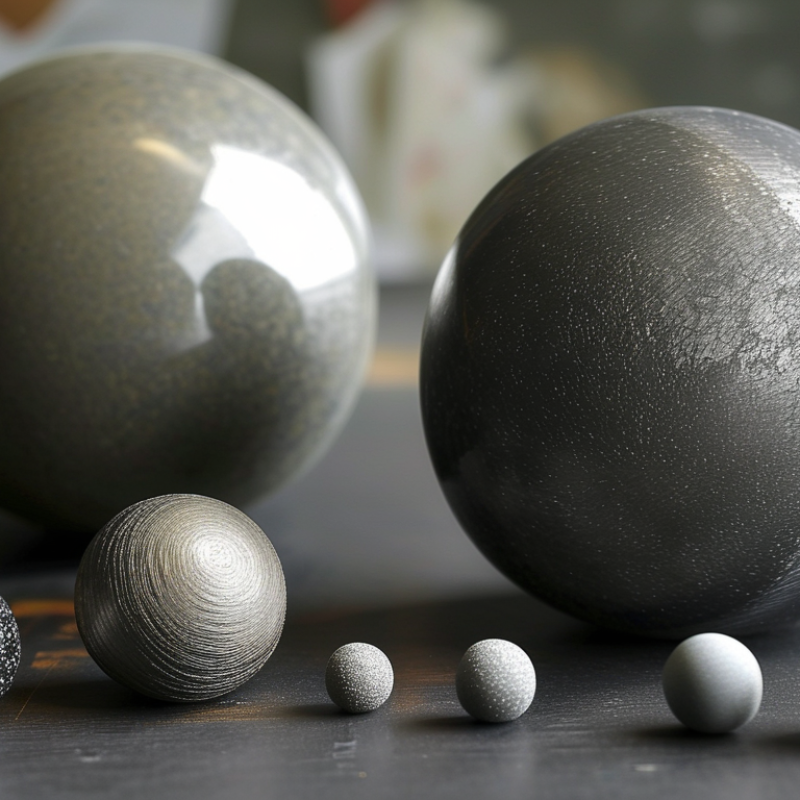
Choosing the right tungsten carbide ball involves several factors that can significantly impact your application. First, consider the size and weight of the ball. These dimensions can affect performance, especially in high-precision tasks, such as machining or drilling. A ball that is too heavy may not fit well within a system designed for lighter components. Conversely, a ball that is too small may not provide the necessary force or support.
Material composition also plays a crucial role. Tungsten carbide comes in various grades, affecting hardness and wear resistance. Higher-grade materials may offer better durability but can also come at a premium cost. It's essential to analyze the specific requirements of your project. Sometimes a lower grade might meet your needs effectively while saving costs.
Finally, surface finish should not be overlooked. A rough surface can cause friction and wear, leading to performance issues over time. Ensure the balls are manufactured to the specifications required for your application. Finding the balance between performance and cost is challenging but vital for long-term success. An informed decision is key to maximizing efficiency in your operations.
When choosing a tungsten carbide ball, it's essential to understand the different grades available. Tungsten carbide is an alloy known for its extreme hardness and durability. The grades are typically classified based on the cobalt content and tungsten carbide particle size. Higher-grade tungsten carbide is more resilient and has better wear resistance, which is crucial for industrial applications.
However, not all applications require the highest grade. In some cases, a lower grade may suffice, especially in non-critical environments. This decision can lead to cost savings, but it requires careful evaluation. Selecting a lower grade without proper consideration may result in premature failure. It’s essential to assess the specific requirements of your project and choose accordingly.
Moreover, while higher-grade tungsten carbide may offer superior performance, it can also present challenges. The manufacturing process may introduce variations in hardness and toughness. Understanding these intricacies can help you avoid unexpected results. Always consider the balance between cost and performance for your specific needs.
Tungsten carbide balls are vital in many industries due to their strength and durability. They are often used in mining, manufacturing, and aerospace sectors. In a recent report, the global market for tungsten carbide reached USD 20 billion, with a projected growth of 5% annually. This indicates a rising demand across various applications.
In mining and mineral processing, tungsten carbide balls excel at grinding and crushing operations. Their hardness reduces wear and extends service life. Additionally, in the automotive industry, they enhance performance in engines and bearings. Their resistance to wear can significantly lower maintenance costs, providing an economic advantage.
Despite their benefits, choosing the right tungsten carbide ball can be tricky. Factors such as size, grade, and coating matter. For instance, a poorly selected grade might lead to premature failure during high-stress applications. Users must evaluate their specific needs thoroughly to avoid costly mistakes.
When selecting tungsten carbide balls, price and quality often go hand in hand. A high price tag can indicate better material density and durability. However, costly options are not always the best for every application. Cheaper tungsten carbide balls can perform adequately in less demanding situations. Finding the right balance is crucial.
Quality also extends beyond cost. Look for detailed specifications. A well-manufactured ball should exhibit uniform hardness and minimal surface defects. Pay attention to reviews and user feedback; they reveal real-world performance. Sometimes, a slightly lower-priced ball might surprise you with its reliability and lifespan.
There’s a need to consider your specific use case. What works for one application might not be ideal for another. Reflect on your requirements carefully. It’s easy to get swayed by flashy marketing. Ultimately, a thoughtful approach leads to the right choice. Evaluate both price and quality objectively to ensure your final decision meets your needs effectively.
| Type | Diameter (mm) | Hardness (HRA) | Weight (g) | Price ($) |
|---|---|---|---|---|
| Standard Ball | 6 | 92 | 1.5 | 5.00 |
| High Precision Ball | 10 | 94 | 4.1 | 10.00 |
| Custom Size Ball | 8 | 93 | 2.5 | 7.50 |
| Ultra-Fine Ball | 5 | 95 | 1.2 | 8.00 |
| Economy Ball | 12 | 90 | 5.8 | 4.00 |
Maintaining tungsten carbide balls is essential for their longevity and performance. Regular cleaning is crucial. Use a soft cloth to wipe off dirt and debris. This simple step prevents buildup that may affect their functionality. Be mindful of harsh chemicals; they can damage the surface. Water and mild soap work just fine for routine maintenance.
Another important aspect is proper storage. Store the balls in a cool, dry place. Avoid locations with high humidity. Moisture can lead to corrosion over time. Using a protective case can also help. These precautions significantly extend lifespan and enhance reliability.
It's worth noting that wearing and tear can happen, even with pampered care. Inspect the balls regularly for signs of damage. If you notice cracks or chips, it might be time for a replacement. Sometimes, trying to extend their life can backfire. Regular assessment leads to better overall performance. Reflecting on these aspects aids in making informed decisions for your equipment.
„Thanks to the LUVIR technology, the solder resist process could be switched directly from the previously used mask exposure to direct exposure. As an outstanding digital solution on the market, this technology has been able to demonstrate fast process times and superior quality on our certified conventional ink in production. This allowed us to fully digitize the solder mask process at low cost – without process or ink adjustments. An excellent benefit to our production in Rot am See.“
Ralf Göhringer (Head of Production WE Rot am See)
I would definitely recommend the Limata machine and team for a future company purchase
Michael Greenaway
Compunetics Inc.
“The Limata ldi has been amazing!! Best thing we did was buy this machine”
Richard Brady
GM
Circuitlabs
“Since 2019, we have been running the Limata X1000 LDI system (including LUVIR for solder mask imaging) in daily production as an addition to our current process with film. The machine was capable of properly exposing Taiyo PSR-4000 BN (DI) solder mask types on normal to high-copper boards using a new and unique direct imaging process. The machine operating interface is very user friendly which allowed for a quick technical training curve. The pre-registration processing reduced several seconds of production time at every print. Limata support and service staff is incomparable. They supported our team every step of the way at basically any time of the day or night, with literally, an immediate response time, customizing the software interface to best fit our Operations and needs.
We have exposed more than 8,000 prints since end of October, on various solder mask colors and some resist film panels. Limata, has proven to be very capable and innovative. They are a strong contender in the industry.
We have very much enjoyed this project, and working with the team!
Thank you Limata for the continued support and being a part of our growth.”
Bill Sezate
Vice President, GM
Summit Interconnect
As a replacement to our current contact exposure process with film, the LIMATA X2000 system including LUVIR-Technology was capable of properly exposing non-LDI solder mask types using a direct imaging process. The machine offers cutting edge software with a very intuitive operating interface which allowed for quick technician training curve. The dual drawer system combined with pre-registration processing reduced several seconds of production time at every machine cycle. Limata support and service staff is world class. They added software patches to keep production running at shortest possible response times, customized the software interface to best fit our in-house Operations system, and even wrote a step-by-step machine processing manual. As a result of the project, we have exposed more than 16,000 times on various product types and solder mask brands/colors. Limata, in a very short timeframe as a company, has definitely shown they are truly innovative and will be challenging the industry of direct imaging for the top spot.
Kevin Beattie
Process Engineer
TTM Technologies
Forest Grove Division
