Choosing the right Check Valve for your application can greatly impact system performance. According to renowned valve industry expert, Dr. Robert Smith, “The right check valve can save you both time and money in the long run.” This highlights the importance of a careful selection process.
Check valves play a crucial role in fluid control systems. They prevent backflow, ensuring that systems operate smoothly and efficiently. Selecting the proper check valve requires understanding your specific needs—pressure ratings, material compatibility, and flow characteristics are all vital factors to consider. Without this knowledge, one could face significant operational issues.
Many users underestimate the complexity of check valve selection. They may choose based solely on price or availability. However, this approach can lead to costly mistakes. It is essential to analyze all variables and consult professionals when necessary. Investing time in this process pays off by enhancing system reliability and longevity.
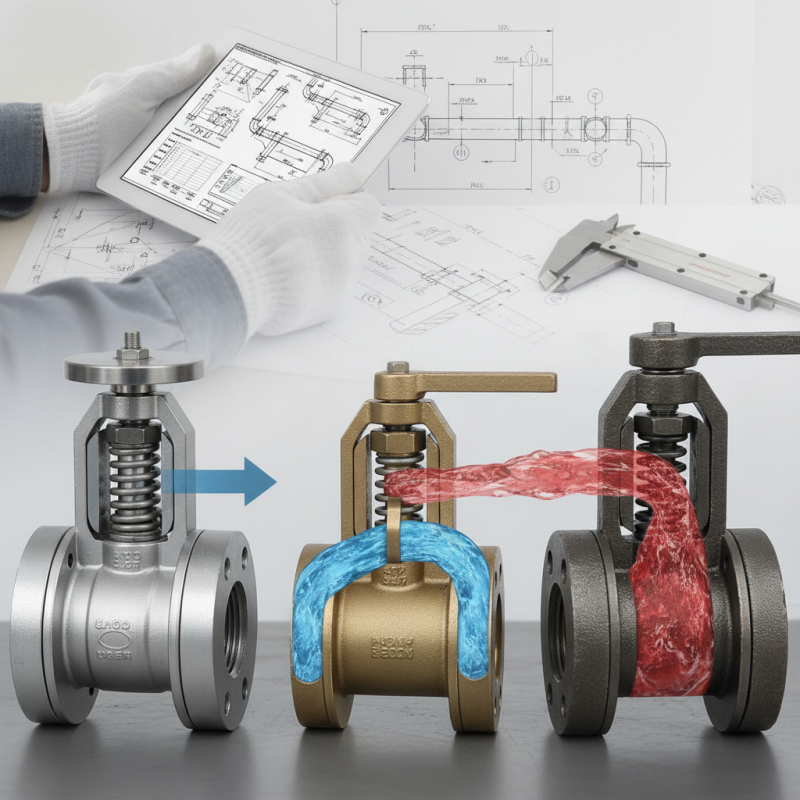
Check valves play a crucial role in various systems. They ensure that fluid flows in a single direction, preventing backflow. This function protects pumps, pipelines, and other equipment from damage. The design of check valves varies, influencing their effectiveness in different applications. According to a study by the Hydraulic Institute, nearly 60% of pump failures result from improper flow management. Utilizing the right check valve can significantly reduce these risks.
Common types of check valves include swing, lift, and diaphragm valves. Each type has distinct features suited for specific conditions. For instance, swing check valves are ideal for low-pressure systems, while lift check valves work better in high-pressure applications. Data from the American Society of Mechanical Engineers (ASME) suggests that selecting the right type can improve system efficiency by up to 30%. However, many industries still overlook these factors, leading to operational inefficiencies.
A frequent oversight involves the valve material choice. Check valves made from incompatible materials with the flowing medium can fail prematurely. Inappropriate sizing can also cause significant issues, like increased energy costs or system wear. Addressing these factors requires careful analysis and knowledge of the system's specific needs to maximize performance and longevity.
| Check Valve Type | Application | Material | Pressure Rating | Temperature Range |
|---|---|---|---|---|
| Swing Check Valve | Water and wastewater applications | Cast iron | Up to 150 psi | -20°C to 80°C |
| Lift Check Valve | Oil and gas applications | Stainless steel | Up to 300 psi | -10°C to 120°C |
| Ball Check Valve | Chemical processing | PVC | Up to 100 psi | 0°C to 60°C |
| Dual Plate Check Valve | Power plants | Carbon steel | Up to 600 psi | -20°C to 150°C |
Check valves play a crucial role in fluid systems. Understanding the different types of check valves helps in selecting the right one for specific applications. The two most common types are swing check valves and lift check valves.
Swing check valves allow fluid flow in one direction and feature a disc that swings open and closed. They are often used in water and wastewater applications. Conversely, lift check valves rely on a moving disc that lifts off its seat to allow flow. These are suitable for applications with varying flow rates.
When considering a check valve, it is vital to assess your system's pressure and temperature requirements. Using a valve that cannot handle the necessary pressure could lead to failures. It is a common oversight. Always measure your system parameters accurately. Additionally, think about the medium flowing through the valve. Corrosive media may need a specific valve material for durability.
Tips: Always consult with experts when selecting a valve. They can guide you through complex decisions. Comparing specifications from multiple sources can provide clarity. Make a checklist of your needs. This will streamline the selection process. Don't rush; the right valve is essential for system efficiency.
When selecting a check valve, several factors come into play. Understanding your application is crucial. You must consider the fluid type, pressure, and temperature conditions. Each of these elements affects valve performance and materials used.
Material choice is vital. Stainless steel, brass, or plastic can all serve different applications. For corrosive fluids, opt for higher-grade substances. This decision can impact the valve's durability and reliability. Make sure to consult with materials experts to ensure optimal selection.
**Tips:** Always check the specifications of your system. Ensure compatibility with existing components. This step can prevent costly downtimes.
Flow characteristics are another important aspect. Pressure drops vary by valve type. Make sure you understand how your system's flow will interact with the chosen valve. Misunderstanding this can create problems down the line.
**Tips:** Test the valve performance under actual operating conditions. Simulations can provide insights, but real-world data is invaluable. Adjust your choice as needed based on these findings.
Choosing the right material for check valves is essential for optimal performance. The compatibility of the valve material with the fluid is critical. Using the wrong material can lead to corrosion or degradation, which affects the system's efficiency. According to a report by the American Society of Mechanical Engineers (ASME), improper material selection can result in a 30% increase in maintenance costs over time.
For example, stainless steel is popular in many industries due to its durability and corrosion resistance. However, when dealing with highly acidic fluids, materials like Hastelloy may be necessary. Polypropylene is often chosen for chemical applications but may not withstand high temperatures. These nuances illustrate the complexity of material selection, as each application presents unique challenges.
Consideration of temperature ranges and pressure ratings is equally important. A report by the International Journal of Fluid Mechanics states that 60% of valve failures occur due to improper material choices. Testing different materials in controlled environments is recommended. This iterative process can prevent costly errors. Ultimately, understanding fluid compatibility not only enhances valve lifespan but also optimizes overall system performance.
When installing check valves, proper positioning is crucial. Ensure that the valve is placed in the correct orientation, typically with the flow arrow pointing in the desired direction. Misalignment can lead to malfunctions, such as backflow. Pay attention to the inlet and outlet dimensions to choose suitable pipe sizes. Inadequate support might cause wear over time, affecting performance.
Regular maintenance is essential to prolong the life of check valves. Keep an eye on signs of leaks or unusual noises. Occasional cleaning can help remove debris that might prevent proper sealing. It is important to check the seating surfaces; wear may require replacement. Consider documenting maintenance actions to track the valve's performance over time.
Not all installations will go perfectly. Some users may overlook specific adjustments, leading to minor issues. A few may experience inconsistent performance due to environmental factors. Being mindful of these challenges can assist in making necessary adjustments or replacements, ensuring the check valve continues to function effectively.
„Thanks to the LUVIR technology, the solder resist process could be switched directly from the previously used mask exposure to direct exposure. As an outstanding digital solution on the market, this technology has been able to demonstrate fast process times and superior quality on our certified conventional ink in production. This allowed us to fully digitize the solder mask process at low cost – without process or ink adjustments. An excellent benefit to our production in Rot am See.“
Ralf Göhringer (Head of Production WE Rot am See)
I would definitely recommend the Limata machine and team for a future company purchase
Michael Greenaway
Compunetics Inc.
“The Limata ldi has been amazing!! Best thing we did was buy this machine”
Richard Brady
GM
Circuitlabs
“Since 2019, we have been running the Limata X1000 LDI system (including LUVIR for solder mask imaging) in daily production as an addition to our current process with film. The machine was capable of properly exposing Taiyo PSR-4000 BN (DI) solder mask types on normal to high-copper boards using a new and unique direct imaging process. The machine operating interface is very user friendly which allowed for a quick technical training curve. The pre-registration processing reduced several seconds of production time at every print. Limata support and service staff is incomparable. They supported our team every step of the way at basically any time of the day or night, with literally, an immediate response time, customizing the software interface to best fit our Operations and needs.
We have exposed more than 8,000 prints since end of October, on various solder mask colors and some resist film panels. Limata, has proven to be very capable and innovative. They are a strong contender in the industry.
We have very much enjoyed this project, and working with the team!
Thank you Limata for the continued support and being a part of our growth.”
Bill Sezate
Vice President, GM
Summit Interconnect
As a replacement to our current contact exposure process with film, the LIMATA X2000 system including LUVIR-Technology was capable of properly exposing non-LDI solder mask types using a direct imaging process. The machine offers cutting edge software with a very intuitive operating interface which allowed for quick technician training curve. The dual drawer system combined with pre-registration processing reduced several seconds of production time at every machine cycle. Limata support and service staff is world class. They added software patches to keep production running at shortest possible response times, customized the software interface to best fit our in-house Operations system, and even wrote a step-by-step machine processing manual. As a result of the project, we have exposed more than 16,000 times on various product types and solder mask brands/colors. Limata, in a very short timeframe as a company, has definitely shown they are truly innovative and will be challenging the industry of direct imaging for the top spot.
Kevin Beattie
Process Engineer
TTM Technologies
Forest Grove Division
