Choosing the right Metal Racking System begins with understanding your storage environment, not browsing product photos. Every warehouse has different pressures, including ceiling height, aisle width, floor condition, product weight, and handling equipment. A rack that suits boxed inventory may perform poorly with steel coils or irregular pallets.
Start by recording the actual load requirements. Measure each pallet, including its height and overhang. Confirm the total weight, load distribution, and lifting method. Forklift turning space matters. So does beam clearance. Small measurement errors can create serious operational problems.
Material selection also deserves careful attention. Steel racking usually offers strength, durability, and adaptable configurations. However, corrosion resistance may be necessary in humid, cold, or chemically exposed areas. Powder-coated surfaces look clean, but appearance alone does not prove long-term performance. Check the manufacturer’s specifications, tested load ratings, installation guidance, and inspection procedures.
Safety should guide every decision. Uprights need stable anchoring. Beams require secure locking pins. Damaged components should never remain in service because replacement costs seem inconvenient. Local building requirements and workplace safety rules may also affect the design. Confirm them before installation.
A practical layout must support people, not only inventory. Leave clear travel paths and visible aisle markings. Consider future growth instead of filling every available metre today. Still, overplanning can waste valuable floor space. The best choice balances capacity, access, budget, and daily workflow.
There is no universal answer. Even experienced teams can misjudge changing stock levels. Review the system regularly, document inspections, and adjust carefully as your operation develops.
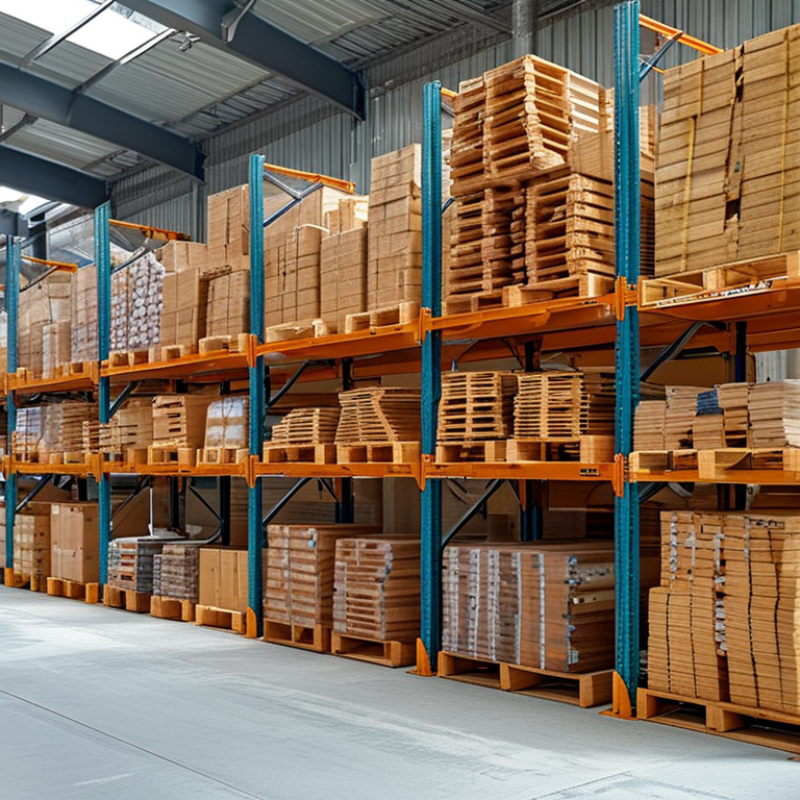
Choosing a metal racking system starts with your inventory, not the rack itself. Measure pallet dimensions, unit weights, turnover rates, and available floor height. Fast-moving cartons may need direct access, while reserve stock can use higher-density storage. Leave clear aisles for forklifts, inspection, and emergency movement.
Operating conditions matter just as much. Record daily handling volume, forklift type, loading patterns, temperature, humidity, and future expansion plans. The 2024 MHI Annual Industry Report found that 55% of supply-chain professionals expected to increase technology investment. This signals a practical concern: your racking should support scanners, automation, and changing workflows. A layout that works today may create delays after growth.
Tips: Mark every load level visibly. Confirm floor capacity with a qualified engineer. Add impact protection where vehicles turn sharply. Inspect beams, frames, anchors, and connectors routinely. OSHA guidance emphasizes regular hazard identification and corrective action, but inspections are often treated as paperwork. That is a mistake. A bent upright may look minor until repeated loading exposes the weakness. Also, do not select maximum height simply because the ceiling allows it. Fire systems, lighting, retrieval reach, and worker visibility can reduce usable capacity. I would test a small rack zone first, measure picking time, and revise the design before full installation.
| Storage Requirement | Recommended Rack Type | Typical Load or Capacity | Typical Dimensions | Operating Conditions | Key Selection Considerations |
|---|---|---|---|---|---|
| Standard palletized goods High variety of stock-keeping units | Adjustable pallet racking | Approximately 500–5,000 kg per beam level, subject to design and configuration | Typical frame height: 2.4–12 m Typical bay width: 1.8–3.0 m Typical depth: 0.9–1.2 m | Forklift or reach-truck access; frequent stock rotation | Best for direct access to every pallet. Confirm pallet size, beam capacity, floor load, aisle width, and required clearance. |
| Small parts and cartons Manual picking and high item variety | Longspan shelving or steel shelving | Approximately 100–800 kg per shelf level, depending on shelf construction | Typical height: 1.8–3.0 m Typical width: 0.9–2.4 m Typical depth: 0.3–0.8 m | Manual handling; pedestrian aisles; frequent order picking | Choose adjustable shelf levels and an ergonomic picking height. Use bins or dividers when products are small or loose. |
| Long, bulky, or irregular products Pipes, timber, profiles, and sheet materials | Cantilever racking | Commonly designed for 250–2,000 kg per arm; engineering verification is required | Typical height: 2–6 m Arm length: 0.6–1.5 m Column spacing: 1.0–2.0 m | Front loading by forklift, crane, or manual handling | Measure product length, weight, deflection tolerance, and overhang. Add end stops when products could roll or slide. |
| High-density storage Many pallets with limited product variety | Drive-in or drive-through racking | Often configured for multiple pallets per lane; capacity depends on tunnel length and load design | Typical height: 4–10 m Typical lane depth: 3–15 pallets | Forklift enters storage lanes; lower selectivity than adjustable racking | Suitable for batch storage and relatively uniform loads. Consider forklift clearance, pallet quality, lane depth, and loading sequence. |
| First-in, first-out inventory Perishable or date-sensitive products | Pallet flow racking | Typically one pallet per roller position; total capacity varies by lane and level | Typical depth: 2–6 pallets Typical height: 3–8 m | Loading from one side and picking from the opposite side | Specify pallet dimensions, load weight, roller pitch, braking requirements, and lane slope to support controlled movement. |
| Low-to-medium access frequency Space efficiency is more important than instant access | Mobile racking | Comparable to the supported pallet or shelving system; moving bases require additional structural review | System height commonly 2–10 m Only one or a few access aisles may be open at a time | Powered or manually operated mobile bases; controlled pedestrian access | Check slab flatness, distributed floor loading, emergency access, aisle interlocks, and retrieval frequency before selecting this option. |
| Very high storage volume Maximum vertical use of the building | High-bay pallet racking | Load capacity is engineered by level, frame, beam, and handling equipment | Often above 8 m and may extend to 12 m or more in suitable facilities | Reach truck, turret truck, or automated handling equipment | Verify building height, sprinkler clearance, rack tolerances, floor flatness, lighting, and equipment operating envelope. |
| Corrosive, humid, or outdoor conditions Exposure to moisture, chemicals, or temperature changes | Protected steel racking with suitable coating or galvanized components | Capacity should be based on the same structural design principles as indoor systems, with environmental allowances | Dimensions depend on the selected rack configuration and site layout | Humidity, wash-down areas, salt exposure, chemicals, or outdoor wind loads | Select corrosion protection based on the actual environment. Review drainage, inspection access, anchoring, and wind or seismic requirements. |
Planning note: Capacity ranges and dimensions are indicative planning values, not final engineering limits. Confirm the rack design against applicable local building, fire, workplace-safety, seismic, and load-rating requirements before installation.
Choosing a metal racking system starts with the space, not the catalogue. Measure the floor area, clear ceiling height, doors, columns, sprinkler lines, and forklift paths. Leave room for lighting and maintenance access. The 2024 MHI Annual Industry Report, based on more than 2,000 supply-chain professionals, identifies warehouse capacity pressure as a continuing operational concern. Space is expensive. A narrow aisle may increase storage density, but it can slow handling and create collision risks.
Load capacity must be calculated for each beam level and upright frame. Record pallet weight, dimensions, stacking height, and how often loads move. Do not rely on an estimated “average” pallet. BLS reported 885 fatal workplace injuries involving falls, slips, and trips in its 2023 Census of Fatal Occupational Injuries. That figure covers all industries, not racking alone, but it shows why stable storage and clear access matter.
Check the floor slab, anchoring method, and local safety requirements with a qualified engineer. Rack dimensions should match the real inventory. A rack that is too deep wastes reach space; one that is too shallow leaves pallets unsupported.
Keep clearance between loads and sprinklers. I have seen layouts that looked efficient on paper but blocked turning points in practice. Recheck the drawing with an actual pallet and forklift. Small mistakes become daily delays. MHI’s report also notes ongoing pressure to improve operational efficiency, yet higher density is not always better. Availability, inspection access, and safe movement deserve equal weight.
How to Choose the Right Metal Racking System?
Compare Metal Racking Types and Structural Features
Metal racking should match the load, storage height, aisle width, and handling equipment. A system that looks strong may still fail when beams are overloaded or poorly anchored. Check the manufacturer’s load data and have a qualified professional verify unusual layouts.
Selective pallet racking offers direct access to each pallet and suits varied inventory. Its main structure includes upright frames, horizontal beams, diagonal bracing, and floor anchors. Shelving systems work better for cartons, tools, and smaller parts. They usually use adjustable levels, steel panels, or wire decking. Cantilever racking supports long materials such as pipes, timber, and metal profiles. Its arms need careful spacing to prevent uneven loading.
Mobile racking reduces wasted aisle space by moving storage rows along floor rails. However, it requires a level floor, safety controls, and disciplined operation. Drive-in designs increase density but provide less stock rotation. Corrosion-resistant finishes matter in humid warehouses, though paint alone is not a complete solution.
Inspect beam locks, upright damage, anchor tightness, and deck condition regularly. Keep loads centered and below the stated capacity. Small dents can matter.
A practical weakness is often ignored: future stock changes. A rack designed for today’s cartons may become unsuitable after one product change. Allow adjustment space, but do not assume every component can be mixed safely. Structural compatibility must be confirmed.
Compare typical rated load capacity by storage level or arm. Higher capacity usually requires heavier uprights, beams, bracing, anchors, or structural supports.
Structural comparison: boltless shelving uses clip-in panels and posts; longspan shelving uses heavier beams; selective pallet racking uses adjustable beams and braced frames; drive-in racking uses guide rails and fewer aisles; cantilever racking uses reinforced arms for long or irregular loads. Values are indicative industry ranges and must be verified against the selected system's load plaques, engineering calculations, floor capacity, and local safety requirements.
A reliable metal racking system begins with safety, not appearance. Check the rated load for each beam and level. Never estimate weight by eye. Uneven floors, damaged uprights, and loose connectors can create serious risks. In my warehouse assessments, small dents often revealed larger handling problems. Clear aisle widths also matter. Workers should move carts without twisting, stopping suddenly, or brushing stored goods. Anchoring may be necessary in busy or tall installations.
Accessibility affects daily productivity. Place fast-moving items between knee and shoulder height. Reserve higher levels for lighter, less frequent inventory. Label every location clearly, even when the system seems obvious. A step stool is not a proper solution for repeated access. Durability depends on steel thickness, coating quality, joint design, and the working environment. Dust, moisture, and frequent impacts will test weak materials. Inspect beams and frames regularly. One overlooked crack can change the entire risk profile.
Tips: Leave room for safe inspection and future stock changes. Choose adjustable levels, replaceable components, and compatible extensions. Keep expansion space around the initial layout, but do not oversize the system without a storage plan. I have seen unused capacity become an expensive obstacle. Review loading patterns after several weeks. The original layout may look efficient, yet real movement often exposes awkward corners or wasted reach.
Select the Best System Based on Cost, Compliance, and Long-Term Value
Choosing metal racking starts with the warehouse, not the product catalogue. Measure aisle widths, ceiling height, floor condition, and load sizes carefully. A small measurement error can disrupt forklifts and reduce usable space. Record the heaviest pallet, not the average one. Safety depends on real operating conditions.
Cost matters, but the lowest purchase price can hide future expenses. Compare installation, inspections, repairs, relocation, and replacement parts. Ask whether the system can adapt when inventory changes. Adjustable levels may cost more initially, yet they can prevent an expensive redesign later. Still, flexibility is not always valuable. Unused features can become wasted money.
Compliance should be checked before ordering. Confirm load ratings, anchoring requirements, fire access, aisle clearances, and local workplace rules. A qualified engineer or safety professional should review unusual layouts and heavy-duty applications. Keep drawings, inspection records, and maintenance instructions accessible. In practice, teams sometimes overlook damaged uprights because repairs interrupt work. That is a poor trade. A reliable system needs routine inspections, visible load labels, and trained staff. Long-term value comes from safe performance, manageable maintenance, and controlled operating costs. The best choice may not look impressive on day one. It should remain dependable years later.
„Thanks to the LUVIR technology, the solder resist process could be switched directly from the previously used mask exposure to direct exposure. As an outstanding digital solution on the market, this technology has been able to demonstrate fast process times and superior quality on our certified conventional ink in production. This allowed us to fully digitize the solder mask process at low cost – without process or ink adjustments. An excellent benefit to our production in Rot am See.“
Ralf Göhringer (Head of Production WE Rot am See)
I would definitely recommend the Limata machine and team for a future company purchase
Michael Greenaway
Compunetics Inc.
“The Limata ldi has been amazing!! Best thing we did was buy this machine”
Richard Brady
GM
Circuitlabs
“Since 2019, we have been running the Limata X1000 LDI system (including LUVIR for solder mask imaging) in daily production as an addition to our current process with film. The machine was capable of properly exposing Taiyo PSR-4000 BN (DI) solder mask types on normal to high-copper boards using a new and unique direct imaging process. The machine operating interface is very user friendly which allowed for a quick technical training curve. The pre-registration processing reduced several seconds of production time at every print. Limata support and service staff is incomparable. They supported our team every step of the way at basically any time of the day or night, with literally, an immediate response time, customizing the software interface to best fit our Operations and needs.
We have exposed more than 8,000 prints since end of October, on various solder mask colors and some resist film panels. Limata, has proven to be very capable and innovative. They are a strong contender in the industry.
We have very much enjoyed this project, and working with the team!
Thank you Limata for the continued support and being a part of our growth.”
Bill Sezate
Vice President, GM
Summit Interconnect
As a replacement to our current contact exposure process with film, the LIMATA X2000 system including LUVIR-Technology was capable of properly exposing non-LDI solder mask types using a direct imaging process. The machine offers cutting edge software with a very intuitive operating interface which allowed for quick technician training curve. The dual drawer system combined with pre-registration processing reduced several seconds of production time at every machine cycle. Limata support and service staff is world class. They added software patches to keep production running at shortest possible response times, customized the software interface to best fit our in-house Operations system, and even wrote a step-by-step machine processing manual. As a result of the project, we have exposed more than 16,000 times on various product types and solder mask brands/colors. Limata, in a very short timeframe as a company, has definitely shown they are truly innovative and will be challenging the industry of direct imaging for the top spot.
Kevin Beattie
Process Engineer
TTM Technologies
Forest Grove Division
