Operating a tandem cold rolling mill requires precision and expertise. Industry expert Dr. John Smith emphasizes, "Efficiency defines the success of a tandem cold rolling mill." His insight highlights the importance of optimizing processes in this complex machinery.
The tandem cold rolling mill can produce high-quality metal sheets at significant speeds. However, operators face challenges. Maintaining consistent thickness and surface quality is crucial. Small variations can lead to defects, impacting the product's usability.
Training is essential. Workers must understand the nuances of the machinery. A poorly operated tandem cold rolling mill can result in increased waste and costs. Striving for perfection in operation is always a work in progress. Aiming for efficiency and quality should drive continuous improvement efforts in this industry.
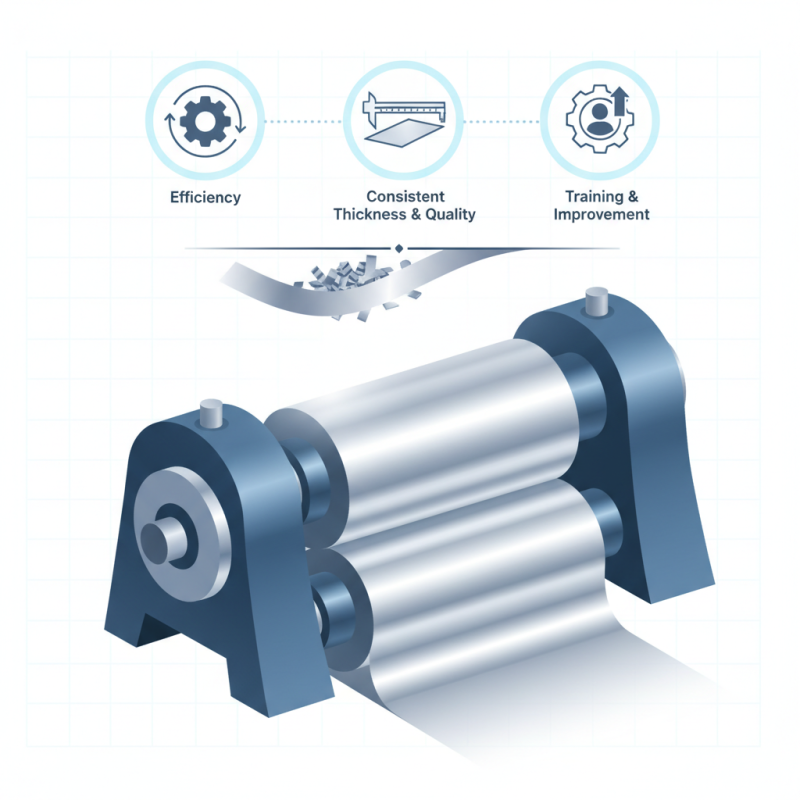
Tandem cold rolling mills are crucial in metal manufacturing. They process metal strips to achieve desired thickness and property. The operation involves a series of rollers, each reducing the thickness incrementally. This continuous approach improves efficiency and reduces waste.
One essential characteristic is the precise control of roller pressure. Too high pressure can lead to defects, while too low pressure may result in insufficient thickness reduction. Operators often face challenges in maintaining this balance. Temperature control also plays a significant role. Cold rolling must be done at controlled temperatures to avoid material brittleness.
Another important aspect is the maintenance of the rollers. Regular inspections can prevent unexpected downtime. A worn roller can affect the quality of the final product. Operators often need to reflect on their maintenance schedules. Inconsistent practices may lead to production inefficiencies and increased costs. Each element requires careful attention to detail for optimal performance.
Operating a tandem cold rolling mill requires a solid understanding of its key principles. The rolling process begins with metal strips being fed into the mill. These strips undergo deformation as they pass through a series of rollers. Each pair of rollers reduces the thickness, while increasing length. The pressure applied must be carefully controlled. Too much pressure can lead to defects.
In addition, the process heavily relies on roller speed and temperature. Maintaining optimal temperatures is crucial to avoid brittleness. The rollers themselves should be regularly monitored for wear and tear. Uneven wear can lead to inconsistent results. Operators must develop a keen eye for identifying these issues. Frequent adjustments are often necessary to maintain quality.
Another key aspect is lubrication. Proper lubrication reduces friction between the rollers and the metal. This not only aids in achieving a better finish but also prolongs roller life. However, too much lubricant can create problems. Operators must find the right balance. Keeping detailed logs of production metrics is advisable. This can help identify patterns and potential spots for improvement.
In tandem cold rolling mills, achieving the right sheet thickness and surface quality is crucial. Several critical parameters play a significant role in this process. The roll gap, for example, should be adjusted carefully. An incorrect roll gap can lead to variations in thickness, resulting in waste. Frequent monitoring is needed to maintain optimal settings.
Another important factor is the deformation behavior of the material. Different alloys respond differently to pressure and temperature. If this is not understood, poor surface quality can result. Surface defects such as scratches or pits can emerge, indicating inadequate control. Operators must remain vigilant to ensure the quality of the end product.
Temperature management in the rolling process also impacts the final sheet quality. If the metal is too cold, it becomes brittle. If it's too hot, it may deform excessively. Adjusting cooling systems and reheating processes is essential. However, these adjustments are often overlooked, leading to inconsistent quality. Proper training and experience are necessary for operators to notice subtle changes in conditions that can affect outcome.
Operating a tandem cold rolling mill requires careful maintenance to ensure optimal performance. Regular inspections play a critical role. According to industry reports, nearly 30% of production downtime occurs due to inadequate maintenance practices. This highlights the need for a robust maintenance strategy.
One essential tip is to schedule routine checks on bearings and lubrication systems. Contaminants can quickly damage these components. Keeping them clean enhances overall mill efficiency. Implementing a predictive maintenance program can help identify potential failures before they happen. This proactive approach often leads to significant savings.
Another crucial factor is monitoring the mill's operating parameters. Variances can indicate underlying issues that need attention. Striking a balance between production speed and quality is vital. Some mills, however, overlook this, leading to reduced product integrity. Continuous training for operators on these metrics can improve outcomes. Emphasizing the importance of consistent performance checks fosters a culture of excellence.
Operating a tandem cold rolling mill involves not only precision but also a strong focus on safety. The World Steel Association reports that rolling mills are among the industries with higher safety incidents. To mitigate this, workers should always wear personal protective equipment (PPE). Helmets, gloves, and steel-toed boots are essential. Training sessions about proper use of equipment can minimize accidents.
In addition to PPE, clear communication in the operating environment is vital. Regular safety drills can help keep everyone alert. The use of visual aids, such as signs that indicate hazards, is recommended. Surprisingly, many mills neglect maintenance checks. According to industry studies, up to 30% of accidents could be prevented with better maintenance.
It's critical to establish a culture of safety. Encourage employees to report unsafe conditions. This often goes overlooked. Regular feedback loops can enhance safety protocols. Implementing these practices leads to a notable decrease in workplace injuries. Therefore, fostering an environment where employees feel empowered will enhance operation efficiency.
„Thanks to the LUVIR technology, the solder resist process could be switched directly from the previously used mask exposure to direct exposure. As an outstanding digital solution on the market, this technology has been able to demonstrate fast process times and superior quality on our certified conventional ink in production. This allowed us to fully digitize the solder mask process at low cost – without process or ink adjustments. An excellent benefit to our production in Rot am See.“
Ralf Göhringer (Head of Production WE Rot am See)
I would definitely recommend the Limata machine and team for a future company purchase
Michael Greenaway
Compunetics Inc.
“The Limata ldi has been amazing!! Best thing we did was buy this machine”
Richard Brady
GM
Circuitlabs
“Since 2019, we have been running the Limata X1000 LDI system (including LUVIR for solder mask imaging) in daily production as an addition to our current process with film. The machine was capable of properly exposing Taiyo PSR-4000 BN (DI) solder mask types on normal to high-copper boards using a new and unique direct imaging process. The machine operating interface is very user friendly which allowed for a quick technical training curve. The pre-registration processing reduced several seconds of production time at every print. Limata support and service staff is incomparable. They supported our team every step of the way at basically any time of the day or night, with literally, an immediate response time, customizing the software interface to best fit our Operations and needs.
We have exposed more than 8,000 prints since end of October, on various solder mask colors and some resist film panels. Limata, has proven to be very capable and innovative. They are a strong contender in the industry.
We have very much enjoyed this project, and working with the team!
Thank you Limata for the continued support and being a part of our growth.”
Bill Sezate
Vice President, GM
Summit Interconnect
As a replacement to our current contact exposure process with film, the LIMATA X2000 system including LUVIR-Technology was capable of properly exposing non-LDI solder mask types using a direct imaging process. The machine offers cutting edge software with a very intuitive operating interface which allowed for quick technician training curve. The dual drawer system combined with pre-registration processing reduced several seconds of production time at every machine cycle. Limata support and service staff is world class. They added software patches to keep production running at shortest possible response times, customized the software interface to best fit our in-house Operations system, and even wrote a step-by-step machine processing manual. As a result of the project, we have exposed more than 16,000 times on various product types and solder mask brands/colors. Limata, in a very short timeframe as a company, has definitely shown they are truly innovative and will be challenging the industry of direct imaging for the top spot.
Kevin Beattie
Process Engineer
TTM Technologies
Forest Grove Division
