Choosing the right Insulation Membrane supplier is not a simple price comparison. It is a building-performance decision.
The UNEP 2023 Global Status Report states that buildings and construction consume about 34% of global energy and create approximately 37% of energy-related emissions. The U.S. Department of Energy also identifies buildings as major energy users. These figures make thermal control, moisture management, and airtightness practical priorities.
Dr. Joseph Lstiburek, a respected building-science expert, has repeatedly emphasized, “Buildings should be designed to be able to dry.” That principle matters when evaluating an Insulation Membrane. A low-cost membrane may reduce heat transfer, yet trap moisture behind cladding. Problems can remain invisible for months.
Look beyond the brochure.
Review thermal resistance, vapor permeability, water resistance, tensile strength, tear resistance, UV stability, and fire performance. Ask for independent laboratory reports, not only factory claims. Confirm compliance with relevant ASTM, EN, or ISO standards. Request product samples, installation instructions, batch traceability, and technical support.
A dependable supplier should explain where the membrane belongs in the wall assembly. They should discuss climate, substrate, joints, penetrations, and drying potential. Factory capacity also matters. So do quality-control records and realistic delivery times.
Supplier interviews can reveal experience. Ask for completed projects in similar climates. Contact references. Inspect packaging and labeling carefully.
No supplier is perfect. Neither is every test report.
The strongest choice balances verified performance, installation reliability, documentation, and long-term service. A careful buyer may spend more initially, but avoid condensation, energy loss, replacement work, and uncomfortable interiors later.
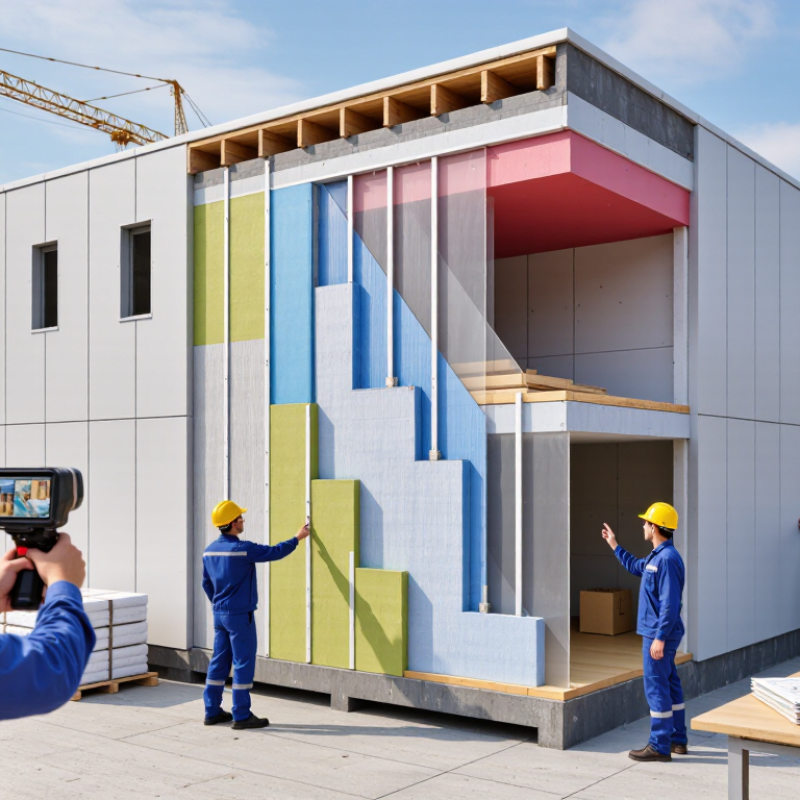
Understanding the membrane is more important than comparing prices. Insulation membranes may control vapor, block air leakage, resist water, or reflect radiant heat. Some products perform several functions, but not equally well.
A roof membrane needs different protection from a wall vapor barrier. Cold-storage rooms require stable performance under low temperatures. Underground structures need strong waterproofing and reliable joint sealing.
The need is substantial. UNEP’s 2023 Global Status Report for Buildings and Construction states that buildings used about 34% of global energy and produced around 37% of energy and process-related emissions in 2022.
Better envelopes can reduce heating and cooling loads. However, membrane performance depends on correct installation. A small puncture near a pipe can weaken an otherwise excellent system.
When evaluating a China insulation membrane supplier, request third-party test reports, declared thermal resistance, vapor permeability, tensile strength, and aging results. Check whether testing follows relevant ISO, ASTM, or national standards.
Ask for batch traceability and installation guidance. A laboratory value is not enough. Site conditions matter more than glossy samples.
In practice, overlapping seams, adhesive compatibility, and worker training often decide the result. I may be overly cautious, but suppliers that avoid failure-case discussions deserve closer questioning.
The best choice is not always the thickest membrane. It is the one matched to climate, substrate, exposure, and workmanship.
Finding the best China insulation membrane supplier starts with a clear project brief. Define the roof or wall system before contacting factories. Record the substrate type, membrane area, climate exposure, fire performance, vapor control needs, and installation method. Include temperature ranges and expected service life. A coastal warehouse may need different protection from an inland residential building. Small details matter.
Supplier selection criteria should be measurable. Request technical datasheets, batch-level quality records, independent test reports, and installation guidance. Check whether the supplier can explain tensile strength, elongation, water resistance, aging performance, and compatibility with adhesives.
Ask for samples from current production, not only polished showroom pieces. A factory audit can reveal storage conditions, coating equipment, laboratory controls, and packaging practices. Confirm production capacity against your schedule, including peak-season delays.
My early mistake was comparing prices before comparing specifications. The cheaper roll created more cutting waste and installation problems. That lesson still shapes my evaluation process.
Ask how claims are handled, who provides technical support, and how replacement materials are documented. Clear answers build trust. Vague promises do not. A supplier may pass every document check yet struggle with consistent communication.
Test that relationship with a small trial order, while keeping written acceptance criteria. No checklist is perfect. Project conditions can change, and the criteria may need review before final approval.
Choosing a China insulation membrane supplier requires more than comparing quoted prices. Product quality begins with controlled raw materials, stable formulations, and repeatable production settings. During a factory assessment, inspect membrane rolls for thickness consistency, surface defects, clean edges, and secure packaging. Ask for test data covering tensile strength, elongation, water resistance, and dimensional stability.
Certifications should be checked carefully. Request the original certificate, issuing body, validity period, factory address, and exact product scope. ISO 9001 can indicate a documented quality system, but it does not prove every membrane performs well. Product-specific reports matter more. Confirm whether testing came from an independent laboratory and whether the tested sample matches your intended specification. A certificate alone is not enough.
Production capacity also affects reliability. Review the number of coating lines, monthly output, maintenance records, and current utilization. Ask how the supplier handles urgent orders without changing material controls. A credible manufacturer should provide batch records, inspection checkpoints, retention samples, and a clear corrective-action process. A small trial order can reveal more than a polished presentation. I would still leave room for doubt; even experienced factories may show inconsistent results between batches. Verify lead times using actual shipping records, not promises. Visit the facility when possible, and speak with technicians, not only sales staff.
Finding the best China insulation membrane supplier requires more than comparing unit prices. Price is the easiest number, and often the least trustworthy. Request a complete quotation covering membrane thickness, coating weight, packaging, testing, tooling, and inland transport. A lower factory price may hide higher inspection or replacement costs. The International Energy Agency reports that buildings use about 30% of global final energy. That pressure makes thermal performance worth measuring, not assuming.
Customization should be tested with a small pilot order. Ask for drawings, tolerances, sample rolls, and documented test methods. Useful indicators include tensile strength, water resistance, vapor permeability, and service-temperature performance. The 2023 UNEP Global Status Report states that buildings create about 37% of global energy-related and process-related carbon emissions. Performance claims therefore need traceable evidence. I would not accept a polished datasheet alone. It is a weak shortcut.
Communication is measurable. Record response times, revision accuracy, and technical clarity during quotation. A supplier that misses one drawing detail may create costly production delays. Delivery terms also deserve careful comparison. Check lead time, production capacity, inspection points, export documents, and responsibility for damaged cargo. The World Bank Logistics Performance Index 2023 evaluates customs, infrastructure, shipment arrangements, logistics quality, tracking, and timeliness. These dimensions reveal risks that a freight quote cannot show. My own comparison sheets are never perfect; suppliers sometimes change assumptions after sampling. Reconfirm every commercial and technical detail before signing.
| Supplier Profile | Typical Product Focus | Indicative Price Range (USD/m², EXW) | Customization Capability | Minimum Order Quantity | Quality Documentation | Communication & Technical Support | Typical Production Lead Time | Payment Terms to Request | Best Use Case | Evaluation Score |
|---|---|---|---|---|---|---|---|---|---|---|
| Profile A: Standard PE Film Manufacturer | Polyethylene vapor barriers, protective films, and basic moisture-resistant membranes. | $0.08–$0.25 | Standard thickness, width, color, roll length, and printed packaging. Limited formulation changes. | Approximately 1,000–5,000 m² | Product data sheet, thickness records, and basic inspection report. Ask for test standards before ordering. | Usually suitable for routine orders; technical support may be limited for complex building-envelope designs. | 7–15 working days after artwork and specifications are approved. | 30% deposit and 70% balance before shipment is common for first orders. Use a written quality clause. | Cost-sensitive projects with established specifications and moderate performance requirements. | ★★★☆☆ |
| Profile B: Reinforced Membrane Converter | Woven or scrim-reinforced PE/PP membranes used for roofing, wall systems, and construction protection. | $0.18–$0.60 | Can often adjust reinforcement, coating weight, width, roll length, color, and packaging. | Approximately 2,000–10,000 m² | Technical data sheet, tensile and tear test results, dimensional records, and batch traceability may be available. | Generally responsive to drawings and specification sheets; confirm whether engineering support is in-house. | 15–25 working days, depending on reinforcement fabric and coating availability. | Negotiate staged payments tied to sample approval, production completion, and pre-shipment inspection. | Projects requiring improved tear strength, dimensional stability, and customized roll formats. | ★★★★☆ |
| Profile C: High-Performance Building Membrane Supplier | Breathable membranes, air barriers, vapor-control layers, and multilayer insulation-related building-envelope products. | $0.45–$1.80 | Higher customization potential, including multilayer structures, functional coatings, printed markings, and project-specific packaging. | Approximately 5,000–20,000 m² | May provide full technical data, independent laboratory reports, fire-performance information, water-resistance data, and production traceability. | Best suited to buyers needing technical submittals, installation guidance, and regular project communication. | 20–40 working days for new specifications; repeat orders may be faster. | Use milestone payments with clearly defined acceptance criteria, inspection rights, and document requirements. | Commercial, industrial, and energy-efficient building projects with strict performance requirements. | ★★★★★ |
| Profile D: Export-Oriented OEM Supplier | Private-label insulation membranes, reflective barriers, underlays, and packaged construction materials. | $0.25–$1.20 | Usually strong in private labeling, packaging design, carton configuration, roll dimensions, and product combinations. | Approximately 3,000–15,000 m² | Can often prepare export documentation, packing lists, certificates of origin, and customized technical files. | Often experienced with overseas buyers; verify response time, English documentation quality, and technical ownership. | 18–35 working days, excluding artwork approval and ocean transportation. | Common structures include 30% deposit and 70% before shipment; consider documentary or letter-of-credit options for larger orders. | Distributors, importers, and contractors launching a customized product line. | ★★★★☆ |
| Profile E: Small-Batch Custom Manufacturer | Special dimensions, trial materials, short production runs, and prototype membranes. | $0.60–$2.50 | Flexible with dimensions, small trial orders, packaging, and material adjustments, but capacity may be limited. | Approximately 500–3,000 m² | Basic product documentation is common; independent testing may require buyer-funded arrangements. | Potentially direct and flexible, but confirm whether one technical contact will manage the project from sample to shipment. | 10–30 working days, depending on raw materials and testing requirements. | Request a smaller deposit for trials and link final payment to sample conformity and inspection results. | Prototype development, market testing, and projects with unusual dimensions or low initial volume. | ★★★☆☆ |
Note: Price ranges are general purchasing benchmarks for China-made membrane products and vary according to polymer type, thickness, reinforcement, coating, testing, order volume, packaging, Incoterms, and exchange rates. Confirm all specifications, test methods, certifications, production schedules, and delivery terms in a signed quotation and purchase contract.
Finding the best China insulation membrane supplier starts with physical samples, not a polished website. Request identical rolls from different production batches. Check thickness, tensile strength, elongation, vapor permeability, and dimensional stability. Ask for test methods and laboratory accreditation. A sample may pass in the laboratory but fail after heat, moisture, or rough installation. That gap deserves attention.
Factory credentials reveal whether quality can be repeated. Request the business license, ISO 9001 certificate, recent product test reports, and batch traceability records. A credible factory should explain coating ratios, curing time, line speed, and inspection points. Visit the plant, if possible. Look for clean storage, calibrated instruments, sealed packaging, and operators recording results.
The UNEP 2023 Global Status Report says buildings account for 34% of global energy demand and 37% of energy-related emissions. Consistent insulation performance is therefore an efficiency issue, not merely a purchasing detail.
Long-term support should be tested before signing a contract. Ask how quickly the supplier handles a damaged roll, specification change, or failed site test. Require technical data sheets, installation guidance, replacement procedures, and documented warranty terms. Confirm whether support continues after the first shipment. A small pilot order can expose weak communication. I once treated fast replies as proof of reliability; that was a poor assumption. Response quality matters more than response speed. Supplier evaluations should include follow-up audits, retained samples, and performance records across several deliveries.
„Thanks to the LUVIR technology, the solder resist process could be switched directly from the previously used mask exposure to direct exposure. As an outstanding digital solution on the market, this technology has been able to demonstrate fast process times and superior quality on our certified conventional ink in production. This allowed us to fully digitize the solder mask process at low cost – without process or ink adjustments. An excellent benefit to our production in Rot am See.“
Ralf Göhringer (Head of Production WE Rot am See)
I would definitely recommend the Limata machine and team for a future company purchase
Michael Greenaway
Compunetics Inc.
“The Limata ldi has been amazing!! Best thing we did was buy this machine”
Richard Brady
GM
Circuitlabs
“Since 2019, we have been running the Limata X1000 LDI system (including LUVIR for solder mask imaging) in daily production as an addition to our current process with film. The machine was capable of properly exposing Taiyo PSR-4000 BN (DI) solder mask types on normal to high-copper boards using a new and unique direct imaging process. The machine operating interface is very user friendly which allowed for a quick technical training curve. The pre-registration processing reduced several seconds of production time at every print. Limata support and service staff is incomparable. They supported our team every step of the way at basically any time of the day or night, with literally, an immediate response time, customizing the software interface to best fit our Operations and needs.
We have exposed more than 8,000 prints since end of October, on various solder mask colors and some resist film panels. Limata, has proven to be very capable and innovative. They are a strong contender in the industry.
We have very much enjoyed this project, and working with the team!
Thank you Limata for the continued support and being a part of our growth.”
Bill Sezate
Vice President, GM
Summit Interconnect
As a replacement to our current contact exposure process with film, the LIMATA X2000 system including LUVIR-Technology was capable of properly exposing non-LDI solder mask types using a direct imaging process. The machine offers cutting edge software with a very intuitive operating interface which allowed for quick technician training curve. The dual drawer system combined with pre-registration processing reduced several seconds of production time at every machine cycle. Limata support and service staff is world class. They added software patches to keep production running at shortest possible response times, customized the software interface to best fit our in-house Operations system, and even wrote a step-by-step machine processing manual. As a result of the project, we have exposed more than 16,000 times on various product types and solder mask brands/colors. Limata, in a very short timeframe as a company, has definitely shown they are truly innovative and will be challenging the industry of direct imaging for the top spot.
Kevin Beattie
Process Engineer
TTM Technologies
Forest Grove Division
