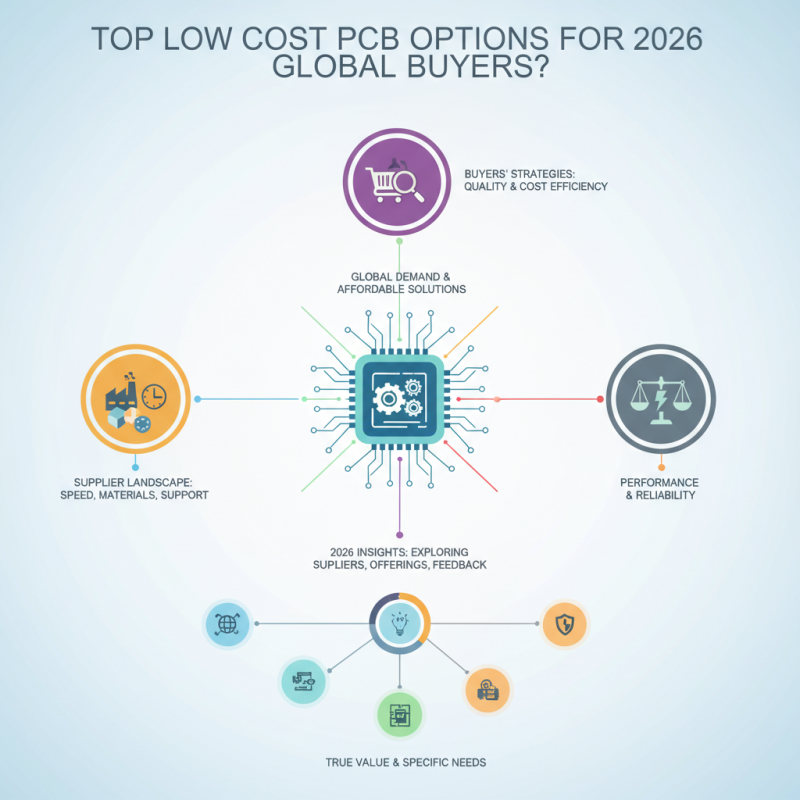
As the global demand for electronics continues to rise, the quest for affordable solutions grows more urgent. Low cost PCB options have become central to many buyers' strategies. Sourcing circuit boards that balance quality and cost efficiency is crucial for both startups and established companies.
Navigating the diverse landscape of low cost PCB suppliers can be overwhelming. Factors like production speed, materials, and customer support play a significant role in choosing a provider. It's not just about price; performance and reliability must not be overlooked.
For 2026, buyers need practical insights into where to find the best low cost PCB options. Exploring various suppliers, their offerings, and customer feedback can paint a clearer picture. The challenge lies in discerning which options deliver true value and meet specific needs. As technology evolves, so do the possibilities and pitfalls of sourcing low cost PCBs.
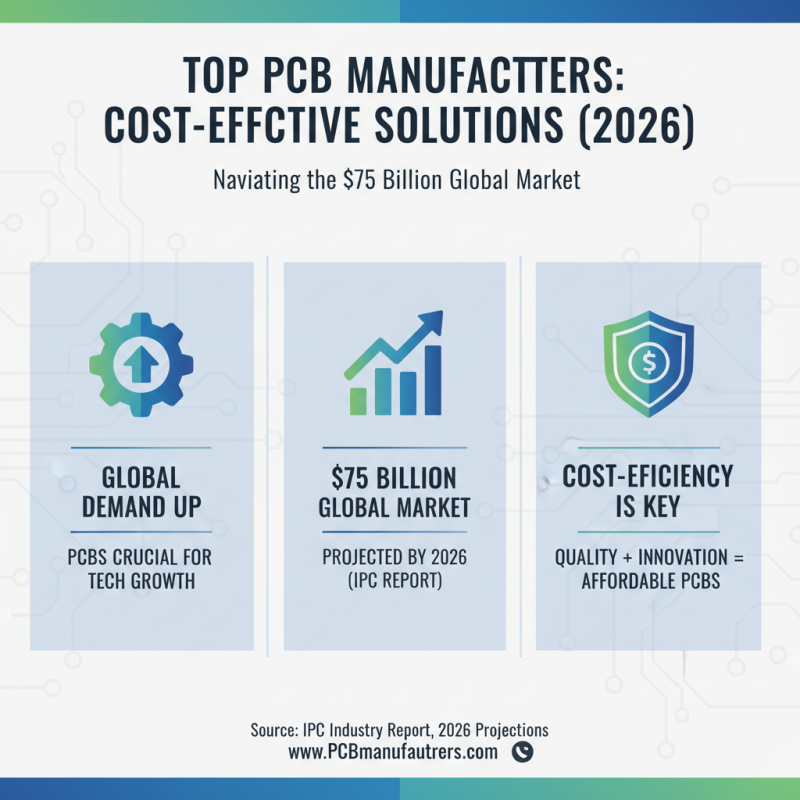
As global demand for printed circuit boards (PCBs) continues to rise, cost-efficiency becomes paramount. According to a recent industry report from IPC, the global PCB market is projected to reach $75 billion by 2026. This growth drives manufacturers to adopt innovative solutions that keep costs low while ensuring quality.
Many PCB manufacturers are embracing automation and advanced materials to enhance production efficiency. Low-cost options, such as flexible PCBs and rigid-flex designs, are gaining traction. Flexible PCBs can lead to reduced assembly costs and weight. Reports indicate that these designs can lower manufacturing costs by approximately 30%. Nevertheless, ensuring their reliability in various applications remains a key challenge that requires ongoing research and innovation.
Additionally, the rise in outsourcing PCB production to regions with lower labor costs amplifies competitive pricing. However, this can sometimes compromise quality. It's essential for buyers to assess manufacturers' reliability. Selecting suppliers based on their track record and adherence to international quality standards can mitigate risks. The balance between cost and quality remains delicate, necessitating careful consideration by global buyers.
When exploring low-cost PCB materials for 2026, it’s crucial to analyze various options through a comparative lens. Different materials offer unique properties and benefits. For instance, FR-4 is widely used due to its balance of cost and performance. It is suitable for many applications but may not perform well under extreme conditions. Another option is Rogers materials, which provide better thermal management but can be pricier.
In addition to performance, the sourcing and environmental impact of PCB materials are significant. Some materials are easier to recycle, while others contribute to landfill waste. As global buyers shift towards sustainability, choosing eco-friendly materials can influence market positions. However, these sustainable options often come with a higher price tag.
This raises questions: Is the cost worth the environmental benefit? Buyers need to carefully assess their priorities and the long-term implications of their choices in PCB materials. Balancing cost, reliability, and ecological impact is increasingly complex in a competitive market.
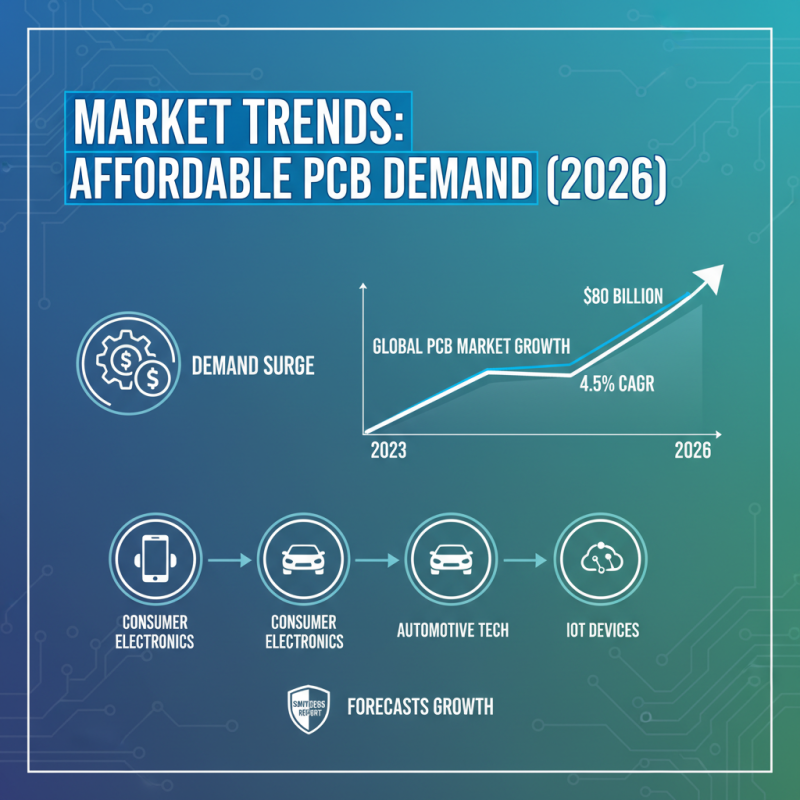
The demand for affordable printed circuit boards (PCBs) is surging as electronics evolve. Market analysts forecast a dramatic rise in the electronics sector by 2026. This growth is driven by consumer electronics, automotive technology, and IoT devices. A report from Smithers reveals that the global PCB market could reach $80 billion, reflecting a 4.5% CAGR.
Cost-effective PCBs have become essential. Many manufacturers are exploring economies of scale to reduce production costs. The use of advanced materials in low-cost PCB production is a priority. This shift can increase durability without significantly raising prices. The challenge lies in balancing quality and affordability. Reports indicate that up to 30% of production might involve compromises in material spec to meet price points.
Optimizing supply chains is vital for managing costs. However, delays and material shortages can hinder progress. Companies must adapt quickly to fluctuating component prices. The ability to scale production is crucial. Emerging markets are also becoming significant players. High demand in Asia is pushing many companies to rethink their logistics. Understanding regional market trends may provide insights into future opportunities.
As global demand for low-cost printed circuit boards (PCBs) rises, sourcing regions are evolving. A key geography is Southeast Asia. Countries like Vietnam and Thailand have emerged as significant players. They offer affordability and skilled labor, attracting manufacturers. Local factories are increasing production capabilities. However, quality control remains a concern for some buyers.
Eastern Europe is another noteworthy area. Nations such as Poland provide competitive pricing and geographical advantages for Western Europe. This region balances cost and speed. Yet, language barriers can complicate communication. Buyers may find it challenging to navigate local regulations.
China continues to dominate the PCB market. Its vast infrastructure supports large-scale production. Costs are often lower than in other regions. However, maintaining quality can be tricky. Many companies face issues with counterfeit components. Buyers need to conduct thorough research to avoid potential pitfalls. These regions highlight the landscape for sourcing low-cost PCBs in 2026.
In a rapidly evolving market, cost reduction in PCB production is vital for buyers. Exploring low-cost options requires understanding different manufacturing processes. Buyers can consider strategies like bulk purchasing and material optimization. Partnering with reliable suppliers also enhances efficiency and reduces overall costs.
Quality control cannot be overlooked. Striking a balance between cost and quality is essential. Sometimes, cheaper materials may result in higher failure rates. This inconsistency can affect product performance and customer satisfaction. Reflecting on past experiences can help refine these choices.
Investing in advanced technologies is another approach. Automation can improve precision and reduce labor costs. However, these technologies may require a higher initial investment. Assessing long-term benefits versus short-term costs is crucial for decision-making. Continuous evaluation of supply chain efficiency is necessary for sustained savings.
| PCB Type | Material Cost (USD) | Manufacturing Cost (USD) | Lead Time (Days) | Notes |
|---|---|---|---|---|
| Standard FR-4 | $0.50 | $1.00 | 7 | Popular choice for most applications |
| High-TG FR-4 | $0.70 | $1.20 | 10 | Suitable for high-temperature applications |
| Flexible PCB | $1.00 | $1.50 | 14 | Ideal for compact designs |
| Metal Core PCB | $1.20 | $1.80 | 12 | Excellent thermal management |
| HDI PCB | $1.50 | $2.20 | 15 | High density interconnections |




„Thanks to the LUVIR technology, the solder resist process could be switched directly from the previously used mask exposure to direct exposure. As an outstanding digital solution on the market, this technology has been able to demonstrate fast process times and superior quality on our certified conventional ink in production. This allowed us to fully digitize the solder mask process at low cost – without process or ink adjustments. An excellent benefit to our production in Rot am See.“
Ralf Göhringer (Head of Production WE Rot am See)
I would definitely recommend the Limata machine and team for a future company purchase
Michael Greenaway
Compunetics Inc.
“The Limata ldi has been amazing!! Best thing we did was buy this machine”
Richard Brady
GM
Circuitlabs
“Since 2019, we have been running the Limata X1000 LDI system (including LUVIR for solder mask imaging) in daily production as an addition to our current process with film. The machine was capable of properly exposing Taiyo PSR-4000 BN (DI) solder mask types on normal to high-copper boards using a new and unique direct imaging process. The machine operating interface is very user friendly which allowed for a quick technical training curve. The pre-registration processing reduced several seconds of production time at every print. Limata support and service staff is incomparable. They supported our team every step of the way at basically any time of the day or night, with literally, an immediate response time, customizing the software interface to best fit our Operations and needs.
We have exposed more than 8,000 prints since end of October, on various solder mask colors and some resist film panels. Limata, has proven to be very capable and innovative. They are a strong contender in the industry.
We have very much enjoyed this project, and working with the team!
Thank you Limata for the continued support and being a part of our growth.”
Bill Sezate
Vice President, GM
Summit Interconnect
As a replacement to our current contact exposure process with film, the LIMATA X2000 system including LUVIR-Technology was capable of properly exposing non-LDI solder mask types using a direct imaging process. The machine offers cutting edge software with a very intuitive operating interface which allowed for quick technician training curve. The dual drawer system combined with pre-registration processing reduced several seconds of production time at every machine cycle. Limata support and service staff is world class. They added software patches to keep production running at shortest possible response times, customized the software interface to best fit our in-house Operations system, and even wrote a step-by-step machine processing manual. As a result of the project, we have exposed more than 16,000 times on various product types and solder mask brands/colors. Limata, in a very short timeframe as a company, has definitely shown they are truly innovative and will be challenging the industry of direct imaging for the top spot.
Kevin Beattie
Process Engineer
TTM Technologies
Forest Grove Division
