In the manufacturing industry, the efficient use of Masterbatch Fillers is essential for product performance. A recent study indicates that using the right filler can reduce material costs by up to 20%. Companies are focusing on optimizing filler content to improve mechanical properties and processing efficiency. Understanding how to effectively integrate Masterbatch Fillers is crucial for achieving desired outcomes.
Many manufacturers overlook the significance of filler selection. Not all fillers are suitable for every application, leading to potential quality issues. For instance, the wrong type can result in compromised strength or flexibility. According to industry experts, using fillers that align with polymer matrices enhances the overall quality of composites.
Challenges persist in achieving optimal performance with Masterbatch Fillers. Some companies may not fully exploit their potential benefits, leading to inconsistencies. Evaluating the interplay between fillers and other components is a complex task. Manufacturers should prioritize research and testing to identify best practices for using Masterbatch Fillers. This focused approach can unlock significant advancements in manufacturing efficiency and product quality.
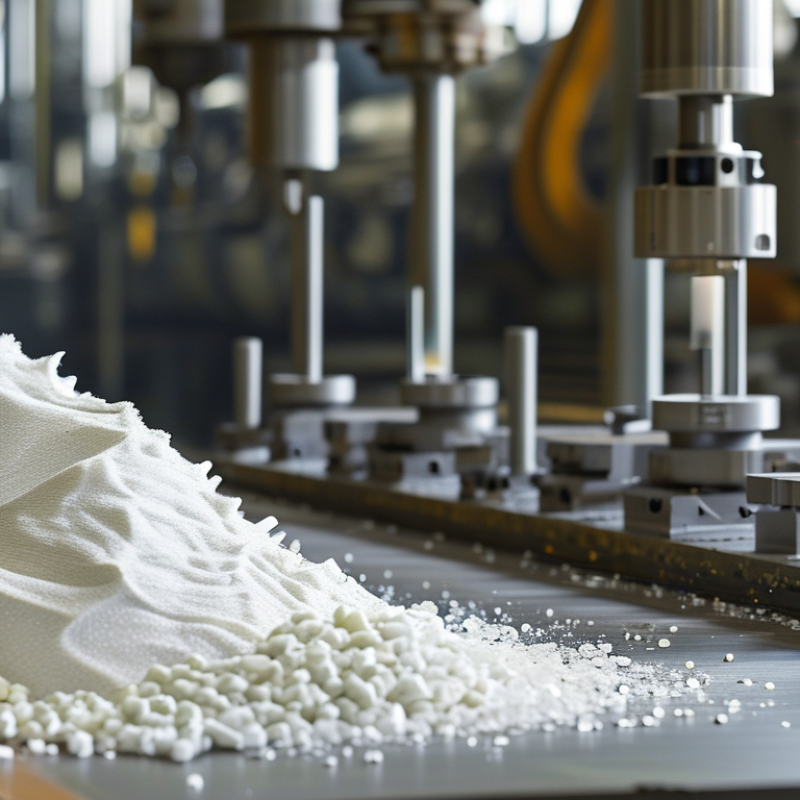
Masterbatch fillers play a crucial role in manufacturing processes. They enhance the properties of polymers, leading to improved performance and cost efficiency. According to industry reports, masterbatch fillers can reduce production costs by up to 30%. These fillers are often composed of materials like calcium carbonate, talc, or clay, which provide better stiffness and opacity.
Understanding the impact of different fillers is vital. For example, while using talc can increase strength, it may compromise flexibility. This trade-off requires careful consideration. In some applications, overfilling can lead to poor dispersion and uneven quality. Reports indicate that many manufacturers struggle with optimizing filler concentrations, sometimes leading to losses in process efficiency.
Manufacturers must also acknowledge the evolving regulations on additives and fillers. Compliance is non-negotiable. Staying informed about these standards can avoid costly penalties. As markets shift, mastering the art of fill ratios and material compatibility is essential for sustained success in the competitive landscape.
Masterbatch fillers play a crucial role in various manufacturing processes. They enhance performance and cost-effectiveness, making them essential in the plastics industry. Common types of masterbatch fillers include calcium carbonate, talc, and clay. Each filler has unique properties that cater to different applications.
Calcium carbonate is widely used due to its low cost and availability. It can improve the mechanical properties of plastics. However, overloading with calcium carbonate may weaken versatility.
Talc is another popular option, known for its strength and rigidity, especially in automotive components. It offers good processing stability, but excessive use can lead to challenges in compatibility with certain polymers.
Additionally, clay fillers are used to enhance barrier properties in packaging. According to recent industry reports, incorporating fillers can reduce production costs by 20% without sacrificing quality. However, careful consideration is needed when selecting fillers to ensure they provide the desired performance. Balancing filler type and concentration is key to optimal results.
When considering masterbatch fillers, several key factors influence their performance in manufacturing. The particle size of additives plays a crucial role. Smaller particles typically disperse better, enhancing the uniformity in the final product. However, if the particles are too fine, they may agglomerate, leading to inconsistencies. Careful balance is essential for achieving optimal performance.
Another important factor is the compatibility of fillers with polymers. Different materials interact uniquely. For example, a filler that works well with one type of polymer may not suit another. This mismatch can lead to weak mechanical properties or discoloration in the final product. Therefore, understanding the chemical nature of the fillers and the base polymer is vital.
Formulation also needs a thoughtful approach. It's not just about adding more fillers to improve properties. Excessive filler use can weaken the product or alter its physical characteristics undesirably. Continuous testing and adjustments are necessary. Manufacturers should always observe how different concentrations affect performance. This ongoing process can reveal valuable insights, leading to continuous improvement and innovation in product design.
When selecting the right masterbatch filler, it's crucial to consider various factors that affect manufacturing performance. Masterbatch fillers can enhance mechanical properties, reduce costs, and improve processing efficiency. According to a recent industry report by MarketsandMarkets, the global masterbatch market is expected to reach $16.2 billion by 2025, highlighting the importance of selecting the right materials.
One key aspect to consider is the compatibility of the filler with the base resin. For instance, using a calcium carbonate filler may not yield optimal results when paired with polyethylene. A study from Smithers Pira indicates that improper filler selection can lead to a 20% decrease in tensile strength. Choosing additives that align with specific resin types can mitigate risks and enhance performance.
Additionally, evaluating the particle size and distribution of fillers is important. Finer particles may provide better dispersion, but can also lead to processing challenges. A balance is necessary; overly fine fillers can cause issues with flow properties. In practice, manufacturers often overlook the long-term effects of filler choice. Regular testing and adjustments based on production feedback are essential for achieving desired results in the final product.
Masterbatch fillers are pivotal in enhancing efficiency and quality during the manufacturing process. They improve the performance of raw materials and reduce costs. According to a report by MarketsandMarkets, the masterbatch market is projected to reach USD 18.86 billion by 2025, highlighting a growing trend in optimization strategies among manufacturers.
To maximize the benefits of masterbatch fillers, understanding their properties is crucial. For instance, choosing the right type of filler can significantly affect the final product's quality. One tip is to conduct trials with different filler formulations in small batches first. This minimizes waste and allows for adjustments before scaling up production. Moreover, ensuring uniform dispersion of fillers in the polymer matrix can enhance product consistency.
Consider the typical processing temperatures while selecting fillers. Adjusting the machine settings for specific fillers can lead to better outcomes. Another tip is to engage with suppliers who provide technical support during the production process. Their expertise can help identify potential issues early on. Pay attention to the consistency of your masterbatch, as variations can impact your final product unexpectedly. Small deviations can lead to significant quality concerns, making close monitoring essential.
„Thanks to the LUVIR technology, the solder resist process could be switched directly from the previously used mask exposure to direct exposure. As an outstanding digital solution on the market, this technology has been able to demonstrate fast process times and superior quality on our certified conventional ink in production. This allowed us to fully digitize the solder mask process at low cost – without process or ink adjustments. An excellent benefit to our production in Rot am See.“
Ralf Göhringer (Head of Production WE Rot am See)
I would definitely recommend the Limata machine and team for a future company purchase
Michael Greenaway
Compunetics Inc.
“The Limata ldi has been amazing!! Best thing we did was buy this machine”
Richard Brady
GM
Circuitlabs
“Since 2019, we have been running the Limata X1000 LDI system (including LUVIR for solder mask imaging) in daily production as an addition to our current process with film. The machine was capable of properly exposing Taiyo PSR-4000 BN (DI) solder mask types on normal to high-copper boards using a new and unique direct imaging process. The machine operating interface is very user friendly which allowed for a quick technical training curve. The pre-registration processing reduced several seconds of production time at every print. Limata support and service staff is incomparable. They supported our team every step of the way at basically any time of the day or night, with literally, an immediate response time, customizing the software interface to best fit our Operations and needs.
We have exposed more than 8,000 prints since end of October, on various solder mask colors and some resist film panels. Limata, has proven to be very capable and innovative. They are a strong contender in the industry.
We have very much enjoyed this project, and working with the team!
Thank you Limata for the continued support and being a part of our growth.”
Bill Sezate
Vice President, GM
Summit Interconnect
As a replacement to our current contact exposure process with film, the LIMATA X2000 system including LUVIR-Technology was capable of properly exposing non-LDI solder mask types using a direct imaging process. The machine offers cutting edge software with a very intuitive operating interface which allowed for quick technician training curve. The dual drawer system combined with pre-registration processing reduced several seconds of production time at every machine cycle. Limata support and service staff is world class. They added software patches to keep production running at shortest possible response times, customized the software interface to best fit our in-house Operations system, and even wrote a step-by-step machine processing manual. As a result of the project, we have exposed more than 16,000 times on various product types and solder mask brands/colors. Limata, in a very short timeframe as a company, has definitely shown they are truly innovative and will be challenging the industry of direct imaging for the top spot.
Kevin Beattie
Process Engineer
TTM Technologies
Forest Grove Division
