TPU Films Enter a New Phase of Surface Engineering
The global thermoplastic polyurethane (TPU) industry is experiencing sustained growth, driven by increasing demand for lightweight, flexible, and high-performance materials across automotive, medical, electronics, and packaging applications.
According to recent market analysis, the global TPU market is projected to grow from USD 2.5 billion in 2026 to USD 3.9 billion by 2033, with a CAGR of 6.8%, reflecting strong expansion in advanced elastomer applications.
Similarly, the TPU films segment is also expected to expand steadily, reaching USD 716.8 million by 2033, driven by automotive and protective film applications. (Source from Grand View Research Thermoplastic Polyurethane (TPU) Market 2026 - 2033)
In this context, surface quality—especially matte appearance and tactile performance—has become a key differentiator in TPU product design.
Industry trends indicate that TPU is no longer used solely for its mechanical performance but is increasingly evolving toward a deeper integration of aesthetics and functionality. Recent industry discussions point to several clear directions, including growing demand for matte TPU surfaces in consumer products, rising preference for soft-touch and skin-like material experiences, increased interest in TPU films with reduced gloss and more consistent surface texture, and the expanding adoption of TPU in wearables and protective films driven by durability and flexibility requirements (Source: Reddit A Fresh Wave of TPU Colors — More Ways to Design, More Ways to Flex).
At the same time, feedback from manufacturing communities highlights persistent limitations in standard TPU materials, such as overly glossy surfaces, inconsistent tactile performance, and difficulty achieving true matte finishes without the use of functional additives (Source: Reddit Matte TPU recommendations). These challenges are accelerating the demand for dedicated surface modification solutions that can simultaneously balance appearance, touch perception, and processing stability.
Matt Effect Masterbatch 3235 is a polyether TPU-based functional additive designed for TPU surface modification, developed to enhance both aesthetic and tactile properties in TPU films and molded products.
It enables manufacturers to achieve a matte surface finish without compromising mechanical performance or processing stability.
Key features include:
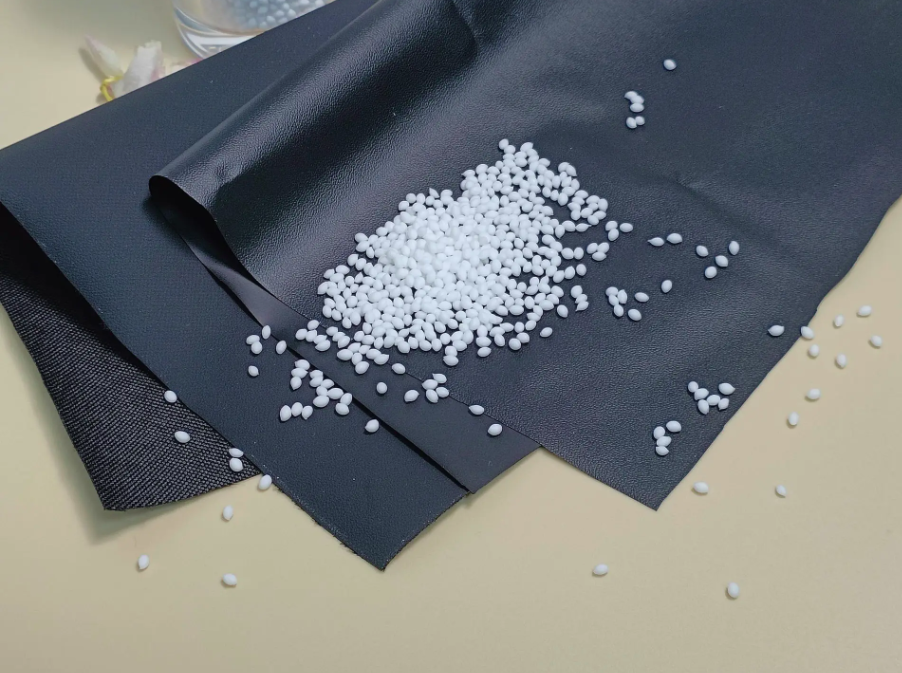
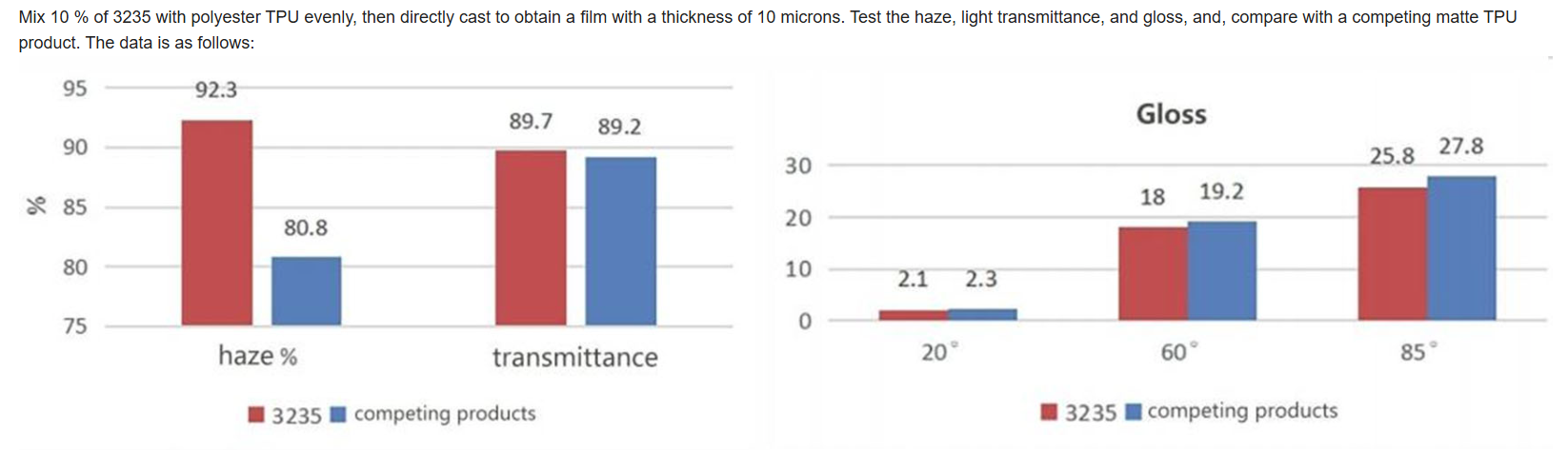
3235 enables uniform matte appearance by modifying surface light scattering behavior in TPU films and molded parts.
This addresses a common industry challenge where TPU surfaces tend to appear overly glossy under standard processing conditions.
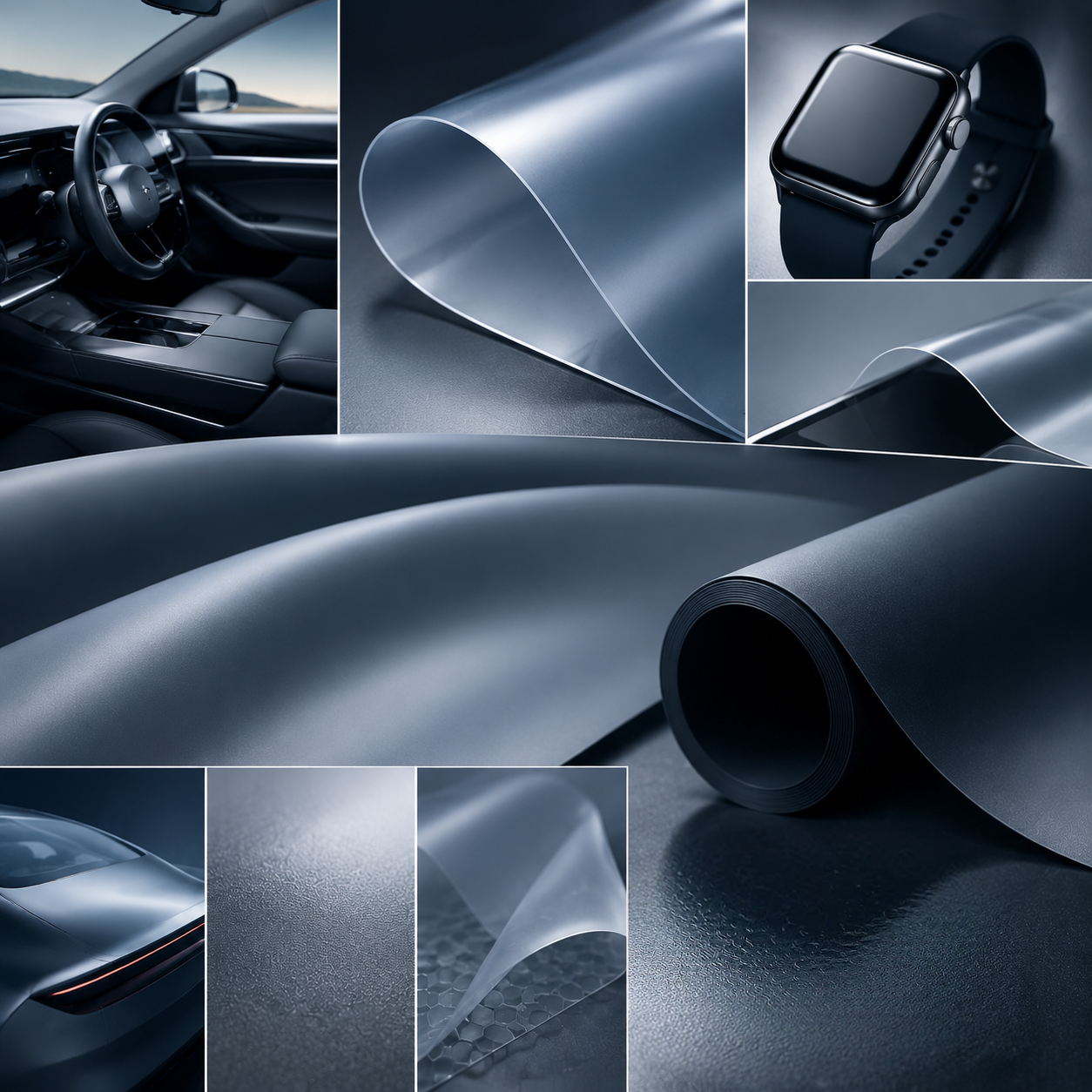
The expansion of TPU films in automotive interiors, protective films, and wearable devices is accelerating globally. According to industry forecasts from Grand View Research (Thermoplastic Polyurethane (TPU) Market 2026–2033), the automotive sector remains the largest application segment, accounting for over 25% of global TPU film demand, driven by lightweight design trends and the increasing need for scratch-resistant, durable surfaces. At the same time, TPU films are gaining wider adoption in EV interior components, protective coatings, flexible electronics, and medical-grade film applications, where both surface aesthetics and tactile performance are becoming increasingly critical design parameters.
However, community and industry feedback—including discussions among TPU users and manufacturers on Reddit (A true matte finish TPU or TPE?)—highlights persistent challenges such as difficulty achieving true matte surfaces, overly glossy finishes in standard TPU grades, and trade-offs between softness, mechanical strength, and processing stability in thin-film applications. Against this backdrop, Matt Effect Masterbatch 3235 offers a balanced solution that integrates enhanced surface aesthetics, soft-touch performance, and stable processing behavior. As TPU continues to evolve from a purely functional polymer into a design-driven engineering material, manufacturers are under increasing pressure to simultaneously optimize mechanical performance, visual appearance, tactile experience, and production efficiency. In this context, 3235 provides a scalable and practical pathway to achieve these requirements without modifying the base TPU formulation.
Matt Effect Masterbatch 3235 represents a new generation of TPU modification technology, aligned with the global shift toward high-performance, visually refined, and consumer-oriented flexible materials.
Supported by strong TPU market growth and increasing demand for matte, soft-touch surfaces, it offers manufacturers a practical and scalable solution for next-generation TPU applications.
SILIKE Silicone Materials Team
Website: https://www.si-tpv.com/
Email: sale@reytechmachine.com
Inquiry: Available via official website contact form
„Thanks to the LUVIR technology, the solder resist process could be switched directly from the previously used mask exposure to direct exposure. As an outstanding digital solution on the market, this technology has been able to demonstrate fast process times and superior quality on our certified conventional ink in production. This allowed us to fully digitize the solder mask process at low cost – without process or ink adjustments. An excellent benefit to our production in Rot am See.“
Ralf Göhringer (Head of Production WE Rot am See)
I would definitely recommend the Limata machine and team for a future company purchase
Michael Greenaway
Compunetics Inc.
“The Limata ldi has been amazing!! Best thing we did was buy this machine”
Richard Brady
GM
Circuitlabs
“Since 2019, we have been running the Limata X1000 LDI system (including LUVIR for solder mask imaging) in daily production as an addition to our current process with film. The machine was capable of properly exposing Taiyo PSR-4000 BN (DI) solder mask types on normal to high-copper boards using a new and unique direct imaging process. The machine operating interface is very user friendly which allowed for a quick technical training curve. The pre-registration processing reduced several seconds of production time at every print. Limata support and service staff is incomparable. They supported our team every step of the way at basically any time of the day or night, with literally, an immediate response time, customizing the software interface to best fit our Operations and needs.
We have exposed more than 8,000 prints since end of October, on various solder mask colors and some resist film panels. Limata, has proven to be very capable and innovative. They are a strong contender in the industry.
We have very much enjoyed this project, and working with the team!
Thank you Limata for the continued support and being a part of our growth.”
Bill Sezate
Vice President, GM
Summit Interconnect
As a replacement to our current contact exposure process with film, the LIMATA X2000 system including LUVIR-Technology was capable of properly exposing non-LDI solder mask types using a direct imaging process. The machine offers cutting edge software with a very intuitive operating interface which allowed for quick technician training curve. The dual drawer system combined with pre-registration processing reduced several seconds of production time at every machine cycle. Limata support and service staff is world class. They added software patches to keep production running at shortest possible response times, customized the software interface to best fit our in-house Operations system, and even wrote a step-by-step machine processing manual. As a result of the project, we have exposed more than 16,000 times on various product types and solder mask brands/colors. Limata, in a very short timeframe as a company, has definitely shown they are truly innovative and will be challenging the industry of direct imaging for the top spot.
Kevin Beattie
Process Engineer
TTM Technologies
Forest Grove Division
