The "Aeration Process In Wastewater Treatment" plays a crucial role in maintaining water quality. This process helps to introduce oxygen into wastewater, facilitating the breakdown of pollutants. However, optimizing aeration can be a complex task. Many treatment plants struggle with efficiency and cost-effectiveness in their aeration methods.
Understanding the specific needs of a wastewater treatment facility is vital. Factors such as influent characteristics, operational conditions, and energy consumption must be taken into account. Implementing advanced aeration technologies can lead to better outcomes. These technologies not only improve oxygen transfer rates but also enhance overall system performance.
Despite the advancements, challenges remain. Some plants experience issues with excessive foaming or poor mixing. These problems can hinder the effectiveness of the aeration process. Therefore, ongoing evaluation and adjustment of strategies are necessary. By continually refining the aeration process, facilities can achieve better treatment results and ensure environmental compliance.
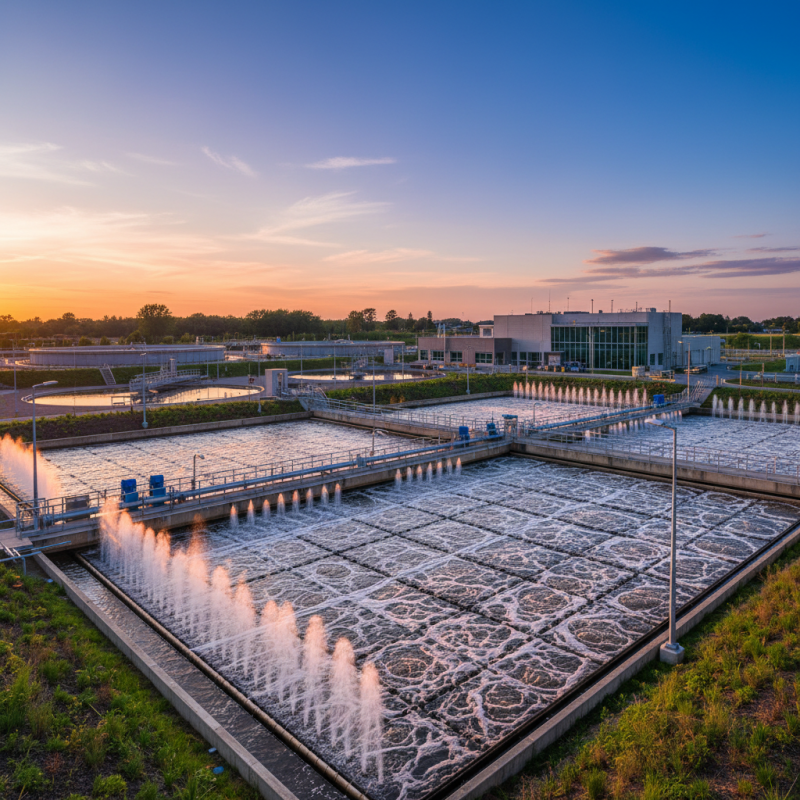
Aeration is a crucial component in the wastewater treatment process. It helps in the biological breakdown of organic matter. According to the Water Environment Federation, effective aeration systems can improve treatment efficiency by up to 30%. Understanding the aeration process can lead to better optimization strategies.
Proper aeration ensures that microorganisms receive enough oxygen for oxidation. This is vital for breaking down wastewater. However, many facilities struggle with energy efficiency. Reports indicate that aeration can account for over 60% of the energy used in wastewater treatment. This highlights the need for optimization.
Tips: Regularly monitor dissolved oxygen levels. Adjusting aeration rates based on real-time data can enhance efficiency. Consider using fine bubble diffusers, which can provide more uniform aeration and reduce energy consumption.
It's important to note that not all aeration systems work the same way. Some may require frequent maintenance or face limitations. Facilities must evaluate their unique conditions and challenges. Reflecting on these issues can help in developing more effective aeration strategies. Continuous improvement is key in the quest for optimized performance.
Aeration is crucial in wastewater treatment. Its efficiency is influenced by several key factors. Understanding these factors can lead to improved processes and better water quality.
One major factor is the aeration method used. Different methods, like diffused air or mechanical aerators, have unique efficiencies. Choosing the right method based on your facility’s size and type of wastewater is essential. Each method has pros and cons that can affect operational costs and energy use.
Image Placeholder
Another important element is the mixing intensity. Proper mixing ensures that oxygen is evenly distributed throughout the tank. Insufficient mixing can lead to dead zones where bacteria cannot thrive. It's vital to monitor the mixing to enhance aeration efficiency.
Also, consider the temperature and pH of the wastewater. They significantly impact the microbial activity and overall treatment effectiveness. These factors require constant evaluation and adjustment, making aeration a complex process.
Aeration is critical in wastewater treatment. Innovative technologies play a vital role in enhancing this process. One promising method is the use of fine bubble aeration systems. These systems produce small bubbles that increase oxygen transfer efficiency. This not only boosts microbial activity but also reduces energy consumption. Fine bubbles provide a larger surface area for oxygen to dissolve into the water.
Another revolutionary approach includes the implementation of membrane aerated biofilm reactors (MABR). These systems utilize membrane technology to supply oxygen directly to biofilms. They significantly enhance treatment efficiency. MABR systems also minimize energy requirements, making them eco-friendly. However, they do require careful monitoring to maintain optimal performance.
Despite these advancements, challenges persist. Technology adoption can be costly and complex. Some facilities may struggle with maintenance issues. Proper training for staff is essential to mitigate risks. Continuous research is necessary to refine these technologies and make them more accessible to a broader range of wastewater treatment plants.
| Technology | Efficiency (%) | Cost ($/m³) | Maintenance Frequency (months) | Notes |
|---|---|---|---|---|
| Diffused Aeration | 85 | 0.15 | 12 | Commonly used, good energy efficiency |
| Mechanical Aeration | 75 | 0.20 | 6 | Higher maintenance, but effective for larger plants |
| Aerated Lagoons | 65 | 0.10 | 24 | Low cost, but land-intensive |
| Fine Bubble Aeration | 90 | 0.18 | 18 | High oxygen transfer efficiency |
| LIFT® Technology | 95 | 0.25 | 36 | Innovative and efficient but more costly |
Effective aeration is crucial in wastewater treatment. Implementing robust monitoring and control systems can significantly enhance this process. By utilizing real-time data, facilities can adjust aeration rates based on the actual needs of the microorganisms in the treatment system. Such adaptability can lead to improved treatment outcomes and reduced energy consumption.
Integrating advanced sensors can provide valuable insights. These sensors can measure dissolved oxygen levels, temperature, and other key parameters. However, relying solely on technology can be misleading. Abnormal readings or sensor malfunctions can occur, impacting aeration efficiency. Staff should regularly check sensor calibration and system performance to mitigate these issues.
Data analytics can also play a vital role. Analyzing trends helps identify patterns in aeration demands. Yet, interpreting this data requires expertise and ongoing training. Staff might misinterpret data without proper knowledge. Continuous learning initiatives can enhance staff skills and improve the effectiveness of the aeration process. Balancing technology with human insight is essential for achieving optimal results in wastewater treatment.
Evaluating the performance of aeration processes in wastewater treatment is crucial. Various metrics can be employed to analyze efficiency. One common metric is oxygen transfer efficiency (OTE). This measures how effectively oxygen is transferred from the air to the water. High OTE values indicate better aeration performance. Regular monitoring can reveal issues, like blockages or poor mixing.
Another important metric is the specific aeration energy (SAE). This reflects the energy consumed per unit of oxygen transferred. A lower SAE signifies a more efficient aeration system. Comparing SAE against historical data helps identify trends and inefficiencies. Operators should recognize that energy consumption may fluctuate with changing conditions.
Biosolids removal rate also serves as a key performance indicator. This metric assesses the effectiveness of the aeration process in breaking down organic matter. Decreased biosolids levels often correlate with improved treatment efficiency. However, variations in influent quality can impact these results. Therefore, continuous evaluation is essential. This ensures wastewater treatment works optimally and meets regulatory standards.
„Thanks to the LUVIR technology, the solder resist process could be switched directly from the previously used mask exposure to direct exposure. As an outstanding digital solution on the market, this technology has been able to demonstrate fast process times and superior quality on our certified conventional ink in production. This allowed us to fully digitize the solder mask process at low cost – without process or ink adjustments. An excellent benefit to our production in Rot am See.“
Ralf Göhringer (Head of Production WE Rot am See)
I would definitely recommend the Limata machine and team for a future company purchase
Michael Greenaway
Compunetics Inc.
“The Limata ldi has been amazing!! Best thing we did was buy this machine”
Richard Brady
GM
Circuitlabs
“Since 2019, we have been running the Limata X1000 LDI system (including LUVIR for solder mask imaging) in daily production as an addition to our current process with film. The machine was capable of properly exposing Taiyo PSR-4000 BN (DI) solder mask types on normal to high-copper boards using a new and unique direct imaging process. The machine operating interface is very user friendly which allowed for a quick technical training curve. The pre-registration processing reduced several seconds of production time at every print. Limata support and service staff is incomparable. They supported our team every step of the way at basically any time of the day or night, with literally, an immediate response time, customizing the software interface to best fit our Operations and needs.
We have exposed more than 8,000 prints since end of October, on various solder mask colors and some resist film panels. Limata, has proven to be very capable and innovative. They are a strong contender in the industry.
We have very much enjoyed this project, and working with the team!
Thank you Limata for the continued support and being a part of our growth.”
Bill Sezate
Vice President, GM
Summit Interconnect
As a replacement to our current contact exposure process with film, the LIMATA X2000 system including LUVIR-Technology was capable of properly exposing non-LDI solder mask types using a direct imaging process. The machine offers cutting edge software with a very intuitive operating interface which allowed for quick technician training curve. The dual drawer system combined with pre-registration processing reduced several seconds of production time at every machine cycle. Limata support and service staff is world class. They added software patches to keep production running at shortest possible response times, customized the software interface to best fit our in-house Operations system, and even wrote a step-by-step machine processing manual. As a result of the project, we have exposed more than 16,000 times on various product types and solder mask brands/colors. Limata, in a very short timeframe as a company, has definitely shown they are truly innovative and will be challenging the industry of direct imaging for the top spot.
Kevin Beattie
Process Engineer
TTM Technologies
Forest Grove Division
