Photovoltaic connectors play a crucial role in solar energy systems. They link solar panels to inverters or batteries. With the rise in renewable energy, understanding these connectors is vital.
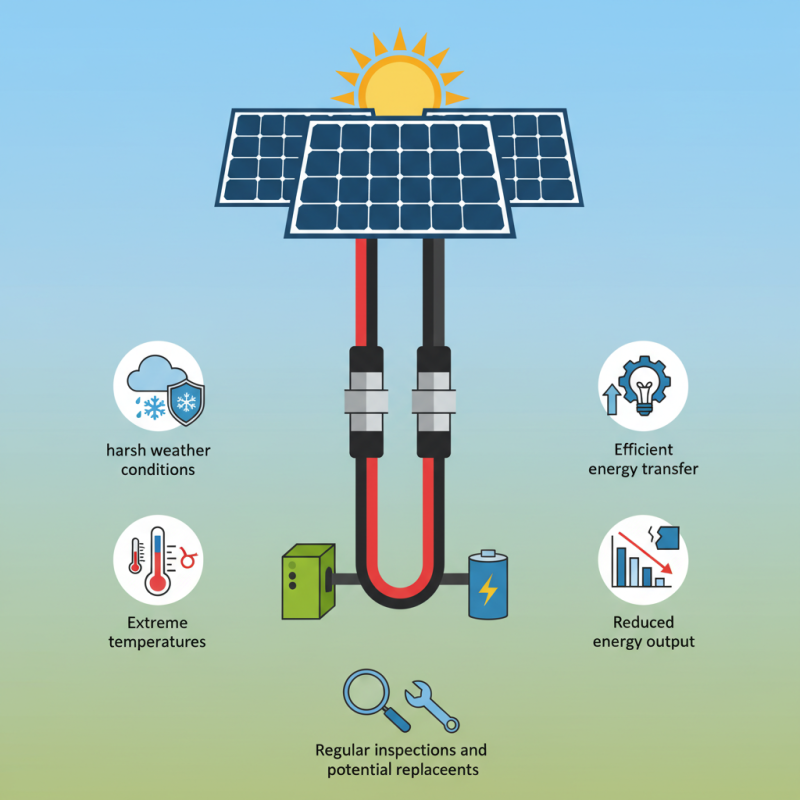
These components are designed to ensure safe and efficient energy transfer. They must withstand harsh weather conditions. However, not all connectors perform equally. Some may fail under pressure or extreme temperatures.
The importance of quality cannot be understated. Faulty connectors can lead to reduced energy output. This aspect requires careful consideration, especially for large solar setups. Users should appreciate the need for regular inspections and potential replacements. In the journey of harnessing solar power, photovoltaic connectors hold significant weight. Their reliability can make or break an installation's success.
Photovoltaic connectors are crucial in solar energy systems. They link solar panels to inverters, allowing energy to flow seamlessly. These connectors are designed for easy installation and secure connections. Their compact size makes them suitable for various applications, from residential rooftops to large solar farms.
Understanding their function is essential for anyone involved in solar technology. Photovoltaic connectors typically feature a male and female end, ensuring a snug fit. They are often weather-resistant, designed to withstand harsh conditions. However, improper installation may lead to inefficiencies or failures. It’s vital to follow guidance during setup.
Challenges can arise in choosing the right type of connector. Not all connectors are created equal. Some may not endure extreme temperatures or moisture. Users might overlook this, thinking all connectors perform similarly. This could result in poor performance over time. A little research can help avoid such pitfalls and ensure a reliable solar setup.
| Parameter | Details |
|---|---|
| Connector Type | MC4 |
| Material | UV-resistant polymer |
| Rated Current | 30A |
| Rated Voltage | 1000V DC |
| Temperature Range | -40°C to +90°C |
| Ingress Protection | IP67 |
| Compatibility | Compatible with standard PV cables |
| Connection Method | Plug and play (snap-in) |
| Applications | Solar panels, Inverters, Off-grid systems |
Photovoltaic connectors play a vital role in solar energy systems. These connectors facilitate the safe and efficient transfer of electricity from solar panels to inverters and other components. A key component of these connectors is the housing, which ensures durability and protection against environmental elements. These housings are generally made from high-quality materials resistant to UV rays and extreme temperatures.
Another essential part is the contact pin. The pin is responsible for the electrical connection, transferring current with minimal resistance. Industry reports indicate that connectors can lose up to 5% of their efficiency due to improper contact. The sealing mechanism also requires attention. Poor sealing can lead to water ingress, which risks short circuits. Data shows that around 10% of photovoltaic system failures are linked to connector issues.
Proper assembly and installation significantly influence the lifespan of photovoltaic connectors. Discrepancies in installation practices have led to increased maintenance costs, reflecting a pressing issue for installers. Many systems fail after just a few years because of connector-related problems. Continuous education and training for technicians could improve this situation. Emphasizing best practices might enhance overall system reliability and performance.
Photovoltaic connectors play a crucial role in solar energy systems. They ensure reliable electrical connections between various components, such as panels and inverters. These connectors need to withstand harsh environmental conditions. They must resist moisture, dust, and temperature fluctuations. According to a report by the Solar Energy Industries Association, quality connectors can enhance system durability and performance.
Effective connectors contribute to overall system efficiency. A study indicated that faulty connections could lead to significant energy losses—up to 5% of total production. This loss amplifies over time, affecting overall energy yield. Further, improper installation can create hotspots, which may damage solar panels.
Moreover, the market for photovoltaic connectors is growing rapidly. The global market is expected to reach over $2 billion by 2025. As solar adoption increases, so does the demand for high-quality connectors. However, not all installations prioritize connector quality, which can result in failures. Consistent education and improved standards are essential for long-term success in the solar industry.
Proper installation and maintenance of photovoltaic connectors are crucial for the efficiency of solar energy systems. A study from the National Renewable Energy Laboratory indicates that up to 20% of losses in solar power output can be traced back to poor connections. Incorrect installation can lead to hot spots, which may damage panels and decrease lifespan. Ensure that all connectors are compatible and secure to avoid issues.
Regular maintenance is essential. Inspect connectors every six months. Look for signs of wear, corrosion, or dirt buildup. A clean connection can improve performance. In data from Solar Power World, it was noted that regularly maintained systems can yield 15% more energy over their lifespan compared to neglected ones. When cleaning, use a dry cloth and avoid abrasive materials.
Consider the weather conditions in your area. Extreme temperatures can cause connectors to expand and contract, leading to loosening. Document the condition of your connectors after each check. This can help identify patterns over time. By taking these steps, you can enhance the longevity and performance of your solar energy system.
When working with photovoltaic connectors, safety is paramount. These connectors are vital for ensuring the efficient performance of solar energy systems. However, improper handling can lead to significant hazards. According to a report by the National Renewable Energy Laboratory, nearly 20% of solar panel failures are attributed to issues with connectors. This statistic highlights the importance of understanding the proper use of these components.
Humidity and dust can create electrical hazards when working with PV connectors. Professionals should always ensure that connectors are dry and clean before installation. The American Society for Testing and Materials recommends regular inspections to prevent corrosion or loose connections. Disconnecting power before handling connectors is crucial. Many accidents occur because individuals forget this step in their processes, risking electrical shock.
Proper training is also essential. Workers should be educated on the specific challenges that connectors face. A study suggests that workers with specialized training are 40% less likely to experience electrical accidents. This illustrates the impact of education on safety in the field. Engaging in ongoing training can foster a culture of safety and awareness.
„Thanks to the LUVIR technology, the solder resist process could be switched directly from the previously used mask exposure to direct exposure. As an outstanding digital solution on the market, this technology has been able to demonstrate fast process times and superior quality on our certified conventional ink in production. This allowed us to fully digitize the solder mask process at low cost – without process or ink adjustments. An excellent benefit to our production in Rot am See.“
Ralf Göhringer (Head of Production WE Rot am See)
I would definitely recommend the Limata machine and team for a future company purchase
Michael Greenaway
Compunetics Inc.
“The Limata ldi has been amazing!! Best thing we did was buy this machine”
Richard Brady
GM
Circuitlabs
“Since 2019, we have been running the Limata X1000 LDI system (including LUVIR for solder mask imaging) in daily production as an addition to our current process with film. The machine was capable of properly exposing Taiyo PSR-4000 BN (DI) solder mask types on normal to high-copper boards using a new and unique direct imaging process. The machine operating interface is very user friendly which allowed for a quick technical training curve. The pre-registration processing reduced several seconds of production time at every print. Limata support and service staff is incomparable. They supported our team every step of the way at basically any time of the day or night, with literally, an immediate response time, customizing the software interface to best fit our Operations and needs.
We have exposed more than 8,000 prints since end of October, on various solder mask colors and some resist film panels. Limata, has proven to be very capable and innovative. They are a strong contender in the industry.
We have very much enjoyed this project, and working with the team!
Thank you Limata for the continued support and being a part of our growth.”
Bill Sezate
Vice President, GM
Summit Interconnect
As a replacement to our current contact exposure process with film, the LIMATA X2000 system including LUVIR-Technology was capable of properly exposing non-LDI solder mask types using a direct imaging process. The machine offers cutting edge software with a very intuitive operating interface which allowed for quick technician training curve. The dual drawer system combined with pre-registration processing reduced several seconds of production time at every machine cycle. Limata support and service staff is world class. They added software patches to keep production running at shortest possible response times, customized the software interface to best fit our in-house Operations system, and even wrote a step-by-step machine processing manual. As a result of the project, we have exposed more than 16,000 times on various product types and solder mask brands/colors. Limata, in a very short timeframe as a company, has definitely shown they are truly innovative and will be challenging the industry of direct imaging for the top spot.
Kevin Beattie
Process Engineer
TTM Technologies
Forest Grove Division
