In today's globalized world, communication barriers often hinder meaningful interactions. Introducing "Real-time smart translation glasses," a revolutionary technology designed to break down these barriers. These innovative devices utilize advanced algorithms and augmented reality to provide instant translations of spoken language. As travel and business become more interconnected, the need for seamless communication grows.
Real-time smart translation glasses offer users the ability to engage with others effortlessly. By simply wearing these glasses, users can understand foreign languages without missing a beat. Imagine participating in a conversation in a café in Paris or negotiating a deal in Tokyo, all while feeling confident in comprehension. However, the effectiveness of these devices can vary. Users might encounter challenges related to dialect differences or background noise. This raises questions about their reliability in complex situations.
Despite these imperfections, the potential of real-time smart translation glasses is immense. They represent a step towards a more inclusive world where language barriers do not isolate individuals. As technology continues to evolve, the dream of universal communication comes closer to reality. Yet, it urges reflection on how human connection is deeply rooted in the subtleties of language that may be lost in translation.
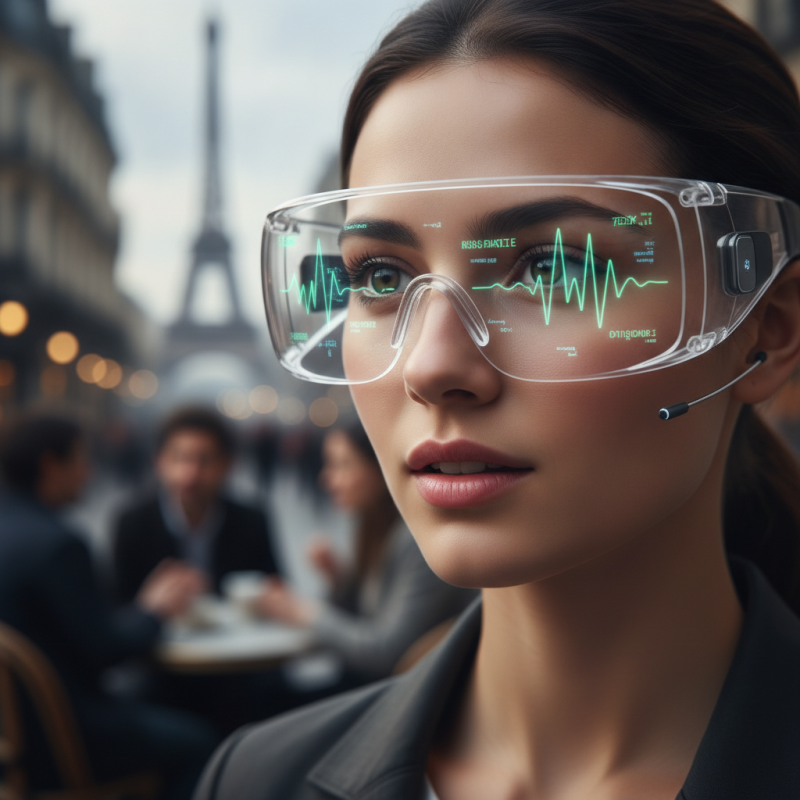
Real-time smart translation glasses represent a significant leap in language technology. They integrate augmented reality with advanced language processing. The glasses can display translated text directly in the user’s field of vision. This helps bridge language barriers effectively in real-world situations. Key features include voice recognition, real-time translation, and hands-free use. According to recent market research, the demand for such technology is expected to grow, with a projected compound annual growth rate (CAGR) of 30% over the next five years.
These glasses often utilize artificial intelligence and machine learning algorithms to improve translation accuracy. Users can expect support for multiple languages and jargon-specific translations. The glasses incorporate a small projector that overlays translated text onto the objects in sight. Despite their innovative design, some challenges remain. Users might struggle with battery life and connectivity issues. Adjusting to wearing glasses while interacting is an evolving experience.
Tips: It’s essential to explore user reviews before making a purchase. This can provide insights into practical use cases and common concerns. Additionally, regular software updates can enhance performance. Staying informed about technological trends can help users maximize their experience with smart translation glasses.
Real-time smart translation glasses leverage advanced technologies to bridge language barriers. These innovative devices incorporate augmented reality (AR), voice recognition, and machine translation to deliver seamless communication. A report from Market Research Future indicates that the global AR market is expected to reach $198 billion by 2025. This growth underscores the demand for AR solutions, including smart translation eyewear.
The key technology behind these glasses involves natural language processing (NLP) and optical character recognition (OCR). NLP enables the system to interpret and translate spoken or written language. OCR helps in capturing text from the environment. According to a study by Statista, 54% of global users desire instant translation. This illustrates the urgency for tools that can provide real-time translations in various languages.
Despite the optimistic projections, challenges remain. Accuracy can be inconsistent, especially with idiomatic expressions or nuanced phrases. The technology may struggle with background noise or poor lighting conditions. Reflecting on these limitations, it's vital to consider user experience and context. Further advancements in AI and machine learning are required to enhance the reliability of translation accuracy in everyday situations.
The smart translation glasses market is witnessing significant growth. As the world becomes more interconnected, the demand for real-time language translation is increasing. Users seek innovative solutions to bridge communication gaps. Market research indicates that the smart glasses segment is expected to grow at an impressive rate over the next few years. This aligns with the rising need for accessibility in multilingual interactions.
Tips: When considering smart translation glasses, evaluate ease of use. Look for models that offer intuitive controls. This ensures seamless interaction during conversations. Also, consider battery life. Glasses with longer battery duration can support extended usage without interruptions.
Growth statistics reveal that consumer interest in smart translation glasses is on the rise. More individuals and businesses recognize their potential to enhance communication. Educational institutions are also exploring these devices for language learning. However, challenges remain. Users might experience occasional translation errors or connectivity issues. Continuous improvements in technology are necessary for reliability.
Real-time smart translation glasses are revolutionizing how we communicate across languages. These innovative devices provide instant translations of spoken words and text. Users can enjoy the convenience of reading translations directly in their line of sight. Several models are now available, each with unique features and varying levels of accuracy.
When comparing popular smart translation glasses, consider factors like battery life, translation speed, and user interface. Some options may offer superior voice recognition, while others excel in clarity and design. Battery life can significantly impact usage during travel or long meetings. Look for models that allow easy customization to fit your personal preferences.
Tips: Always test out the device before purchasing. Get familiar with its features to optimize your experience. It's also essential to watch tutorial videos for a comprehensive understanding. Furthermore, remember that no device is perfect. Be patient with glitches and limitations. Understanding these aspects will help set realistic expectations while using smart translation glasses.
Smart translation glasses are revolutionizing communication across various industries. These wearable devices instantly translate spoken language into text displayed within the user's view. The technology leverages advanced algorithms and real-time data processing to create seamless interactions, catering to a globalized workforce.
In healthcare, for example, these glasses facilitate patient-doctor conversations in diverse linguistic contexts. Doctors can provide better care when they understand a patient’s history without language barriers. In the travel industry, tourists can navigate foreign environments more confidently. They can read signs, menus, and instructions translated directly in their line of sight. It enhances their experience but may lead to over-reliance on technology for basic communication skills.
However, the technology isn't flawless. Environmental factors and accents can pose challenges. Misinterpretations aren't uncommon, and users sometimes encounter delays in translation, causing awkward moments. This raises questions about the balance between technological assistance and personal interaction. As industries embrace smart translation glasses, they must consider these intricacies to optimize their effectiveness.
„Thanks to the LUVIR technology, the solder resist process could be switched directly from the previously used mask exposure to direct exposure. As an outstanding digital solution on the market, this technology has been able to demonstrate fast process times and superior quality on our certified conventional ink in production. This allowed us to fully digitize the solder mask process at low cost – without process or ink adjustments. An excellent benefit to our production in Rot am See.“
Ralf Göhringer (Head of Production WE Rot am See)
I would definitely recommend the Limata machine and team for a future company purchase
Michael Greenaway
Compunetics Inc.
“The Limata ldi has been amazing!! Best thing we did was buy this machine”
Richard Brady
GM
Circuitlabs
“Since 2019, we have been running the Limata X1000 LDI system (including LUVIR for solder mask imaging) in daily production as an addition to our current process with film. The machine was capable of properly exposing Taiyo PSR-4000 BN (DI) solder mask types on normal to high-copper boards using a new and unique direct imaging process. The machine operating interface is very user friendly which allowed for a quick technical training curve. The pre-registration processing reduced several seconds of production time at every print. Limata support and service staff is incomparable. They supported our team every step of the way at basically any time of the day or night, with literally, an immediate response time, customizing the software interface to best fit our Operations and needs.
We have exposed more than 8,000 prints since end of October, on various solder mask colors and some resist film panels. Limata, has proven to be very capable and innovative. They are a strong contender in the industry.
We have very much enjoyed this project, and working with the team!
Thank you Limata for the continued support and being a part of our growth.”
Bill Sezate
Vice President, GM
Summit Interconnect
As a replacement to our current contact exposure process with film, the LIMATA X2000 system including LUVIR-Technology was capable of properly exposing non-LDI solder mask types using a direct imaging process. The machine offers cutting edge software with a very intuitive operating interface which allowed for quick technician training curve. The dual drawer system combined with pre-registration processing reduced several seconds of production time at every machine cycle. Limata support and service staff is world class. They added software patches to keep production running at shortest possible response times, customized the software interface to best fit our in-house Operations system, and even wrote a step-by-step machine processing manual. As a result of the project, we have exposed more than 16,000 times on various product types and solder mask brands/colors. Limata, in a very short timeframe as a company, has definitely shown they are truly innovative and will be challenging the industry of direct imaging for the top spot.
Kevin Beattie
Process Engineer
TTM Technologies
Forest Grove Division
