Aluminum Alloy Powder is becoming increasingly important in various industries, including aerospace, automotive, and 3D printing. According to a recent market analysis, the global aluminum powder market is expected to reach $1.2 billion by 2026, driven by rising demand in these sectors. However, sourcing high-quality aluminum alloy powder can be challenging.
Dr. Emily Tran, an expert in materials science, states, "The quality of aluminum alloy powder directly impacts the performance of the final product." This emphasis on quality is paramount in applications where durability and strength are critical. It is crucial to consider factors such as particle size, shape, and purity when sourcing this powder.
Despite the advancements in production technology, inconsistencies remain. Variability in sourcing can lead to unsatisfactory results in end products. Addressing these challenges requires thorough research and expertise. Companies must navigate supplier options carefully to ensure they obtain the best materials for their production needs.
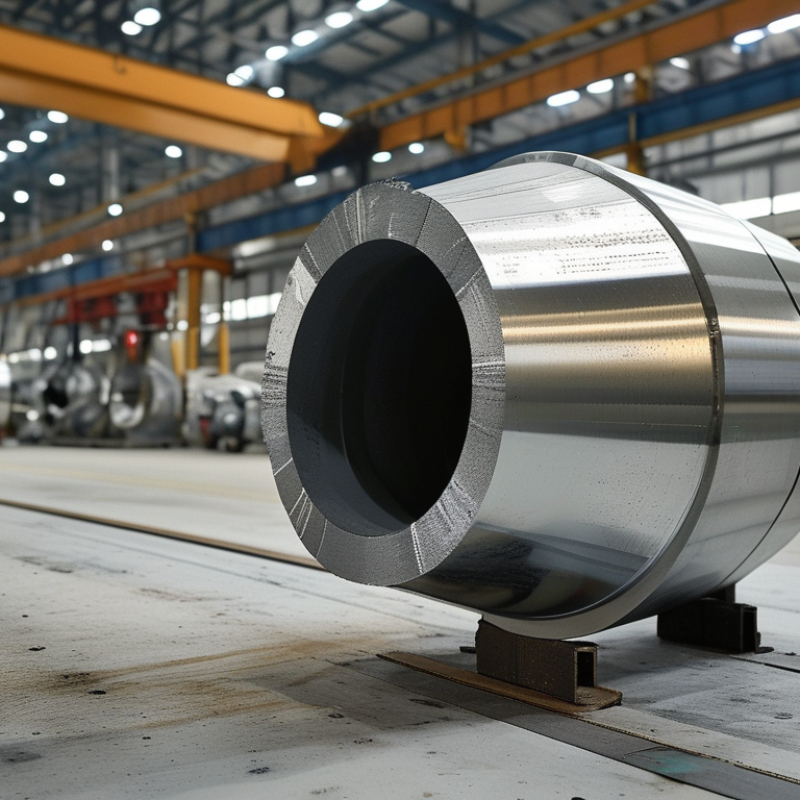
Aluminum alloy powder is a fine particulate form of aluminum mixed with other elements. This powder is widely used in various industries, including automotive, aerospace, and 3D printing. Its lightweight properties and excellent corrosion resistance make it ideal for applications requiring strong yet lightweight materials.
In automotive manufacturing, aluminum alloy powders are utilized to create components that reduce vehicle weight. This, in turn, enhances fuel efficiency. Aerospace engineers also favor this powder because it can withstand extreme conditions while keeping structures lightweight. Additionally, in 3D printing, aluminum alloy powder allows for intricate designs that would be difficult to achieve with traditional methods.
Consider these tips when sourcing aluminum alloy powder. Quality matters. Look for suppliers who can provide certifications of their products. Testing samples from different sources can help identify the best fit for your needs. Be aware that not all powders are created equal; impurities can affect performance. Always question the reliability of your supplier and their production techniques. Understanding these details leads to better application outcomes.
| Property | Value | Application |
|---|---|---|
| Particle Size | < 100 µm | Additive Manufacturing |
| Chemical Composition | Aluminum, Silicon, Magnesium | Automotive Parts |
| Density | 2.7 g/cm³ | Aerospace Components |
| Melting Point | 660 °C | Casting |
| Flowability | Excellent | Powder Coating |
| Purity | > 99% | Electronics |
| Packaging | Sealed Bags | Industrial Use |
When sourcing high quality aluminum alloy powder, understanding key properties and quality indicators is essential. The powder's particle size and distribution significantly affect its performance. Fine particles often enhance flowability, while a uniform distribution ensures consistency in applications. Look for materials with a specific surface area ideal for your intended use.
Purity is another critical factor. High-grade aluminum alloy powder should have minimal contaminants. Regularly check for levels of iron, silicon, and oxides. A low level of impurities indicates high quality and better performance in metallurgical processes. Different alloys possess varying qualities; therefore, it is vital to choose an alloy that fits specific project requirements.
When assessing suppliers, ask for certificates of analysis. These documents provide detailed composition information and confirm purity levels. Quality control processes are also essential for maintaining consistency. Suppliers with robust testing protocols are often more reliable. Monitor your chosen supplier's background to ensure they maintain high standards.
When sourcing high-quality aluminum alloy powder, several methods prove effective. Understanding the specific alloy's characteristics is crucial. Different applications demand unique properties from the powder. For example, some industries require improved flowability while others prioritize particle size and distribution.
Networking with industry professionals offers valuable insights. Attending trade shows and conferences can help you connect with suppliers. Engaging in discussions allows you to learn about the latest advancements. Furthermore, online forums can provide feedback on different suppliers’ reputations and product quality. Researching their certifications can help ensure they meet industry standards.
Evaluating suppliers is essential for quality assurance. Requesting samples enables you to assess the powder's performance in your application. Conducting thorough tests on these samples is advisable. Look for inconsistencies in particle size or unexpected impurities. Discrepancies in quality can lead to significant issues in production processes. Keeping an open line of communication with suppliers can also reveal their willingness to address concerns.
When sourcing high-quality aluminum alloy powder, several factors significantly influence the final product's quality. The purity of raw materials is critical. For instance, impurities can affect the powder's properties, leading to inadequate performance in applications. Selecting high-purity aluminum can mitigate this issue. The production process must be scrutinized as well. Techniques like gas atomization generally yield finer powders, enhancing flowability and sinterability.
Another important aspect is the powder's particle size distribution. A narrow size range typically ensures uniformity in performance, crucial for applications requiring precision. However, achieving the desired particle size can be challenging. Manufacturers may need to invest in advanced screening and classification methods. Quality testing is equally paramount. Regular assessments using techniques such as scanning electron microscopy can help identify flaws or inconsistencies in the powder.
Storage conditions play a pivotal role too. Aluminum alloy powder absorbs moisture, which can lead to clumping or oxidation over time. It is essential to keep powders in a controlled environment to maintain their quality. Despite best efforts, issues may still arise, requiring ongoing evaluation and adjustment. Remain open to refining sourcing strategies as you learn from each batch's performance. Effective sourcing is an evolving process, shaped by experience and feedback.
Evaluating suppliers for aluminum alloy powder is a critical step in ensuring product quality. Start by checking the supplier's credentials. Look for industry certifications that verify their manufacturing standards. Reliable suppliers should be transparent about their quality control processes. They should also provide detailed reports on material composition and particle size distribution.
Next, consider the supplier's reputation within the industry. Customer reviews and testimonials can reveal valuable insights. Engage with current and past clients when possible. Ask about their experiences in terms of consistency and reliability. If complaints arise frequently, it may indicate potential issues.
Another aspect to examine is the supplier's ability to meet your specific requirements. Each application may demand different properties from aluminum alloy powder. Discuss your needs openly, including performance and delivery timelines. Suppliers who are willing to adapt and communicate effectively demonstrate a commitment to quality. However, it is essential to remain cautious. A polished presentation doesn't always guarantee reliability. Always seek continuous feedback and be prepared to reassess your partnerships as needed.
„Thanks to the LUVIR technology, the solder resist process could be switched directly from the previously used mask exposure to direct exposure. As an outstanding digital solution on the market, this technology has been able to demonstrate fast process times and superior quality on our certified conventional ink in production. This allowed us to fully digitize the solder mask process at low cost – without process or ink adjustments. An excellent benefit to our production in Rot am See.“
Ralf Göhringer (Head of Production WE Rot am See)
I would definitely recommend the Limata machine and team for a future company purchase
Michael Greenaway
Compunetics Inc.
“The Limata ldi has been amazing!! Best thing we did was buy this machine”
Richard Brady
GM
Circuitlabs
“Since 2019, we have been running the Limata X1000 LDI system (including LUVIR for solder mask imaging) in daily production as an addition to our current process with film. The machine was capable of properly exposing Taiyo PSR-4000 BN (DI) solder mask types on normal to high-copper boards using a new and unique direct imaging process. The machine operating interface is very user friendly which allowed for a quick technical training curve. The pre-registration processing reduced several seconds of production time at every print. Limata support and service staff is incomparable. They supported our team every step of the way at basically any time of the day or night, with literally, an immediate response time, customizing the software interface to best fit our Operations and needs.
We have exposed more than 8,000 prints since end of October, on various solder mask colors and some resist film panels. Limata, has proven to be very capable and innovative. They are a strong contender in the industry.
We have very much enjoyed this project, and working with the team!
Thank you Limata for the continued support and being a part of our growth.”
Bill Sezate
Vice President, GM
Summit Interconnect
As a replacement to our current contact exposure process with film, the LIMATA X2000 system including LUVIR-Technology was capable of properly exposing non-LDI solder mask types using a direct imaging process. The machine offers cutting edge software with a very intuitive operating interface which allowed for quick technician training curve. The dual drawer system combined with pre-registration processing reduced several seconds of production time at every machine cycle. Limata support and service staff is world class. They added software patches to keep production running at shortest possible response times, customized the software interface to best fit our in-house Operations system, and even wrote a step-by-step machine processing manual. As a result of the project, we have exposed more than 16,000 times on various product types and solder mask brands/colors. Limata, in a very short timeframe as a company, has definitely shown they are truly innovative and will be challenging the industry of direct imaging for the top spot.
Kevin Beattie
Process Engineer
TTM Technologies
Forest Grove Division
