As electric vehicles (EVs) gain popularity, the need for efficient charging solutions is paramount. One of the best options is the AC EV Charger. According to a recent report by the International Energy Agency (IEA), global EV sales doubled in 2021, highlighting the urgent demand for accessible charging infrastructure. Making an informed choice about an AC EV Charger is crucial for enhancing user experience and sustainability.
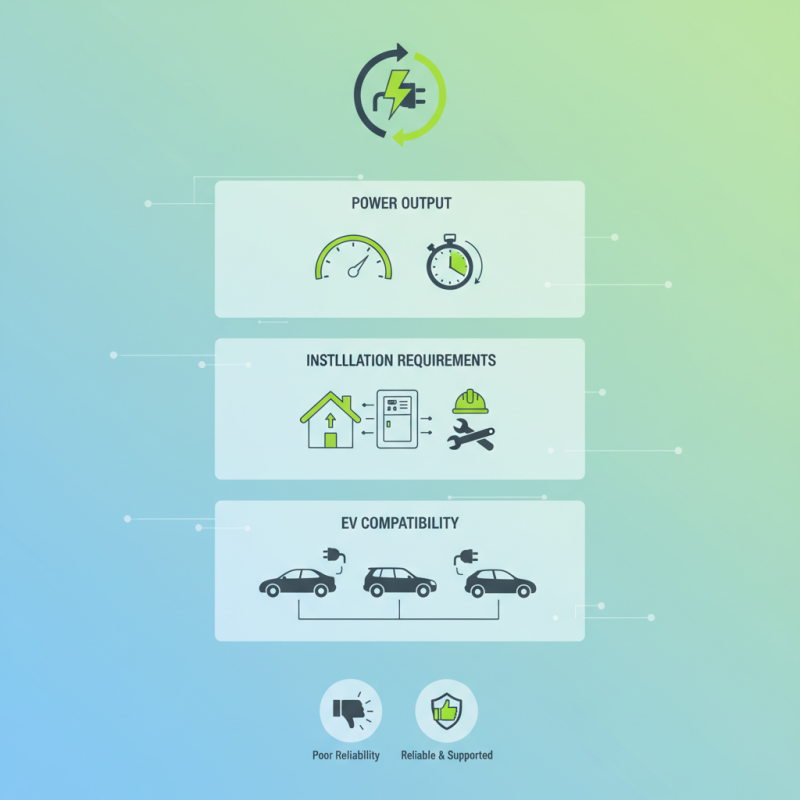
Factors to consider include power output, installation requirements, and compatibility with various EV models. Data shows that chargers with higher power outputs can significantly reduce charging times. However, the cost and complexity of installation can vary widely. Industry insights suggest that ignoring these factors could lead to frustrating experiences for users.
It is essential to recognize that not all AC EV Chargers deliver the same performance or reliability. Some models may have subpar customer reviews due to poor reliability or lack of support. Evaluating these aspects will help you find a charger that meets your expectations and aligns with future growth in EV usage.
Electric vehicle (EV) adoption is gaining momentum worldwide. A key component of this transition is the availability of AC EV chargers. According to a report from the International Energy Agency, the number of public EV chargers grew by 60% in the last year. This growth is essential for building consumer confidence and encouraging EV purchases.
AC EV chargers are vital for daily charging needs. Most EV owners prefer to charge at home or work, where AC chargers are typically installed. Studies show that around 80% of charging occurs at home. These chargers are generally more affordable and easier to install. However, the charging speed can be slower compared to DC chargers. This can be a shortcoming for drivers needing quick top-ups.
Infrastructure must improve to support widespread EV adoption. Insufficient charging stations deter potential buyers. Expanding the network of AC chargers ensures that users can charge their vehicles conveniently. However, issues such as inconsistent charger placement and varying charging speeds persist. Addressing these matters is crucial for fostering a sustainable EV ecosystem.
When selecting an AC EV charger, several key factors demand attention. Charging speed is critical. The average Level 2 AC charger delivers around 10-20 miles of range per hour. Your driving habits and vehicle range will dictate the required speed. Evaluate how quickly you need to recharge your vehicle based on daily usage.
Another essential consideration is the installation location. Indoor and outdoor settings may require different weatherproofing features. As noted in a recent industry report, approximately 30% of EV charger installations are adversely affected by environmental factors. Proper installation can mitigate these risks and enhance charger longevity.
User-friendly interfaces play a crucial role in the overall experience. A report from the Electric Vehicle Association highlighted that 45% of users prefer chargers with straightforward controls and connectivity features. These elements can significantly enhance user satisfaction. Consider ease of use and accessibility when selecting your device to ensure it meets your daily needs efficiently.
When choosing the best AC EV charger, understanding the different types is vital. Several types include Level 1 and Level 2 chargers. Level 1 chargers are convenient but slow. They use a standard 120V outlet, often taking hours for a full charge. This is fine for home use but may not meet everyone's needs.
Level 2 chargers offer faster charging solutions, operating at 240V. They are ideal for home or commercial installations. Their efficiency ratings typically exceed those of Level 1 chargers. However, they do require a dedicated circuit and installation, which can be a barrier for some users.
Consider the actual charging speed and efficiency rating. Not all chargers perform the same. Factors like quality of installation and local electrical infrastructure can influence outcomes. It's crucial to review specifications and user feedback carefully. Charging times can vary considerably depending on the charger type and vehicle. Always weigh your needs against the different options available.
| Charger Type | Power Output (kW) | Voltage (V) | Efficiency Rating (%) | Ideal Use Case |
|---|---|---|---|---|
| Level 1 Charger | 1.4 - 1.9 | 120 | 80 | Home charging |
| Level 2 Charger | 3.3 - 22 | 240 | 95 | Home & Public charging |
| Level 3 Charger (DC Fast Charger) | 50 - 350 | 480 | 98 | High-speed public charging |
| Smart Charger | 7.2 - 11.5 | 240 | 90 | Home with advanced features |
When selecting an AC EV charger, the charging speed is crucial. The kW rating determines how quickly your electric vehicle charges. Higher kW ratings mean faster charging times. For instance, a 22 kW charger can recharge a vehicle significantly quicker than a 7 kW version. This difference can save you valuable time, especially for daily commuters.
However, higher speeds come with considerations. Not all electric vehicles can handle high kW rates. Charging faster may lead to battery wear over time. Understanding your vehicle’s capacity is essential before investing in a charger. Also, evaluating your typical charging habits is key. If you mostly charge at home overnight, a slower charger may suffice.
It's essential to consider your unique situation. If your EV usage varies, think about a charger with adjustable settings. This flexibility can accommodate different needs. Ultimately, finding the right balance between speed, efficiency, and longevity should guide your decision.
When selecting an AC EV charger, understanding long-term savings is crucial. A suitable charger not only facilitates convenient charging but also reduces overall costs over time. The initial investment can seem daunting, yet it pays off through lower energy bills and maintenance costs.
Consider energy efficiency. Chargers with higher efficiency ensure that more energy is used for actual charging. This means less waste and lower electricity bills. Look for models with smart features too. They can optimize charging times based on electricity rates. This will add even more savings.
Another important aspect is installation costs. Some chargers require professional installation, which can add to upfront expenses. Check for any rebates or incentives available in your area. These can significantly lower your total expenditure. Ultimately, investing in the right charger leads to more than just immediate benefits; it creates a pathway to sustainable savings and energy independence.
„Thanks to the LUVIR technology, the solder resist process could be switched directly from the previously used mask exposure to direct exposure. As an outstanding digital solution on the market, this technology has been able to demonstrate fast process times and superior quality on our certified conventional ink in production. This allowed us to fully digitize the solder mask process at low cost – without process or ink adjustments. An excellent benefit to our production in Rot am See.“
Ralf Göhringer (Head of Production WE Rot am See)
I would definitely recommend the Limata machine and team for a future company purchase
Michael Greenaway
Compunetics Inc.
“The Limata ldi has been amazing!! Best thing we did was buy this machine”
Richard Brady
GM
Circuitlabs
“Since 2019, we have been running the Limata X1000 LDI system (including LUVIR for solder mask imaging) in daily production as an addition to our current process with film. The machine was capable of properly exposing Taiyo PSR-4000 BN (DI) solder mask types on normal to high-copper boards using a new and unique direct imaging process. The machine operating interface is very user friendly which allowed for a quick technical training curve. The pre-registration processing reduced several seconds of production time at every print. Limata support and service staff is incomparable. They supported our team every step of the way at basically any time of the day or night, with literally, an immediate response time, customizing the software interface to best fit our Operations and needs.
We have exposed more than 8,000 prints since end of October, on various solder mask colors and some resist film panels. Limata, has proven to be very capable and innovative. They are a strong contender in the industry.
We have very much enjoyed this project, and working with the team!
Thank you Limata for the continued support and being a part of our growth.”
Bill Sezate
Vice President, GM
Summit Interconnect
As a replacement to our current contact exposure process with film, the LIMATA X2000 system including LUVIR-Technology was capable of properly exposing non-LDI solder mask types using a direct imaging process. The machine offers cutting edge software with a very intuitive operating interface which allowed for quick technician training curve. The dual drawer system combined with pre-registration processing reduced several seconds of production time at every machine cycle. Limata support and service staff is world class. They added software patches to keep production running at shortest possible response times, customized the software interface to best fit our in-house Operations system, and even wrote a step-by-step machine processing manual. As a result of the project, we have exposed more than 16,000 times on various product types and solder mask brands/colors. Limata, in a very short timeframe as a company, has definitely shown they are truly innovative and will be challenging the industry of direct imaging for the top spot.
Kevin Beattie
Process Engineer
TTM Technologies
Forest Grove Division
