Choosing the right Plastic Wall Formwork can significantly impact construction projects. The right formwork systems ensure stability, efficiency, and cost-effectiveness. However, selecting the best one can be challenging due to various factors.
A good Plastic Wall Formwork should be durable and easy to handle. It must withstand heavy concrete pressures. Therefore, it is essential to consider the quality of materials used. Additionally, always assess the formwork's versatility for different project types.
Moreover, while many manufacturers claim their products are the best, it is important to research beyond marketing. User reviews and expert recommendations provide valuable insights. Sometimes, even slight adjustments in formwork choice can lead to better results. Not every product will meet your needs perfectly. It’s crucial to evaluate performance based on specific requirements.
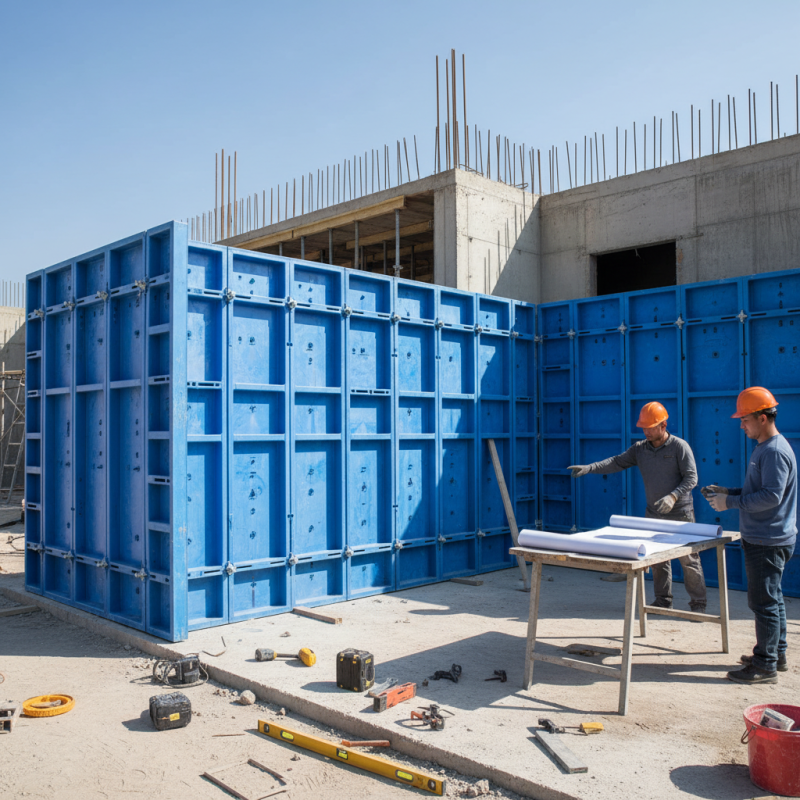
Understanding plastic wall formwork is crucial for successful construction projects. This type of formwork is lightweight, durable, and reusable. Its flexibility allows it to be molded into various shapes, catering to diverse architectural requirements. According to a recent industry report, plastic formwork can reduce construction time by up to 20%. This efficiency makes it appealing for contractors focused on project deadlines.
When choosing plastic wall formwork, consider the material's strength. Ensure it can withstand hydraulic pressure during the concrete pour. Durability under weather conditions is essential as well. Many forms are designed to last years, even with repeated use.
Tip: Evaluate your project size. For smaller projects, modular plastic systems are ideal. They can adapt easily without extensive resources.
Another critical factor is cost-effectiveness. The initial investment may be higher, but savings come from reduced labor costs and fewer repair or replacement needs. However, not all plastic formworks perform equally. Be wary of lower-priced options that compromise quality.
Tip: Research and compare different suppliers’ specifications. Quality should remain a priority, even with budget constraints.
When selecting plastic wall formwork, evaluating material durability is essential. Look for materials that endure harsh weather and substantial weight. Durability correlates with the lifespan of the formwork. Lesser-quality options may chip or crack under strain. This deterioration can lead to project delays and increased costs.
Performance standards are another critical aspect. Ensure that the formwork meets industry guidelines. This guarantees safety and efficiency on job sites. Evaluate its load-bearing capacity and resistance to chemicals. Some plastics perform well in moist environments, while others may not. Understanding these factors can save you from poor investment choices.
Practical testing also helps assess performance. Evaluate how the material reacts under stress before making a purchase. Also, consider user reviews or field reports for additional insights. Experiences shared by others can reveal hidden vulnerabilities. This reflection could help you avoid potential pitfalls in your selection process.
When evaluating plastic wall formwork options, assessing cost-effectiveness is crucial. A 2022 industry report highlighted that nearly 35% of construction budgets are spent on materials. This indicates the significant impact of formwork choices on overall project costs. Prioritizing cost-effective materials can lead to substantial savings.
One tip is to compare rental versus purchase costs. Renting plastic formwork may reduce upfront expenses, but consider long-term project timelines. If your project extends beyond a few months, purchasing could be more economical. Additionally, investigate the lifecycle of the materials. Durable formwork often yields lower replacement costs.
Beyond initial costs, analyze installation efficiency. Efficient formwork can speed up project completion, minimizing labor costs. A study revealed that projects using advanced plastic formwork reduced labor time by up to 15%. Investing in quality can enhance overall productivity. Keep in mind potential maintenance expenses too. A well-maintained system will outlast cheaper options, providing value over time.
| Tip | Description | Cost-Effectiveness (1-5) | Durability (1-5) | Ease of Use (1-5) |
|---|---|---|---|---|
| Material Selection | Choose high-quality plastic that withstands weather and wear. | 4 | 5 | 4 |
| Weight Consideration | Opt for lightweight options to reduce handling and transport costs. | 5 | 4 | 5 |
| Reusability | Consider formworks that can be reused multiple times for cost savings. | 5 | 5 | 4 |
| System Compatibility | Ensure compatibility with existing construction systems to avoid costs. | 4 | 4 | 5 |
| Vendor Support | Choose vendors that provide support and guidance throughout the project. | 4 | 4 | 5 |
When selecting plastic wall formwork, design flexibility and ease of use are critical factors. Professionals often cite that projects requiring custom shapes can benefit significantly from adaptable formwork solutions. According to industry reports, nearly 70% of construction teams prioritize flexibility in their materials. This flexibility allows for innovative designs without compromising structural integrity.
One key tip is to evaluate the system’s modularity. Modular systems can be easily adjusted to fit specific project requirements. They reduce waste and enhance project efficiency. Furthermore, consider how intuitive the assembly process is. If teams struggle with the setup, it can lead to delays. Studies show that usable formwork can cut labor times by 20%, positively impacting overall project timelines.
Checking for compatibility with existing tools is also essential. Incompatible systems can create unnecessary challenges on-site. Select a formwork type that integrates smoothly with current practices and equipment. You might avoid hidden costs by prioritizing easy-to-understand designs that attract skilled labor. A complex formwork setup can deter workers, affecting productivity.
When selecting plastic wall formwork, understanding the manufacturer's reputation is essential. Research shows that 70% of construction professionals prioritize this factor. A reliable manufacturer should have a history of quality products. Look for evidence of experience in the market. Many manufacturers offer detailed project case studies. These documents can reveal how well their products perform under various conditions.
Customer reviews offer a window into real-world performance. According to industry reports, 65% of buyers rely on reviews before making a purchase. Credible reviews highlight both strengths and weaknesses. Seek out comments addressing durability and ease of installation. If feedback consistently mentions issues, take note. Verifying the source of reviews can prevent potential pitfalls. Independent forums and trade publications often provide unbiased insights.
Ask questions in professional forums. Engaging with other industry members can yield invaluable perspectives. Many professionals share experiences about formwork failures. Reflecting on these insights can help avoid costly mistakes. Prioritizing research ensures you make informed decisions in a competitive marketplace.
„Thanks to the LUVIR technology, the solder resist process could be switched directly from the previously used mask exposure to direct exposure. As an outstanding digital solution on the market, this technology has been able to demonstrate fast process times and superior quality on our certified conventional ink in production. This allowed us to fully digitize the solder mask process at low cost – without process or ink adjustments. An excellent benefit to our production in Rot am See.“
Ralf Göhringer (Head of Production WE Rot am See)
I would definitely recommend the Limata machine and team for a future company purchase
Michael Greenaway
Compunetics Inc.
“The Limata ldi has been amazing!! Best thing we did was buy this machine”
Richard Brady
GM
Circuitlabs
“Since 2019, we have been running the Limata X1000 LDI system (including LUVIR for solder mask imaging) in daily production as an addition to our current process with film. The machine was capable of properly exposing Taiyo PSR-4000 BN (DI) solder mask types on normal to high-copper boards using a new and unique direct imaging process. The machine operating interface is very user friendly which allowed for a quick technical training curve. The pre-registration processing reduced several seconds of production time at every print. Limata support and service staff is incomparable. They supported our team every step of the way at basically any time of the day or night, with literally, an immediate response time, customizing the software interface to best fit our Operations and needs.
We have exposed more than 8,000 prints since end of October, on various solder mask colors and some resist film panels. Limata, has proven to be very capable and innovative. They are a strong contender in the industry.
We have very much enjoyed this project, and working with the team!
Thank you Limata for the continued support and being a part of our growth.”
Bill Sezate
Vice President, GM
Summit Interconnect
As a replacement to our current contact exposure process with film, the LIMATA X2000 system including LUVIR-Technology was capable of properly exposing non-LDI solder mask types using a direct imaging process. The machine offers cutting edge software with a very intuitive operating interface which allowed for quick technician training curve. The dual drawer system combined with pre-registration processing reduced several seconds of production time at every machine cycle. Limata support and service staff is world class. They added software patches to keep production running at shortest possible response times, customized the software interface to best fit our in-house Operations system, and even wrote a step-by-step machine processing manual. As a result of the project, we have exposed more than 16,000 times on various product types and solder mask brands/colors. Limata, in a very short timeframe as a company, has definitely shown they are truly innovative and will be challenging the industry of direct imaging for the top spot.
Kevin Beattie
Process Engineer
TTM Technologies
Forest Grove Division
