In the competitive world of paint manufacturing, choosing the right Paint Manufacturing Machine is crucial. Expert John Smith, a leading figure in equipment innovation, emphasizes, "The right machine can dramatically enhance productivity and quality." This insight reflects the importance of thoughtful selection in equipment.
Selecting a Paint Manufacturing Machine is not just about specifications. It's about understanding your unique production needs. Factors such as batch size, mixing speed, and material compatibility play pivotal roles. Many companies overlook these details, leading to costly mistakes. A machine that seems perfect on paper may not deliver in practice.
Consider the long-term impact of your choice. A reliable Paint Manufacturing Machine should not only meet immediate goals but also adapt to future demands. Manufacturers often ignore this dimension, focusing solely on current needs. Balancing immediate requirements with future adaptability can be challenging, yet it's essential for sustainable success.
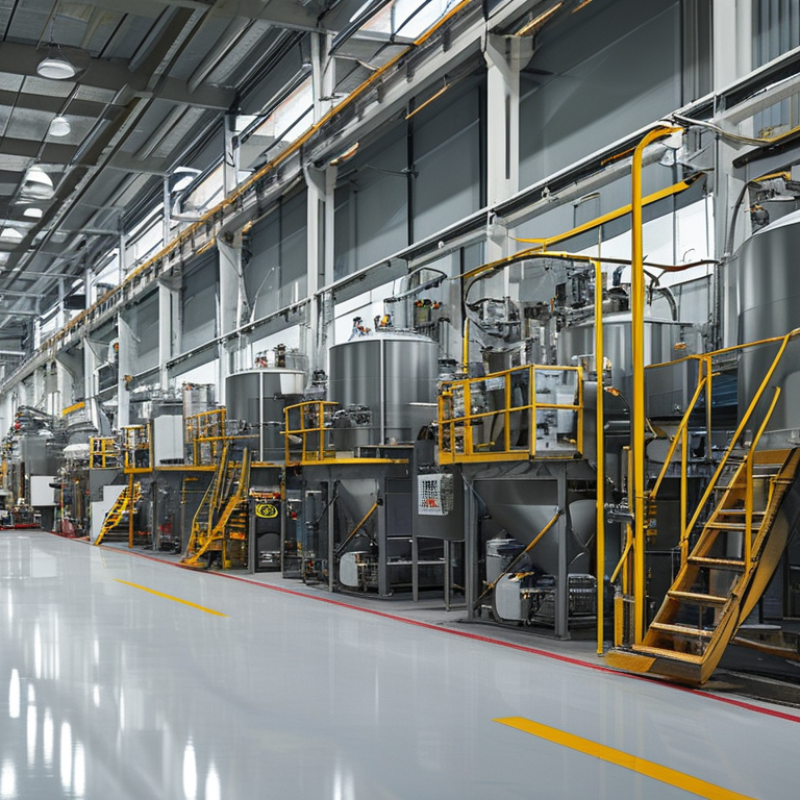
Understanding the different types of paint manufacturing machines is essential for selecting the right equipment. Each machine serves a unique purpose in the production process. Common types include dispersers, mixers, and grinders. Dispersers are vital for breaking down pigments and ensuring an even consistency. Mixers help combine various components, while grinders achieve a fine texture, crucial for high-quality paint.
When considering these machines, think about your specific needs. Capacity matters. A small workshop might not require industrial-scale machinery. Conversely, larger facilities often need high-volume solutions. It’s also important to evaluate speed and efficiency. A machine that operates quickly might increase output, but could lead to uneven mixtures if not monitored.
Watch for the drawbacks of each type. A disperser, while effective, may not handle all pigment types equally well. Mixing can introduce air bubbles if not done carefully. Grinding too fine can affect the color intensity of the final product. Each decision must consider your production goals and the characteristics of the paint you want to produce. Investing in quality machinery pays off, but be mindful of potential limitations.
When considering the production capacity of paint manufacturing machines, evaluating specific metrics is crucial. The output rate is one of the primary indicators. This rate tells you how much paint can be produced within a given timeframe. Make sure to align this metric with your operational goals. A high output rate might be tempting, but it could also lead to quality compromises if the machinery isn't suited for your specific needs.
Additionally, the scalability of the machine plays a significant role. Some machines are designed for high-volume production but may fall short in flexibility. If your business plans change or you want to diversify your product range, you’ll need a machine that can adapt to these shifts. It's essential to reflect on your expected growth and the potential need for different formulations. Sometimes, a machine may not perform as anticipated in varied conditions, highlighting potential limitations.
Moreover, consider the frequency of maintenance and repair. Machines with high production capacities may require more frequent servicing. This can lead to production downtime, affecting profitability. Understanding the long-term operational costs will better inform your decision. It’s a delicate balance between capacity and reliability that warrants thoughtful consideration. Aim to find a machine that offers both sustainable production and consistent performance.
| Machine Type | Production Capacity (Liters/Hour) | Mixing Method | Power Consumption (kW) | Cost (USD) |
|---|---|---|---|---|
| Batch Mixer | 500 | Mechanical Stirring | 15 | 25,000 |
| Continuous Mixer | 1000 | Pumping System | 25 | 50,000 |
| High-Shear Mixer | 300 | High-Speed Shearing | 10 | 30,000 |
| Planetary Mixer | 200 | Planetary Motion | 12 | 35,000 |
| Ribbon Blender | 700 | Ribbon Mixing | 20 | 45,000 |
When assessing the technology and automation features in paint manufacturing machines, it’s essential to prioritize efficiency and adaptability. Recent reports indicate that automated systems account for over 40% of the manufacturing costs in the painting industry. These systems significantly enhance production speed and consistency. Consider how the chosen machine integrates with existing tools and whether it can be upgraded as technology evolves.
Optimal machines should provide real-time monitoring. A system that detects viscosity changes during mixing can ensure uniform paint quality. According to industry analyses, paint defects can lead to a 10-15% increase in material waste. Reducing such waste should be a key consideration when evaluating equipment.
A hands-on approach could reveal potential gaps. Inspect the interface. Is it user-friendly? If operators struggle, efficiency suffers. Evaluate feedback from current users of the machines. Real-life insights can shed light on any shortcomings worth addressing. Automation that may appear cutting-edge might have drawbacks in practical settings, so thorough vetting stays crucial in this decision-making process.
When selecting a paint manufacturing machine, the importance of maintenance and support services cannot be overstated. A recent report by Markets and Markets indicated that equipment downtime can cost manufacturers an average of $20,000 to $30,000 per hour. This underlines the necessity of reliable support and prompt service.
Regular maintenance prolongs machine lifespan and ensures consistent product quality. It minimizes the risk of unexpected failures, which can disrupt production lines. Understanding the service options available can help in making informed decisions. Data from industry surveys show that over 70% of manufacturers prioritize equipment reliability as a critical factor in their purchasing decisions.
Consider the following advice: Choose machines from suppliers that offer comprehensive maintenance plans. A supplier with a strong reputation for after-sales service often indicates reliability. Inspect their service response times and the availability of spare parts. When a machine breaks down, quick access to parts is essential for minimizing downtime. Engaging with experienced professionals for maintenance can also provide your team with valuable knowledge and insights. Reflect on the historical performance of your chosen supplier; past service issues could signal future challenges.
When analyzing cost-effectiveness and budgeting for paint manufacturing equipment, it's essential to consider several crucial factors. A comprehensive understanding of your production needs will guide your choices. For instance, the type of paint you intend to manufacture may influence the machinery required. Customization options can significantly impact costs, so assess whether standard models will suffice or if you need tailored solutions.
Budgeting goes beyond just the initial purchase price. Consider operational costs, maintenance, and potential downtime. An efficient machine may have a higher upfront cost but will save on labor and energy in the long run. Evaluating the lifespan of equipment is equally important. Investing in durable machines may yield better returns over time.
Identifying the right balance between quality and cost can be tricky. Investing less upfront might lead to greater expenses later. Be prepared for unexpected expenses, and set aside a contingency fund. Assess your long-term production goals, as they will shape your decision-making process. It’s wise to consult with industry experts. Their insights can illuminate potential pitfalls and help refine your approach to budgeting effectively.
„Thanks to the LUVIR technology, the solder resist process could be switched directly from the previously used mask exposure to direct exposure. As an outstanding digital solution on the market, this technology has been able to demonstrate fast process times and superior quality on our certified conventional ink in production. This allowed us to fully digitize the solder mask process at low cost – without process or ink adjustments. An excellent benefit to our production in Rot am See.“
Ralf Göhringer (Head of Production WE Rot am See)
I would definitely recommend the Limata machine and team for a future company purchase
Michael Greenaway
Compunetics Inc.
“The Limata ldi has been amazing!! Best thing we did was buy this machine”
Richard Brady
GM
Circuitlabs
“Since 2019, we have been running the Limata X1000 LDI system (including LUVIR for solder mask imaging) in daily production as an addition to our current process with film. The machine was capable of properly exposing Taiyo PSR-4000 BN (DI) solder mask types on normal to high-copper boards using a new and unique direct imaging process. The machine operating interface is very user friendly which allowed for a quick technical training curve. The pre-registration processing reduced several seconds of production time at every print. Limata support and service staff is incomparable. They supported our team every step of the way at basically any time of the day or night, with literally, an immediate response time, customizing the software interface to best fit our Operations and needs.
We have exposed more than 8,000 prints since end of October, on various solder mask colors and some resist film panels. Limata, has proven to be very capable and innovative. They are a strong contender in the industry.
We have very much enjoyed this project, and working with the team!
Thank you Limata for the continued support and being a part of our growth.”
Bill Sezate
Vice President, GM
Summit Interconnect
As a replacement to our current contact exposure process with film, the LIMATA X2000 system including LUVIR-Technology was capable of properly exposing non-LDI solder mask types using a direct imaging process. The machine offers cutting edge software with a very intuitive operating interface which allowed for quick technician training curve. The dual drawer system combined with pre-registration processing reduced several seconds of production time at every machine cycle. Limata support and service staff is world class. They added software patches to keep production running at shortest possible response times, customized the software interface to best fit our in-house Operations system, and even wrote a step-by-step machine processing manual. As a result of the project, we have exposed more than 16,000 times on various product types and solder mask brands/colors. Limata, in a very short timeframe as a company, has definitely shown they are truly innovative and will be challenging the industry of direct imaging for the top spot.
Kevin Beattie
Process Engineer
TTM Technologies
Forest Grove Division
