Low back pain affects an estimated 619 million people worldwide, according to the World Health Organization’s 2023 fact sheet. The Global Burden of Disease Study also identifies it as a leading cause of disability. These numbers make home-based relief tools attractive, including the increasingly popular Back Stretcher.
Yet popularity is not proof. A Back Stretcher may create gentle spinal extension, reduce muscle tightness, or provide short-term comfort after sitting. Results can differ sharply between users. A rigid arch might feel supportive to one person, but painful against another person’s lower ribs. People with numbness, weakness, recent injury, osteoporosis, or diagnosed spinal conditions should seek qualified medical advice before use.
Dr. Stuart McGill, a leading spine biomechanics researcher, has warned: “The spine is not a structure that likes to be bent and twisted under load.” His observation supports careful comparison rather than exaggerated promises. The best products should be judged by adjustability, padding, stability, materials, user instructions, and realistic clinical claims.
This guide examines ten leading Back Stretchers for back pain relief. It considers how each design feels on a firm floor, how easily it fits different body shapes, and whether its instructions encourage gradual use. Evidence for passive stretching devices remains limited. That matters. Comfort can be useful, but it does not replace movement, rehabilitation, or professional diagnosis. Some rankings may remain subjective, because personal fit is difficult to measure in a living room.
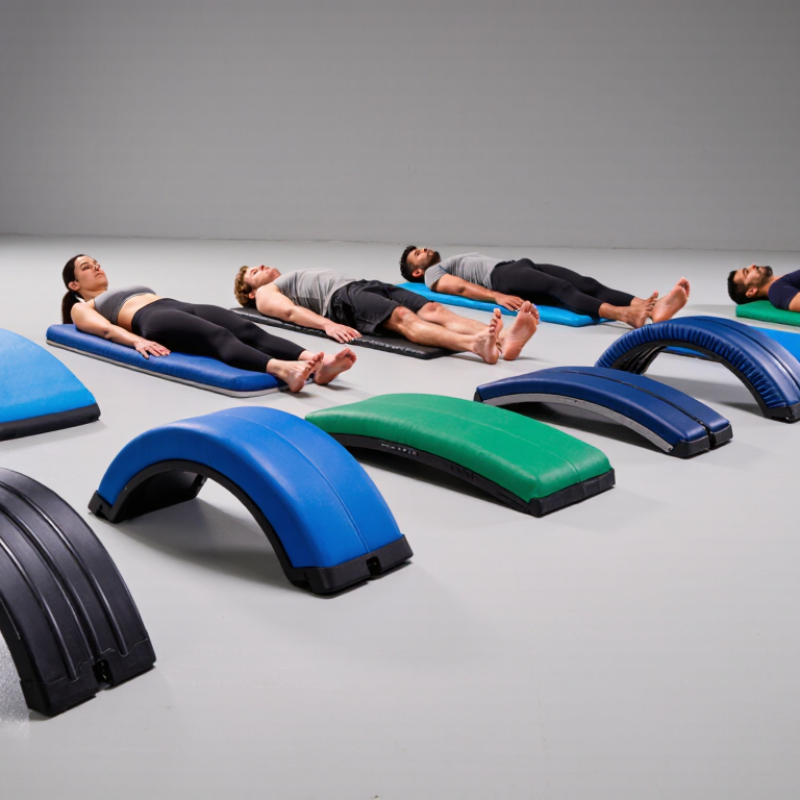
Back pain is not a niche complaint.
The World Health Organization reported that 619 million people lived with low back pain in 2020, with cases projected to reach 843 million by 2050. In 2023, WHO guidance emphasized non-surgical care, education, exercise, and appropriate self-management. This context matters when reviewing the top 10 back stretchers for back pain relief.
The ten options may include lumbar arches, foam rollers, inflatable supports, traction devices, stretching benches, and gentle mobility tools. Each creates a different type of pressure or movement. A curved stretcher can open the front of the hips, while a roller may improve comfortable movement around the spine. Neither tool should be treated as a cure. Pressure is not proof. Short sessions and slow breathing are safer starting points than forceful stretching.
Evidence generally supports exercise-based care more strongly than passive gadgets alone. A physiotherapist can help match a device to symptoms, posture, strength, and medical history. Stop if pain travels down the leg, numbness increases, or weakness appears. Seek urgent medical attention for bladder or bowel changes, saddle numbness, fever, or sudden severe pain. I have found that comfort can be misleading; a device may feel helpful today but irritate tissues later. That uncertainty deserves honest attention. The best choice is usually the tool that encourages regular, controlled movement without fear or excessive pressure.
Back stretchers aim to reduce discomfort through three related actions: spinal decompression, gentle extension, and improved mobility. Decompression slightly separates loaded spinal segments. This may reduce pressure around irritated joints or discs, although relief varies between individuals. The effect is usually temporary, not a structural correction.
Extension moves the spine backward over a curved surface. A mild arch can open the front of the hips and encourage movement after long periods of sitting. Mobility work adds controlled motion through the lower back, pelvis, and surrounding muscles. In practice, two minutes may feel helpful, while ten minutes may feel excessive. Start gently. Breathe normally. Avoid forcing the deepest position.
A sensible choice should feel stable on the floor and support the body without sharp pressure. Padding matters, especially near the ribs and tailbone. I would judge a stretcher by comfort, control, and whether symptoms settle afterward, not by dramatic intensity. More stretch is not automatically better. Stop if pain travels down the leg, numbness increases, or weakness appears. People with recent injuries, osteoporosis, unexplained pain, or diagnosed spinal conditions should seek professional guidance before use. Evidence for home traction and passive stretching remains mixed, and personal experience can be misleading. A calmer back does not always mean the underlying problem has changed.
This comparison uses a 0–10 mechanical emphasis scale based on each design’s typical ability to support spinal extension, decompression, and mobility. The scores describe intended movement principles, not proven clinical effectiveness or guaranteed pain relief.
Spinal extension moves the spine backward, decompression reduces compressive loading through positioning or traction, and mobility-focused designs encourage controlled movement. People with persistent, severe, or radiating back pain should seek guidance from a qualified healthcare professional before using these devices.
The strongest comparison begins with design, not appearance. The top ten models usually include lumbar arches, curved boards, roller systems, and gentle traction frames. Arched designs support the lower back while lying down. Roller styles add movement, but they may feel too intense for sensitive users. Foldable stretchers suit small rooms. Wider platforms often feel steadier. Small contact points can leave red marks after several minutes.
Adjustability separates a useful stretcher from a frustrating one. Look for several height settings, removable cushions, or adjustable angles. A beginner may need a shallow curve and firm support. Experienced users might prefer deeper extension. The fit should match your torso length and flexibility. One setting cannot suit everybody. My own ranking would change after repeated use, because comfort varies with body shape and daily pain levels.
Never force a painful stretch. Stop if numbness, weakness, or sharp pain appears, and seek qualified medical advice.
User support deserves equal attention. Clear setup instructions reduce misuse. Helpful diagrams matter. Responsive customer service, sensible return policies, and transparent safety guidance also build trust. Check whether the product explains weight limits and cleaning requirements. A sturdy frame is valuable, but poor instructions can undermine it. Some products look impressive online and feel unstable at home. That is an easy detail to miss. For persistent pain, a physiotherapist can help identify whether stretching is appropriate.
Back stretchers can feel helpful, but comfort is not proof of effectiveness. Physical therapy guidance, including principles reflected in APTA recommendations, generally favors active exercise, gradual loading, and individual assessment. Passive stretching may provide short-term relief, yet it should not replace walking, strengthening, or movement practice.
Use a stretcher gently. A mild pulling sensation is usually acceptable; sharp, burning, or electric pain is not. Stop if pain travels farther down the leg, numbness increases, or weakness appears. Symptoms should settle soon after the session, not worsen through the next day. Evidence for specific stretcher designs remains limited, so the “top ten” should be judged by safety, adjustability, and whether the device supports regular movement. I would not assume a dramatic stretch means better treatment.
Tips:
Avoid back stretchers without medical advice after a recent fracture, spinal surgery, serious injury, or when osteoporosis is severe. Seek prompt assessment for fever, unexplained weight loss, bowel or bladder changes, saddle numbness, or progressive leg weakness. These signs need more than home stretching. A clinician or physical therapist can screen contraindications and adapt the plan to your symptoms, work demands, and movement tolerance. Even good advice needs adjustment.
A back stretcher should be judged by fit, not dramatic curvature. Measure your torso and compare it with the device’s usable support area. Your lower ribs should feel supported, while your pelvis stays stable.
Begin with three to five minutes on a low setting. Sharp pain, numbness, or spreading leg symptoms are warning signs. Stop immediately.
FDA status also needs careful reading.
Registration or listing does not mean FDA approval, clearance, or proof of effectiveness. The FDA explains that marketing status depends on a device’s classification and intended use. Evidence for back stretchers remains uneven, and many consumer products have limited independent research.
That matters. A 2023 WHO fact sheet estimated that 619 million people experienced low back pain in 2020, with cases potentially reaching 843 million by 2050. Large demand does not equal strong evidence.
Use frequency should follow tolerance, not advertising.
A short session once daily may be reasonable for some adults, but longer use can irritate joints or muscles.
People with recent fractures, osteoporosis, inflammatory disease, progressive weakness, bowel or bladder changes, or unexplained weight loss should seek clinical screening first.
NICE guideline NG59 recommends manual therapy only within a broader plan involving exercise. Stretching alone may feel helpful, yet it should not replace assessment.
No checklist is perfect. A physiotherapist can observe your posture, symptoms, and movement response before repeated use.
„Thanks to the LUVIR technology, the solder resist process could be switched directly from the previously used mask exposure to direct exposure. As an outstanding digital solution on the market, this technology has been able to demonstrate fast process times and superior quality on our certified conventional ink in production. This allowed us to fully digitize the solder mask process at low cost – without process or ink adjustments. An excellent benefit to our production in Rot am See.“
Ralf Göhringer (Head of Production WE Rot am See)
I would definitely recommend the Limata machine and team for a future company purchase
Michael Greenaway
Compunetics Inc.
“The Limata ldi has been amazing!! Best thing we did was buy this machine”
Richard Brady
GM
Circuitlabs
“Since 2019, we have been running the Limata X1000 LDI system (including LUVIR for solder mask imaging) in daily production as an addition to our current process with film. The machine was capable of properly exposing Taiyo PSR-4000 BN (DI) solder mask types on normal to high-copper boards using a new and unique direct imaging process. The machine operating interface is very user friendly which allowed for a quick technical training curve. The pre-registration processing reduced several seconds of production time at every print. Limata support and service staff is incomparable. They supported our team every step of the way at basically any time of the day or night, with literally, an immediate response time, customizing the software interface to best fit our Operations and needs.
We have exposed more than 8,000 prints since end of October, on various solder mask colors and some resist film panels. Limata, has proven to be very capable and innovative. They are a strong contender in the industry.
We have very much enjoyed this project, and working with the team!
Thank you Limata for the continued support and being a part of our growth.”
Bill Sezate
Vice President, GM
Summit Interconnect
As a replacement to our current contact exposure process with film, the LIMATA X2000 system including LUVIR-Technology was capable of properly exposing non-LDI solder mask types using a direct imaging process. The machine offers cutting edge software with a very intuitive operating interface which allowed for quick technician training curve. The dual drawer system combined with pre-registration processing reduced several seconds of production time at every machine cycle. Limata support and service staff is world class. They added software patches to keep production running at shortest possible response times, customized the software interface to best fit our in-house Operations system, and even wrote a step-by-step machine processing manual. As a result of the project, we have exposed more than 16,000 times on various product types and solder mask brands/colors. Limata, in a very short timeframe as a company, has definitely shown they are truly innovative and will be challenging the industry of direct imaging for the top spot.
Kevin Beattie
Process Engineer
TTM Technologies
Forest Grove Division