Choosing a partner for Corporate Video Design in China involves more than comparing showreels. A striking frame can attract attention, but clear messaging, thoughtful pacing, and dependable production determine whether viewers understand the story. Small choices matter: readable subtitles, natural interview sound, and a product shot that shows real use. These details can make a film feel credible—or strangely distant.
This guide to China’s top 10 corporate video design companies offers a starting point for comparing creative capabilities, production experience, localization, and communication. It is not a guarantee that every company suits every brief. Budgets, timelines, industry knowledge, and approval processes vary. The strongest fit is usually the team that asks precise questions before proposing visual ideas. Brand strategist Donald Miller writes, “People don't buy the best products; they buy the products they can understand the fastest.” That principle applies well to corporate films: viewers need a clear message, not just elegant motion graphics. Ask to see relevant case studies, clarify who handles scripting and revisions, and confirm how success will be evaluated. Look for evidence, not promises. A polished portfolio helps, but it cannot reveal every project’s constraints or working style. Rankings also simplify a nuanced decision. Use them as a shortlist, then examine the work closely and speak with the team. The best choice may be less flashy, yet more attentive to your audience and goals.
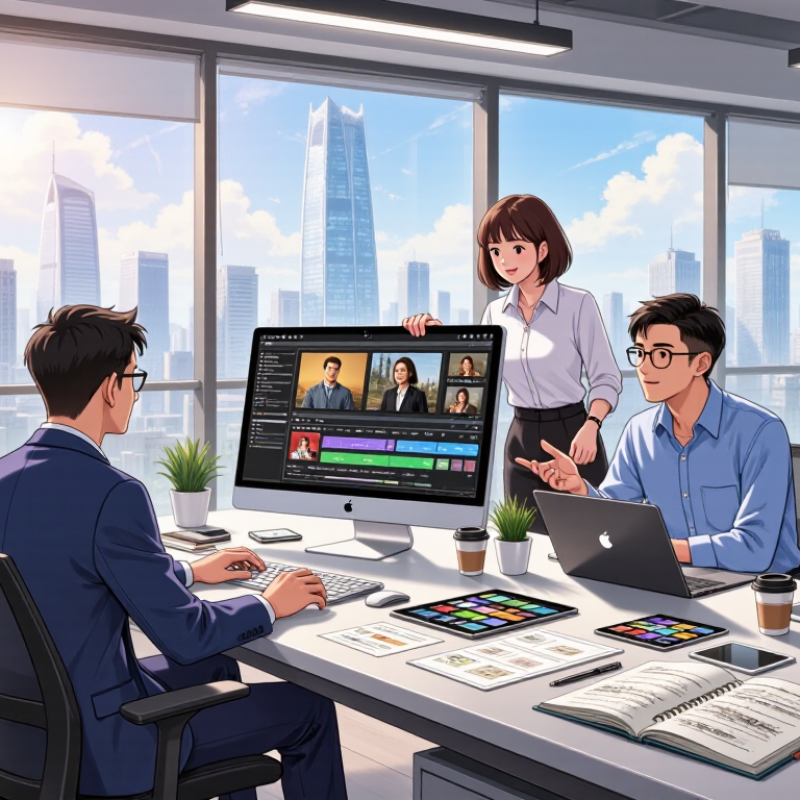
China’s corporate video design industry combines business strategy, scripting, filming, animation, editing, and platform-ready delivery. A strong film does more than look polished: it explains a product, process, or company culture in clear visual steps. The 2024 Video Marketing Statistics report found that 91% of surveyed businesses used video marketing, while 90% of video marketers said video delivered good returns. These figures describe a broad international sample, not China alone, so they are useful context—not a local guarantee. Details matter. Selection criteria should include relevant sector experience, script quality, production workflow, revision terms, and performance measurement. Ask to see a comparable project, then check whether its visuals and message fit your audience.
Tips: Request a short treatment before approving a full production. Confirm who handles subtitles, voice-over, and aspect ratios for different channels. Compare itemized quotes, not just total prices. Budgets vary. One imperfect point: creative quality is partly subjective, and a polished showreel cannot prove a team will meet your deadline. Set milestones, name the decision-maker, and agree on measurable deliverables before filming.
A credible comparison of China’s corporate video design companies starts with consistent evidence, not impressive showreels alone. Each candidate should be assessed against the same brief: audience, message, format, and intended use. Reviewers can examine published projects for clear storytelling, relevant industry experience, visual consistency, and sound quality. They should also check whether production details, team roles, and service scope are explained. Claims without supporting examples deserve less weight.
A practical shortlist can combine portfolio quality, creative process, communication, delivery options, and client feedback. Give each category a defined score, then record the evidence behind it, such as a project page, sample storyboard, or stated revision policy. Compare similar project types where possible; a polished product launch may not show skill in internal training videos. Note when information is missing rather than treating it as a weakness automatically. No score is perfect. Public portfolios reveal only part of a working relationship, and scoring weights involve judgment.
Tips: Ask for a sample script outline, confirm who handles filming and editing, and clarify revision rounds before comparing prices. Keep notes. A short discovery call can show whether a team asks useful questions or jumps straight to a visual concept. That difference is easy to overlook, and worth reviewing.
The ten profiles present different approaches to corporate video design in China, rather than a fixed ranking. One studio may build brand films around executive interviews and workplace footage. Another may focus on 2D animation, using clean diagrams to explain complex services. Industrial specialists often film production lines, close-ups of machinery, and safety procedures. Product-focused teams shape demonstrations around real use cases. Details matter.
Other profiles highlight internal communication, event recaps, documentary storytelling, multilingual production, short social videos, and end-to-end creative services. A documentary team may spend time observing staff before filming. An event crew needs a compact setup and a clear shot plan. Multilingual projects require more than translated subtitles; pacing, terminology, and visual references can also need adjustment. Small choices show experience.
When comparing these companies, look beyond polished showreels. Ask who develops the script, how revisions are handled, and whether the proposed schedule includes filming, editing, and review. A strong portfolio helps, but it does not guarantee a smooth project. This grouping is useful, not perfect: some studios work across several categories, and public examples rarely reveal the full production process.
Choosing among China’s top ten corporate video design companies requires more than comparing showreels. Service scope matters. Some teams manage research, scripting, filming, animation, and localization; others focus on a narrower production stage. Ask who prepares interview questions, handles revisions, creates subtitles, and delivers different aspect ratios. These details affect timelines and usability. Small things matter.
Creative strengths show up in specific choices. A company may excel at restrained interviews, while another builds energy through motion graphics or documentary-style scenes. Look for clear storytelling, readable on-screen text, and visuals that support the message rather than decorate it. A beautiful opening cannot rescue a confusing script. Watch a full case study, not just a highlight reel, and note whether the work explains a product or process accurately.
Industry expertise is useful when a team understands the audience, terminology, and filming environment. Manufacturing videos may need close shots of equipment and careful safety planning; corporate culture films depend more on natural interviews and believable moments. Ask how the team verifies technical details and measures success after delivery. Portfolio evidence is helpful, but it does not guarantee the same result for every brief. I would treat rankings as a starting point, not proof of fit. A short test project can expose gaps, though it adds time and cost.
Choosing a corporate video partner takes more than comparing polished reels. Look for work that explains complex ideas clearly, not just attractive shots and quick edits. A sample should show purposeful pacing, readable captions, balanced sound, and a clear message. Details matter. Ask who will handle scripting, filming, and revisions. A handoff between several teams can slow feedback, so clarify responsibilities before production begins. Request a sample schedule with key dates, review rounds, and delivery formats.
Experience in your sector can help, but ask what the team learned from similar projects. How do they prepare subject-matter experts who feel awkward on camera? Can they adapt when a location is noisy or a speaker needs another take? Listen for specific answers. Vague promises are a warning sign. Also compare proposals by scope, not just price: crew size, shoot hours, animation, and revision limits can change the final result. A practical scorecard helps, though it cannot capture every working-style mismatch. That part takes a real conversation, and even then, the choice may not feel perfect.
„Thanks to the LUVIR technology, the solder resist process could be switched directly from the previously used mask exposure to direct exposure. As an outstanding digital solution on the market, this technology has been able to demonstrate fast process times and superior quality on our certified conventional ink in production. This allowed us to fully digitize the solder mask process at low cost – without process or ink adjustments. An excellent benefit to our production in Rot am See.“
Ralf Göhringer (Head of Production WE Rot am See)
I would definitely recommend the Limata machine and team for a future company purchase
Michael Greenaway
Compunetics Inc.
“The Limata ldi has been amazing!! Best thing we did was buy this machine”
Richard Brady
GM
Circuitlabs
“Since 2019, we have been running the Limata X1000 LDI system (including LUVIR for solder mask imaging) in daily production as an addition to our current process with film. The machine was capable of properly exposing Taiyo PSR-4000 BN (DI) solder mask types on normal to high-copper boards using a new and unique direct imaging process. The machine operating interface is very user friendly which allowed for a quick technical training curve. The pre-registration processing reduced several seconds of production time at every print. Limata support and service staff is incomparable. They supported our team every step of the way at basically any time of the day or night, with literally, an immediate response time, customizing the software interface to best fit our Operations and needs.
We have exposed more than 8,000 prints since end of October, on various solder mask colors and some resist film panels. Limata, has proven to be very capable and innovative. They are a strong contender in the industry.
We have very much enjoyed this project, and working with the team!
Thank you Limata for the continued support and being a part of our growth.”
Bill Sezate
Vice President, GM
Summit Interconnect
As a replacement to our current contact exposure process with film, the LIMATA X2000 system including LUVIR-Technology was capable of properly exposing non-LDI solder mask types using a direct imaging process. The machine offers cutting edge software with a very intuitive operating interface which allowed for quick technician training curve. The dual drawer system combined with pre-registration processing reduced several seconds of production time at every machine cycle. Limata support and service staff is world class. They added software patches to keep production running at shortest possible response times, customized the software interface to best fit our in-house Operations system, and even wrote a step-by-step machine processing manual. As a result of the project, we have exposed more than 16,000 times on various product types and solder mask brands/colors. Limata, in a very short timeframe as a company, has definitely shown they are truly innovative and will be challenging the industry of direct imaging for the top spot.
Kevin Beattie
Process Engineer
TTM Technologies
Forest Grove Division
