Choosing a Precision Work Rolls supplier can affect surface finish, strip thickness, mill uptime, and operating costs. A roll may look flawless on a drawing, yet perform differently under heat, pressure, and repeated grinding. This guide introduces ten suppliers connected with China’s precision work-roll market and offers practical points for comparing them. It is a starting point, not a certified ranking.
Look beyond product names. Check each supplier’s roll materials, hardness options, dimensional tolerances, grinding capacity, and experience with your mill type. Ask for inspection records, sample specifications, and clear details about delivery and after-sales support. A polished brochure is not enough. Real production evidence matters. Where available, compare technical data with your own mill requirements and discuss wear patterns with the supplier’s engineers. Even small differences in crown, roughness, or geometry can matter on a demanding line.
Supplier information can change, and public claims may not tell the whole story. That is worth remembering. Treat listed capabilities as questions to verify, rather than guarantees of performance. Request recent references or arrange a technical review before making a purchase decision. Price matters, but so do consistency, communication, and the supplier’s ability to respond when a roll needs attention. The strongest choice depends on your material, mill conditions, service expectations, and maintenance schedule. Use the profiles that follow to build a shortlist, then confirm the details directly.
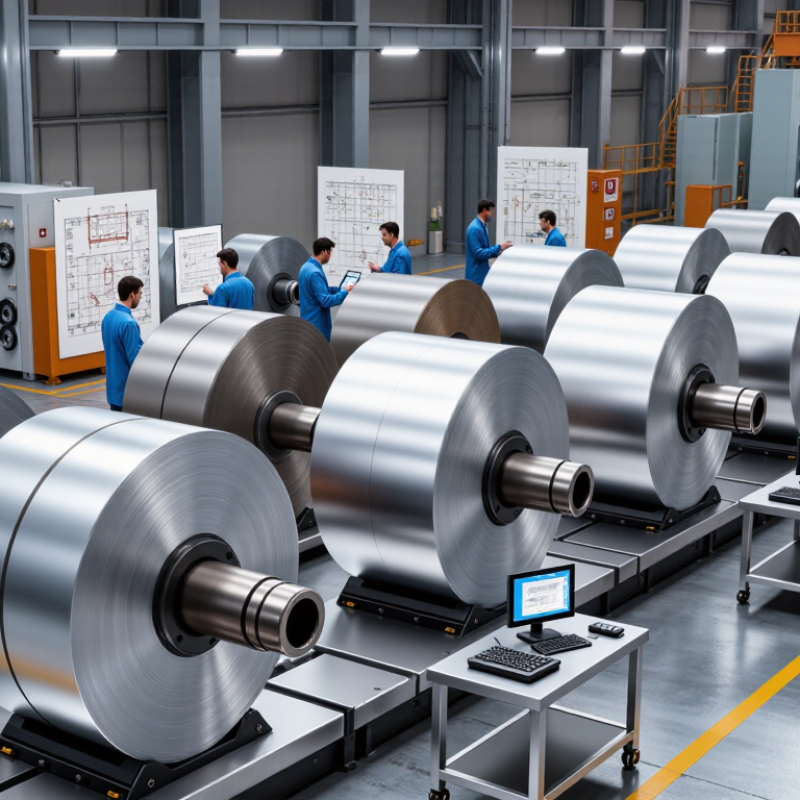
Precision work rolls are the working surfaces that directly shape steel as it passes through a rolling mill. They reduce thickness, control strip profile, and help create the required surface finish. In hot rolling, glowing steel can reach roughly 1,200°C; in cold rolling, rolls act on harder, cooler strip and must maintain tight dimensional tolerances. Small changes matter. Roll wear, heat, and bending can leave uneven thickness or visible marks, so mills monitor roll condition and adjust grinding schedules.
The production scale makes reliability important. World Steel Association’s World Steel in Figures 2024 reports that global crude steel output reached about 1.89 billion tonnes in 2023. The International Energy Agency’s Iron and Steel Technology Roadmap (2020) estimates the sector produces around 2.6 gigatonnes of direct CO₂ emissions annually. These figures describe the wider industry, not the impact of rolls alone. Still, longer roll life and fewer rejected coils can support steadier production and reduce avoidable material losses. A roll specification is never the whole answer. Cooling, alignment, and operator decisions matter too, and real mills do not always behave like a clean engineering diagram.
Evaluating China’s precision work roll suppliers requires more than comparing quoted prices. Start with the steel grade, hardness range, and heat-treatment method. Ask for inspection records that match the roll dimensions and production batch. A certificate matters, but so does knowing how measurements were taken. Request details on roundness, surface finish, and dimensional tolerances.
Manufacturing capability should be supported by practical evidence. Review sample inspection reports, machining procedures, and equipment calibration schedules. If possible, discuss a trial order and agree on acceptance criteria before production. Check how the supplier handles defects, rework, and replacement parts. Response time matters when a roll affects mill uptime. So does clear communication.
Ask about lead times, packaging, and export documentation, then compare answers in writing. A low price may exclude testing or protective packaging. That is easy to miss. Supplier audits can reveal useful details, such as whether finished rolls are stored away from moisture and accidental impact. Still, a polished audit report cannot guarantee consistent results. I would compare several batches over time, not rely on one successful sample. No checklist removes every risk, and some specifications may need adjustment after real production feedback.
China’s Top 10 Precision Work Roll Suppliers
Choosing among China’s leading precision work roll suppliers takes more than comparing quoted prices. A reliable supplier should explain its steel grades, heat-treatment process, grinding methods, and inspection steps. Ask for roll drawings, dimensional reports, and records showing how surface finish and runout are checked. These details matter when rolls must maintain consistent contact across a production line. A low price alone tells little.
Tips: Share your operating conditions, including material, rolling load, speed, and target finish. Request a sample inspection report and confirm packaging for long-distance shipping. Check how the supplier handles regrinding and replacement parts. Small questions reveal a lot.
A useful top-ten shortlist should compare technical capability, delivery consistency, communication, and after-sales support—not just factory size. Review similar applications and speak with the engineers who will handle your order. If possible, inspect a sample roll or arrange a production audit. Supplier claims can sound polished; verification is less tidy, but more useful. Keep tolerances and acceptance criteria in writing, since vague specifications can create avoidable disputes later.
Comparing China’s precision work roll suppliers is less about headline capacity and more about fit. A supplier should explain its steel grades, heat-treatment options, hardness range, and finishing methods in clear terms. Ask whether rolls are designed for specific rolling conditions, such as high loads, repeated thermal cycling, or demanding surface finishes. Product ranges may cover different dimensions and applications, but a long catalog alone proves little. Small differences matter.
Quality checks deserve equal attention. Request dimensional inspection records, hardness measurements, surface-finish data, and material traceability documents. Ask how defects are detected and how corrective actions are recorded. Certificates can support a review, but they do not replace evidence from the actual production process. Ask for evidence. Where practical, compare a sample roll’s measured results with agreed specifications before larger orders. A polished brochure can still leave gaps, especially around service life and repair support. No checklist predicts every mill condition. That is worth remembering. A careful comparison weighs technical documentation, manufacturing consistency, communication, and after-sales capacity together, while leaving room for real-world trial results.
Selecting a precision work roll supplier starts with the conditions inside your mill, not a broad product list. Define the material being rolled, operating speed, load, temperature, and required surface finish. Small differences matter. A roll used for thin strip may need tighter runout control than one used for heavier stock. Share drawings and existing inspection data where available, including diameter tolerance and crown requirements.
Ask how the supplier controls alloy selection, heat treatment, grinding, and final inspection. Request sample reports for hardness, surface roughness, and dimensional checks. Clarify how each roll is identified and traced through production. Evidence is more useful than a general claim of “high precision.” Also ask about repair capacity, delivery consistency, and the process for handling a roll that fails to meet agreed specifications.
Compare suppliers against the same technical checklist. A low quotation alone tells little; neither does a polished brochure. Check whether the proposed tolerances suit your actual process, rather than simply choosing the tightest figures. That can be easy to overlook. If possible, review a trial roll under defined operating conditions and record wear, finish, and service intervals. One trial cannot predict every production run, but it gives your team a practical basis for discussion. No supplier can remove every process variable, and that is worth acknowledging.
Use these example buyer-defined weights to structure an RFQ comparison—not as measured market data or a ranking of suppliers. Adjust them to match your mill, roll specifications, quality requirements, and delivery needs.
„Thanks to the LUVIR technology, the solder resist process could be switched directly from the previously used mask exposure to direct exposure. As an outstanding digital solution on the market, this technology has been able to demonstrate fast process times and superior quality on our certified conventional ink in production. This allowed us to fully digitize the solder mask process at low cost – without process or ink adjustments. An excellent benefit to our production in Rot am See.“
Ralf Göhringer (Head of Production WE Rot am See)
I would definitely recommend the Limata machine and team for a future company purchase
Michael Greenaway
Compunetics Inc.
“The Limata ldi has been amazing!! Best thing we did was buy this machine”
Richard Brady
GM
Circuitlabs
“Since 2019, we have been running the Limata X1000 LDI system (including LUVIR for solder mask imaging) in daily production as an addition to our current process with film. The machine was capable of properly exposing Taiyo PSR-4000 BN (DI) solder mask types on normal to high-copper boards using a new and unique direct imaging process. The machine operating interface is very user friendly which allowed for a quick technical training curve. The pre-registration processing reduced several seconds of production time at every print. Limata support and service staff is incomparable. They supported our team every step of the way at basically any time of the day or night, with literally, an immediate response time, customizing the software interface to best fit our Operations and needs.
We have exposed more than 8,000 prints since end of October, on various solder mask colors and some resist film panels. Limata, has proven to be very capable and innovative. They are a strong contender in the industry.
We have very much enjoyed this project, and working with the team!
Thank you Limata for the continued support and being a part of our growth.”
Bill Sezate
Vice President, GM
Summit Interconnect
As a replacement to our current contact exposure process with film, the LIMATA X2000 system including LUVIR-Technology was capable of properly exposing non-LDI solder mask types using a direct imaging process. The machine offers cutting edge software with a very intuitive operating interface which allowed for quick technician training curve. The dual drawer system combined with pre-registration processing reduced several seconds of production time at every machine cycle. Limata support and service staff is world class. They added software patches to keep production running at shortest possible response times, customized the software interface to best fit our in-house Operations system, and even wrote a step-by-step machine processing manual. As a result of the project, we have exposed more than 16,000 times on various product types and solder mask brands/colors. Limata, in a very short timeframe as a company, has definitely shown they are truly innovative and will be challenging the industry of direct imaging for the top spot.
Kevin Beattie
Process Engineer
TTM Technologies
Forest Grove Division
