Global buyers are asking a sharper question: which advanced circuit boards deliver dependable performance beyond the laboratory?
The answer depends on application, manufacturing discipline, and evidence. High-density interconnect boards suit compact medical devices, smartphones, and aerospace modules. Rigid-flex boards reduce connectors in moving equipment. High-frequency boards support radar, wireless infrastructure, and precise signal transmission. Heavy-copper designs manage substantial current in industrial power systems. Each option solves a different engineering problem.
John W. Mitchell, former IPC president and CEO, has emphasized a practical principle: “Quality must be designed into every board, not inspected in afterward.” That principle matters when comparing advanced circuit boards from global suppliers. Buyers should examine impedance-control data, layer registration, thermal-via design, surface finish, and documented reliability testing. A polished sample is not enough. Ask for cross-sections, process capability reports, and traceability records.
Details reveal reality. A rigid-flex sample should bend without exposing cracks near the transition zone. A high-frequency board should maintain stable dielectric performance across production lots. A power board should show controlled copper thickness, not merely attractive photographs. Certifications help, but they do not replace technical verification.
There is no universal winner.
Even experienced teams can overlook assembly constraints, regional lead times, or repair requirements. That weakness deserves attention. The best choice balances electrical performance, manufacturability, compliance, lifecycle support, and total cost. This guide examines the leading advanced circuit boards available to international buyers, while recognizing that supplier claims still require careful, independent review.
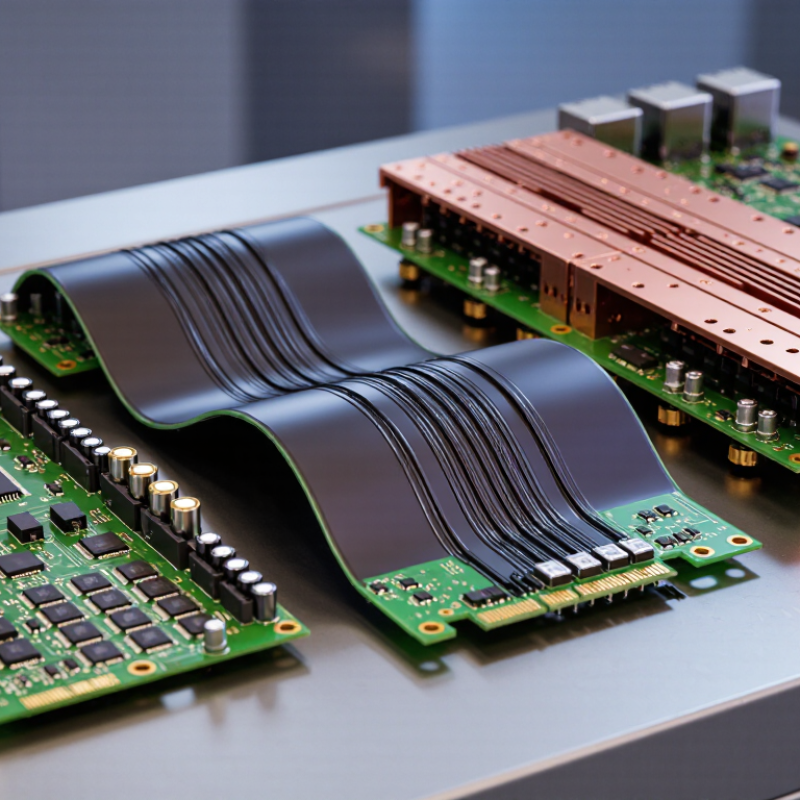
An advanced circuit board is defined by more than high layer counts or a small package.
Global buyers need stable electrical performance, controlled manufacturing, and clear evidence. A practical design may use HDI structures, fine-pitch components, impedance control, and thermal vias. These features support compact products without sacrificing signal quality.
Material selection matters.
High-speed boards often require controlled dielectric properties and consistent copper thickness. In production reviews, engineers should check drill accuracy, solder mask alignment, surface finish, and warpage limits.
Test reports
Test reports should cover continuity, insulation resistance, microsections, and thermal cycling. Traceability is essential. Lot numbers, inspection records, and change notices help buyers investigate failures across borders.
Compliance also defines an advanced board.
Suppliers should provide documentation for applicable environmental, safety, and quality requirements in the target market. Secure data handling and reliable packaging matter during international transport. A board can pass electrical tests yet fail through poor moisture protection. That detail is easy to miss.
No board is perfect.
Specifications may overlook repair access, connector wear, or real operating temperatures. Buyers should request samples, review process capability, and compare measured results with the design assumptions. Fancy features do not replace disciplined verification.
Advanced circuit boards now serve sharply different application needs. High-density interconnect (HDI) boards support compact medical devices, smartphones, and aerospace controls. Their microvias shorten electrical paths and create more routing space. IPC’s 2024 PCB Technology Roadmap highlights continuing demand for finer lines, higher layer counts, and improved signal integrity.
Rigid-flex boards suit cameras, wearables, robotics, and aircraft systems that experience repeated movement. They reduce connectors and save valuable assembly space. Multilayer boards handle computing, industrial automation, and telecommunications equipment requiring dense power and signal routing. RF and microwave boards are better for radar, satellite links, and wireless infrastructure. Their low-loss materials protect high-frequency performance, but material selection becomes critical. Fortune Business Insights reported that the global PCB market could reach about 95 billion US dollars by 2028, reflecting broader demand across these segments.
Tips: Match the board to its operating environment, not only its layer count. Check temperature, vibration, impedance, bend cycles, and repair access. Metal-core boards can improve heat removal in LED and power electronics. However, they may complicate drilling and rework. A practical design review should include manufacturing yield data and prototype testing. I have seen compact layouts fail because heat paths were treated as an afterthought. That mistake remains common. Report figures also vary by research method, so buyers should compare definitions before approving volume production.
What Are the Top Advanced Circuit Boards for Global Buyers?
For global buyers, advanced circuit boards are defined by application, not appearance. HDI boards support compact devices through fine traces and microvias. Rigid-flex boards reduce connectors, saving space and potential failure points. High-frequency boards use low-loss materials to preserve signal quality at fast data rates.
Materials directly shape electrical, thermal, and mechanical performance. Low-loss laminates reduce signal attenuation across long routes. Polyimide layers tolerate repeated bending in flexible sections. Heavy copper handles higher current but increases etching difficulty and board weight. Ceramic-filled materials can improve heat transfer, although they may raise processing costs. No material is perfect.
Manufacturing discipline matters just as much. Laser drilling creates precise microvias, while sequential lamination builds dense interconnections layer by layer. Controlled impedance routing requires consistent dielectric thickness and careful copper measurement. Via filling, surface treatment, and solder-mask registration also affect reliability. In factory audits, I would check cross-sections, automated optical inspection records, and thermal-cycle results before trusting a specification sheet. Small voids can remain invisible during visual inspection. That is an uncomfortable limitation. Testing should include insulation resistance, dimensional checks, and repeated temperature exposure. A board that passes one electrical test may still fail after months of vibration or heat. Process variation deserves attention, especially when production moves between facilities.
Thermal conductivity determines how efficiently heat can move away from high-power components. Standard FR-4, high-Tg FR-4, polyimide, and PTFE laminates typically provide electrical insulation with relatively low thermal conductivity, while alumina ceramic substrates offer substantially better heat transfer. Manufacturing choices such as thicker copper, thermal vias, via-in-pad structures, and improved layer stacking can further reduce thermal resistance and increase reliability.
Values shown are representative industry ranges and may vary according to resin content, frequency, copper structure, ceramic purity, and board construction.
For global buyers, advanced circuit boards should meet recognized technical and management standards. IPC-6012 helps verify qualification requirements for rigid printed boards. IPC-A-600 defines visual acceptance conditions before assembly. IPC-A-610 applies mainly to assembled electronic products. These standards do not replace independent testing. They provide a shared language for suppliers and buyers.
Certification details matter as much as certification names. Check the certificate scope, issuing body, covered production site, and expiration date. ISO 9001 supports consistent quality management, while AS9100 or IATF 16949 may suit aerospace or automotive projects. Environmental compliance should include RoHS and REACH declarations when required. Ask for impedance reports, microsection results, thermal stress data, and material traceability. In practice, missing lot numbers can make a good report difficult to trust. I have seen buyers overlook this small detail.
Tips: Request a recent certificate copy and compare its address with the factory address. Confirm whether testing covers the exact board stack-up, surface finish, and material grade. Ask for corrective-action records when defects repeat. Do not rely on a supplier’s logo alone. A certificate can be valid, yet irrelevant to your product. Also, leave room for review; specifications sometimes change after prototype approval.
| Advanced Board Type | Typical Construction or Capability | Common International Applications | Key Technical Data to Confirm | Relevant Standards and Certifications to Check | Recommended Buyer Evidence |
|---|---|---|---|---|---|
| HDI PCB High-Density Interconnect |
Microvias, fine-line routing, and sequential lamination; commonly designed with one or more via-in-pad or microvia layers. | Smart devices, medical electronics, automotive control units, compact industrial equipment, and high-density computing hardware. | Layer count, minimum trace and spacing, microvia diameter, via stacking or staggering, registration tolerance, impedance control, and drill reliability. | IPC-2221 for design principles; IPC-6012 for rigid printed boards; IPC-A-600 for board acceptance; ISO 9001 for quality management where applicable. | Stack-up drawing, cross-section report, microsection images, impedance test results, electrical test records, and process capability data. |
| Rigid-Flex PCB | Rigid laminate sections combined with flexible polyimide sections and controlled bend areas; may reduce connectors and cable assemblies. | Aerospace systems, medical instruments, automotive electronics, cameras, wearables, and space-constrained equipment. | Bend radius, dynamic or static flexing requirement, flex-layer construction, stiffener design, copper thickness, coverlay quality, and strain-relief geometry. | IPC-2223 for flexible and rigid-flex design; IPC-6013 for flexible and rigid-flex printed boards; IPC-A-600 for acceptability. | Bend-cycle test report, dimensional inspection, flex-zone cross-sections, material certificates, and qualification results for the intended mechanical environment. |
| Flexible PCB | Thin flexible dielectric and copper construction designed for folding, bending, or three-dimensional routing. | Displays, sensors, battery systems, wearable products, printers, automotive interiors, and compact consumer electronics. | Overall thickness, bend radius, flexing cycles, conductor width, coverlay opening accuracy, adhesive system, and resistance to temperature and humidity. | IPC-2223, IPC-6013, IPC-A-600, and applicable product-safety requirements for the finished equipment. | Material data sheets, bend testing, dimensional reports, continuity and insulation testing, and environmental test records. |
| High-Frequency or High-Speed PCB | Controlled-dielectric materials and carefully engineered transmission lines for radio-frequency or high-data-rate signals. | Wireless infrastructure, radar, satellite equipment, test instruments, data networking, and high-speed digital systems. | Dielectric constant, dissipation factor, impedance tolerance, insertion loss, skew, copper roughness, layer registration, and signal-integrity simulation. | IPC-2221 and IPC-6012; IPC-TM-650 test methods; IEC 61189 test methods may also be specified by the customer or project. | Material lot certificates, impedance coupons, TDR reports, insertion-loss data, controlled-impedance calculations, and frequency-specific test results. |
| Metal-Core PCB MCPCB |
A metal base, usually aluminum or copper, provides improved heat spreading beneath the dielectric and copper circuit layers. | LED lighting, power converters, motor drives, automotive lighting, and thermal-management assemblies. | Thermal conductivity, dielectric breakdown voltage, base-metal thickness, flatness, thermal resistance, operating temperature, and mounting compatibility. | IPC-2221, IPC-6012 where applicable, IPC-A-600, IEC 60249 material requirements where specified, and applicable electrical-safety requirements. | Thermal-resistance test data, dielectric withstand results, material certificates, flatness inspection, and thermal cycling reports. |
| Heavy-Copper PCB | Copper conductors substantially thicker than standard signal-board copper, supporting high current and improved heat dissipation. | Electric vehicles, renewable-energy systems, battery management, industrial power supplies, and high-current protection equipment. | Finished copper thickness, current-carrying capacity, thermal rise, plated-hole integrity, etching tolerance, conductor spacing, and copper-to-laminate adhesion. | IPC-2221, IPC-6012, IPC-A-600, and IPC-2152 for current-carrying and thermal design considerations. | Copper-thickness measurement, thermal-rise test, plated-hole microsections, current-load test, and design calculations based on the actual application. |
| Multilayer Rigid PCB | Four or more conductive layers separated by dielectric materials, enabling power, ground, signal, and shielding layers in one board. | Industrial controls, telecommunications, computing equipment, medical devices, automotive systems, and instrumentation. | Layer count, dielectric thickness, controlled impedance, copper balance, registration, lamination voids, plated-through-hole reliability, and warpage. | IPC-2221, IPC-6012, IPC-A-600, IPC-TM-650, and ISO 9001 quality-system certification where required by the purchasing specification. | Approved stack-up, laminate certificates, microsection report, solderability results, thermal-stress testing, and electrical-test records. |
| Embedded-Component PCB | Selected passive or active components are embedded within the board structure to save surface area and shorten electrical paths. | Miniaturized electronics, high-speed modules, medical equipment, aerospace electronics, and advanced control systems. | Component placement accuracy, cavity or lamination design, thermal expansion, repairability, dielectric spacing, electrical isolation, and process yield. | IPC-2221, IPC-6012, IPC-A-600, IPC-7092 for embedded component design guidance where applicable, and IPC-A-610 for assembled-board acceptance. | Build-up drawings, component traceability, X-ray or cross-section inspection, insulation testing, thermal cycling, and reliability qualification records. |
| Safety-Critical PCB | A board manufactured under enhanced traceability, inspection, documentation, and reliability controls for demanding end-use environments. | Aerospace, medical, railway, automotive safety systems, energy infrastructure, and industrial protection equipment. | Reliability class, defect criteria, material flammability, cleanliness, traceability, environmental endurance, change control, and counterfeit-part prevention. | IPC-6012 Class 3 where specified; IPC-A-600 Class 3; ISO 9001; ISO 13485 for applicable medical-device quality systems; AS9100 for applicable aerospace supply chains. | Audited quality manual, lot traceability, nonconformance records, process-control plan, reliability testing, calibration records, and documented change-notification procedures. |
| Environmentally Compliant PCB | Board materials and finishes selected to meet restricted-substance, chemical, and end-of-life obligations for the destination market. | Consumer products, industrial equipment, medical electronics, automotive products, and electronics sold across multiple jurisdictions. | Restricted substances, homogeneous-material composition, surface-finish chemistry, halogen status, recyclability information, and country-specific import requirements. | RoHS Directive 2011/65/EU and amendments; REACH Regulation (EC) No 1907/2006; WEEE Directive 2012/19/EU where applicable; IEC 63000 for technical documentation. | Supplier declarations, third-party laboratory reports, material declarations, chemical composition records, and current compliance statements for the destination market. |
For global buyers, advanced circuit boards should be compared beyond layer count and headline pricing. In supplier audits, I examine stack-up control, impedance reports, copper thickness, and drilling accuracy. Ask for recent production samples, not only polished presentation boards. A reliable supplier can explain material choices and process limits clearly.
Supplier comparison should include engineering support, communication speed, and traceability. Request inspection records, electrical test results, solderability data, and corrective-action reports. Check whether each batch carries identifiable lot information. It helps when problems appear months later.
No supplier is perfect. Even experienced teams sometimes overlook connector wear or thermal expansion.
Unit price is only one part of the cost. Include tooling, freight, testing, rework, customs, minimum order quantities, and expected failure rates. A cheaper board may require tighter incoming inspection or more frequent replacement. Ask suppliers to model pricing at prototype, pilot, and production volumes.
Long-term reliability also depends on thermal cycling, vibration resistance, moisture protection, and stable material sourcing. Review independent certifications and audit evidence, but verify their dates and scope.
I would also request a small pilot run before approving large shipments. That step feels slower, yet it can expose uneven plating, warped panels, or inconsistent solder masks. Buyers should record these findings instead of relying on verbal assurances.
Reliability is measured over time, not during one successful delivery.




„Thanks to the LUVIR technology, the solder resist process could be switched directly from the previously used mask exposure to direct exposure. As an outstanding digital solution on the market, this technology has been able to demonstrate fast process times and superior quality on our certified conventional ink in production. This allowed us to fully digitize the solder mask process at low cost – without process or ink adjustments. An excellent benefit to our production in Rot am See.“
Ralf Göhringer (Head of Production WE Rot am See)
I would definitely recommend the Limata machine and team for a future company purchase
Michael Greenaway
Compunetics Inc.
“The Limata ldi has been amazing!! Best thing we did was buy this machine”
Richard Brady
GM
Circuitlabs
“Since 2019, we have been running the Limata X1000 LDI system (including LUVIR for solder mask imaging) in daily production as an addition to our current process with film. The machine was capable of properly exposing Taiyo PSR-4000 BN (DI) solder mask types on normal to high-copper boards using a new and unique direct imaging process. The machine operating interface is very user friendly which allowed for a quick technical training curve. The pre-registration processing reduced several seconds of production time at every print. Limata support and service staff is incomparable. They supported our team every step of the way at basically any time of the day or night, with literally, an immediate response time, customizing the software interface to best fit our Operations and needs.
We have exposed more than 8,000 prints since end of October, on various solder mask colors and some resist film panels. Limata, has proven to be very capable and innovative. They are a strong contender in the industry.
We have very much enjoyed this project, and working with the team!
Thank you Limata for the continued support and being a part of our growth.”
Bill Sezate
Vice President, GM
Summit Interconnect
As a replacement to our current contact exposure process with film, the LIMATA X2000 system including LUVIR-Technology was capable of properly exposing non-LDI solder mask types using a direct imaging process. The machine offers cutting edge software with a very intuitive operating interface which allowed for quick technician training curve. The dual drawer system combined with pre-registration processing reduced several seconds of production time at every machine cycle. Limata support and service staff is world class. They added software patches to keep production running at shortest possible response times, customized the software interface to best fit our in-house Operations system, and even wrote a step-by-step machine processing manual. As a result of the project, we have exposed more than 16,000 times on various product types and solder mask brands/colors. Limata, in a very short timeframe as a company, has definitely shown they are truly innovative and will be challenging the industry of direct imaging for the top spot.
Kevin Beattie
Process Engineer
TTM Technologies
Forest Grove Division
