In today's fast-paced industrial landscape, selecting the right Air Compressor is crucial for operational efficiency. The global air compressor market is projected to grow from $31.12 billion in 2021 to $47.79 billion by 2028, according to a recent report by MarketsandMarkets. This growth underscores the integral role air compressors play across various sectors.
Renowned industry expert Dr. Emily Carter states, "Choosing the appropriate air compressor can significantly enhance productivity and reduce costs." This statement highlights the importance of understanding the different types of air compressors available. Each type serves distinct purposes, from small-scale applications to heavy-duty industrial settings.
With evolving technologies and diverse applications, businesses face challenges in selecting the right model. Specifications, maintenance requirements, and energy efficiency are critical factors to consider. Investing in the correct air compressor not only fuels productivity but also contributes to long-term sustainability and operational success. Taking the time to evaluate options can prevent costly mistakes and optimize performance.
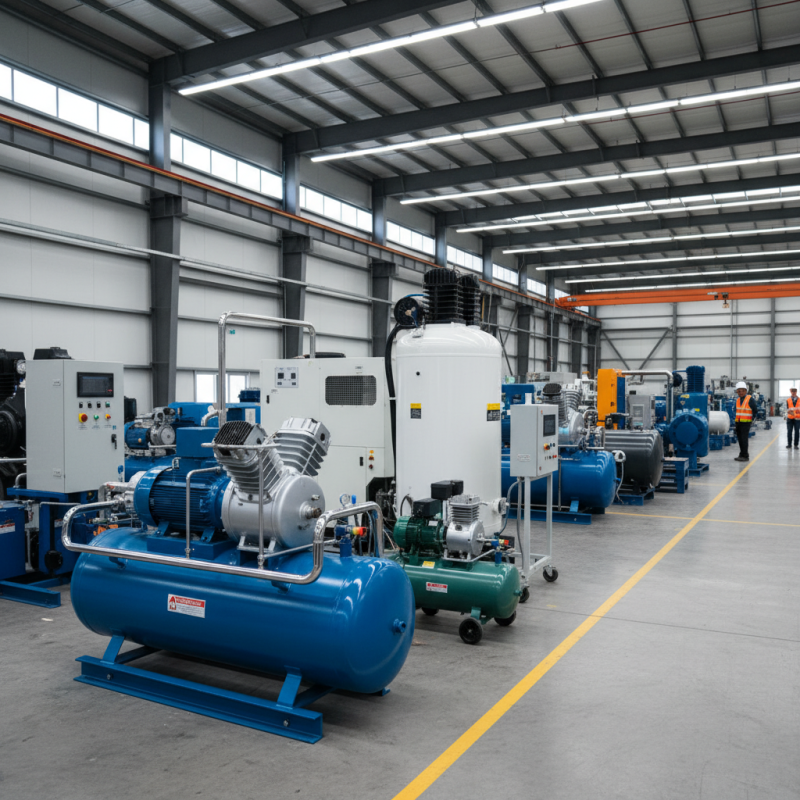
Air compressors play a crucial role in various business operations. They provide necessary power for tools, machinery, and processes across different industries. According to a report by the Compressed Air and Gas Institute, roughly 70% of all manufacturing facilities use compressed air for operational efficiency. This statistic underlines how essential air compressors are in driving productivity and ensuring seamless workflows.
In construction, for instance, pneumatic tools powered by air compressors enhance speed and efficiency. Yet, businesses often overlook maintenance. A lack of regular servicing can lead to energy waste, which is a significant cost. Reports indicate that poorly maintained air compressors can lose up to 30% of their energy efficiency. This highlights a crucial area for reflection. Many companies could save costs if they prioritized preventive maintenance, rather than addressing issues reactively.
The choice of air compressor type can also affect performance. Different types are tailored for specific tasks, ranging from small workshops to large-scale industrial settings. Inappropriate selection can lead to underperformance or overexertion of systems. It’s essential for businesses to invest in understanding their specific compressed air needs. Misalignment between operations and equipment can be costly in the long run.
When choosing an air compressor for your business, understanding the different types is crucial. Each type serves specific purposes. For instance, rotary screw compressors are compact and efficient, making them ideal for continuous operations in manufacturing settings. They deliver a steady airflow and require less maintenance, but they can be costly to install.
Reciprocating compressors, on the other hand, are versatile. They work well for small to medium-sized applications, providing high pressure and reliability. However, they tend to be louder and less efficient over time. Businesses working in industries like automotive repair often find them useful, though they may require more frequent servicing.
Scroll compressors excel in quiet environments, providing a low-noise option for workshops. Their design results in fewer moving parts, yet their initial cost might deter some users. Each type has its pros and cons, which necessitates careful consideration. Understanding these nuances allows business owners to make informed decisions. Reflecting on these options will lead to better efficiency and productivity.
When selecting an air compressor for your business, several key features stand out. Size and capacity are critical; you must assess your power needs. Smaller units may suffice for light duties, while larger operations often require high-capacity compressors. According to industry reports, many businesses experience downtime due to inadequate air supply, emphasizing the importance of proper sizing.
Efficiency is another vital consideration. Look for compressors that display energy-efficient ratings. Inefficient models can waste substantial energy, leading to inflated operation costs. Energy Star-certified models can save businesses up to 30% in energy bills. Reliability cannot be overlooked, either; ensure the compressor has a solid reputation for durability and low maintenance needs, as unexpected repairs can disrupt operations.
Tips: Always review user feedback before purchasing. This may reveal potential issues and enhance your understanding of real-world performance. Additionally, consider the noise level; a quieter model might require a higher initial investment, but it ensures a more pleasant work environment. Think long-term and weigh initial costs against future savings and benefits.
Air compressors are valuable tools for businesses, but they require proper maintenance. Regular checks can extend their lifespan significantly. A key maintenance tip is to change the oil regularly. Dirty oil can lead to engine wear, causing potential breakdowns. Every few months, inspect the air filter for blockages. A clean filter helps the compressor work efficiently.
Another crucial aspect is draining the moisture. Compressors create condensation that can lead to rust. Set a routine to drain the tank weekly or as needed based on usage. Keep the compressor in a cool, dry space. Overheating can further strain the machine.
Inspect belts and hoses for signs of wear. Cracks or fraying can lead to leaks. Replace any damaged parts immediately to avoid performance issues. Maintaining tight connections enhances efficiency. Regularly scheduling these maintenance tasks can prevent major problems down the line. You’ll save time and money while ensuring your operations run smoothly.
Choosing the right air compressor for your business requires careful budgeting. Prices vary significantly based on type, size, and features. A portable model may cost less upfront but may lack power for heavy tasks. In contrast, industrial compressors can be more expensive but offer greater efficiency. Understanding these differences helps you allocate your budget wisely.
Consider not just the purchase price but also maintenance costs. Regular servicing can add to your expenses over time. Some compressors need frequent oil changes; others are oil-free. Also, factor in energy consumption. A less efficient model will rack up higher utility bills, impacting your long-term budget.
Pay attention to warranties and support options offered. A cheaper model may end up costing more if repairs are frequent. Reflect on your actual needs to find a suitable model. The best choice is not always the most expensive one, but one that balances cost and reliability. Be honest about what your business requires to avoid overspending.
„Thanks to the LUVIR technology, the solder resist process could be switched directly from the previously used mask exposure to direct exposure. As an outstanding digital solution on the market, this technology has been able to demonstrate fast process times and superior quality on our certified conventional ink in production. This allowed us to fully digitize the solder mask process at low cost – without process or ink adjustments. An excellent benefit to our production in Rot am See.“
Ralf Göhringer (Head of Production WE Rot am See)
I would definitely recommend the Limata machine and team for a future company purchase
Michael Greenaway
Compunetics Inc.
“The Limata ldi has been amazing!! Best thing we did was buy this machine”
Richard Brady
GM
Circuitlabs
“Since 2019, we have been running the Limata X1000 LDI system (including LUVIR for solder mask imaging) in daily production as an addition to our current process with film. The machine was capable of properly exposing Taiyo PSR-4000 BN (DI) solder mask types on normal to high-copper boards using a new and unique direct imaging process. The machine operating interface is very user friendly which allowed for a quick technical training curve. The pre-registration processing reduced several seconds of production time at every print. Limata support and service staff is incomparable. They supported our team every step of the way at basically any time of the day or night, with literally, an immediate response time, customizing the software interface to best fit our Operations and needs.
We have exposed more than 8,000 prints since end of October, on various solder mask colors and some resist film panels. Limata, has proven to be very capable and innovative. They are a strong contender in the industry.
We have very much enjoyed this project, and working with the team!
Thank you Limata for the continued support and being a part of our growth.”
Bill Sezate
Vice President, GM
Summit Interconnect
As a replacement to our current contact exposure process with film, the LIMATA X2000 system including LUVIR-Technology was capable of properly exposing non-LDI solder mask types using a direct imaging process. The machine offers cutting edge software with a very intuitive operating interface which allowed for quick technician training curve. The dual drawer system combined with pre-registration processing reduced several seconds of production time at every machine cycle. Limata support and service staff is world class. They added software patches to keep production running at shortest possible response times, customized the software interface to best fit our in-house Operations system, and even wrote a step-by-step machine processing manual. As a result of the project, we have exposed more than 16,000 times on various product types and solder mask brands/colors. Limata, in a very short timeframe as a company, has definitely shown they are truly innovative and will be challenging the industry of direct imaging for the top spot.
Kevin Beattie
Process Engineer
TTM Technologies
Forest Grove Division
