In recent years, the proliferation of drones has raised significant security concerns across the globe. The global market for Anti Drone Devices is projected to grow at a CAGR of 20% through 2026, according to industry reports. This surge reflects increased demand for protective solutions against unauthorized drone activities. High-profile incidents such as near-misses at airports and security breaches at public events have highlighted the urgent need for effective anti-drone measures.
Various Anti Drone Device technologies now exist, offering distinct advantages and limitations. Systems employing jamming techniques are popular, but they can disrupt legal communication signals. On the other hand, directed energy weapons promise accuracy but often boast high costs and complex logistics. A balanced approach is essential for buyers navigating this evolving landscape.
As countries tighten regulations, the effectiveness of these solutions remains crucial. Buyers must evaluate their options carefully. The dynamic nature of drone technology necessitates a thorough understanding of emerging anti-drone technologies. Each solution presents unique challenges that require thoughtful consideration and ongoing evaluation, ensuring that security remains a top priority without compromising operational integrity.
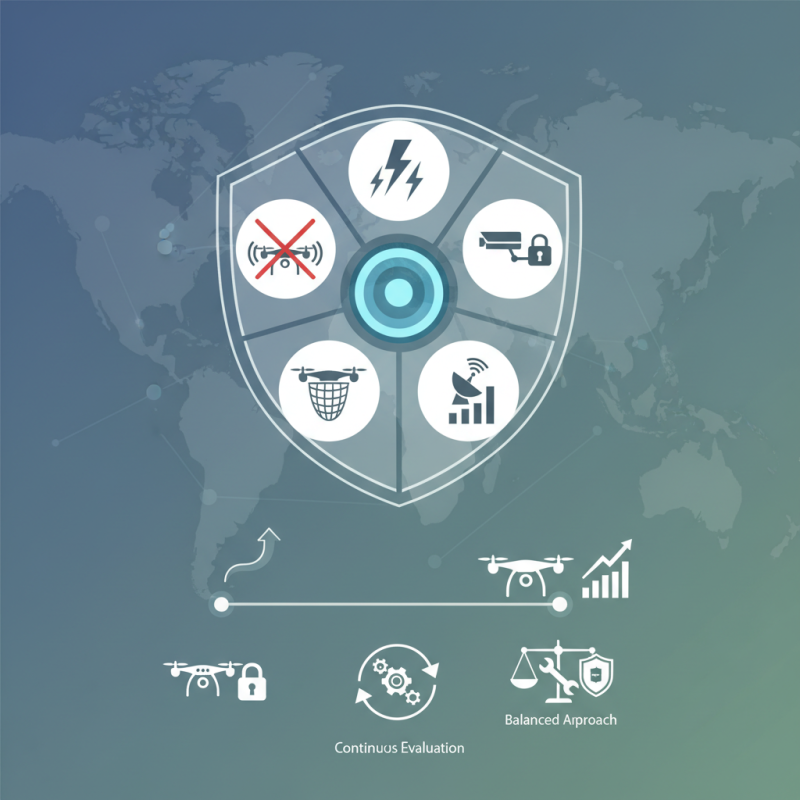
The anti-drone technology market is rapidly evolving. Drones are becoming more accessible, increasing the need for solutions to counter their potential threats. As organizations and governments look to protect sensitive areas, a variety of anti-drone systems have emerged.
One common solution involves jamming signals to disrupt communication between the drone and its operator. This method can be highly effective, but it may also interfere with legitimate communication. Users must consider potential collateral damage when implementing signal jammers. It's crucial to weigh the pros and cons.
Another approach is the use of directed energy weapons, which can disable drones without causing lasting harm to the surrounding environment. However, this technology is still developing and requires significant expertise to deploy. Ensuring that operators are adequately trained is essential for effectiveness and safety.
Tips:
- Always assess the specific threats before selecting a system.
- Balancing effectiveness with safety is key.
- Continuous training helps keep operators prepared for new challenges.
The market also features radar systems designed to identify and track drones in real-time. These systems can create a layered defense strategy when coupled with other technologies. Yet, installation and maintenance can be costly, particularly for smaller organizations. Investing in anti-drone solutions necessitates thoughtful planning and resource allocation.
As drone technology evolves, so do the countermeasures. Users looking for effective anti-drone solutions should consider key features that enhance security. Key aspects to evaluate include detection range, response time, and signal disruption capabilities. Detection systems using radar or advanced sensors are essential. They can identify drones at various altitudes and distances.
Signal jamming is a common function among top devices. It blocks the drone's communication, rendering it ineffective. Some devices also offer physical capture solutions. These can involve nets or other mechanisms that safely bring down the drone. Users need to weigh the pros and cons of each option based on their specific security needs.
Tip: Always consider the environment where the anti-drone device will be deployed. Urban settings may require different features than rural areas.
Detecting and neutralizing drones is a challenge. Manufacturers must ensure effectiveness without causing harm to other devices. Users should regularly assess these solutions and stay updated on emerging technologies.
Tip: Stay informed about regulations that may impact the use of anti-drone devices. Compliance is crucial for lawful operation.
As the threat from unauthorized drones grows, effective counter-drone systems have become essential. Various technologies are available, each with unique ranges and effectiveness. Some systems utilize radio frequency jamming to disrupt drone communications, while others employ physical nets or laser technology. Each method has merits and drawbacks, impacting their overall efficiency.
Range is a crucial factor when comparing these systems. Some devices can neutralize drones from hundreds of meters away, providing a wider safety net. However, not all systems maintain effectiveness at longer distances. Environmental factors, such as weather and terrain, can also affect performance. Testing different solutions in real-world scenarios is important to determine effectiveness.
Many solutions require careful strategic planning. Using multiple technologies together can enhance protection. Combining approaches, like radar detection with jamming, increases interception success. However, integration can be complex. Ongoing evaluation and adaptation will be necessary as drone technology evolves. Ultimately, the pursuit of safer airspaces continues to challenge developers and organizations alike.
When considering anti-drone devices, cost plays a crucial role. Buyers need to evaluate their budgets carefully. The price of these solutions can vary significantly. Some are relatively affordable, while others may require substantial investments. Determining the right balance is essential. High initial costs could lead to lower long-term spending, but budgets do not always allow for that.
Maintenance is another vital consideration. Regular upkeep ensures devices operate effectively. Buyers should inquire about maintenance requirements before purchasing. Some solutions demand extensive routine checks, while others offer simpler maintenance. It's important to assess the time and resources needed for upkeep. A device that requires frequent repairs might become a burden.
Support services are equally important. Effective customer support can make a difference during critical moments. Buyers should look for vendors that offer robust post-purchase support. This includes technical assistance and troubleshooting resources. Reflecting on these aspects can help buyers avoid obstacles later. An uninformed choice in any of these areas might result in unexpected challenges. Quality of support can vary widely, influencing overall satisfaction with a solution.
As the demand for anti-drone technology rises, several trends are shaping the future of this market. The need for enhanced security in both urban and rural areas drives innovation. Emerging technologies such as AI and machine learning are becoming essential. These advancements will improve detection and response times significantly.
Tips: Consider the operational environment when selecting devices. Understanding the specific challenges of your area can lead to better decisions.
Increased collaboration between entities is another notable trend. Public and private sectors are working together to create effective solutions. This synergy often results in a more comprehensive understanding of threats. As technology evolves, staying informed is crucial.
Tips: Regularly update your knowledge about anti-drone regulations. Laws can change rapidly, influencing operational capabilities.
Finally, miniaturization of anti-drone devices is on the rise. Smaller, lighter technologies allow for easier deployment. While this development is promising, it also presents challenges. Performance must not be compromised for size. Balancing portability with effectiveness will be essential in the coming years.
Tips: Assess the trade-offs between size and functionality in product evaluations. Not all small devices will meet your needs efficiently.
| Solution Type | Range (km) | Interception Method | Deployment Time (min) | Estimated Cost (USD) |
|---|---|---|---|---|
| Drone Jammer | 5 | Signal Disruption | 15 | 10,000 |
| Net Gun | 2 | Physical Capture | 10 | 15,000 |
| Directed Energy System | 3 | Laser Destruction | 30 | 500,000 |
| Radar Detection | 10 | Tracking | 20 | 75,000 |
| Drone Capture System | 4 | Net Capture | 25 | 100,000 |
„Thanks to the LUVIR technology, the solder resist process could be switched directly from the previously used mask exposure to direct exposure. As an outstanding digital solution on the market, this technology has been able to demonstrate fast process times and superior quality on our certified conventional ink in production. This allowed us to fully digitize the solder mask process at low cost – without process or ink adjustments. An excellent benefit to our production in Rot am See.“
Ralf Göhringer (Head of Production WE Rot am See)
I would definitely recommend the Limata machine and team for a future company purchase
Michael Greenaway
Compunetics Inc.
“The Limata ldi has been amazing!! Best thing we did was buy this machine”
Richard Brady
GM
Circuitlabs
“Since 2019, we have been running the Limata X1000 LDI system (including LUVIR for solder mask imaging) in daily production as an addition to our current process with film. The machine was capable of properly exposing Taiyo PSR-4000 BN (DI) solder mask types on normal to high-copper boards using a new and unique direct imaging process. The machine operating interface is very user friendly which allowed for a quick technical training curve. The pre-registration processing reduced several seconds of production time at every print. Limata support and service staff is incomparable. They supported our team every step of the way at basically any time of the day or night, with literally, an immediate response time, customizing the software interface to best fit our Operations and needs.
We have exposed more than 8,000 prints since end of October, on various solder mask colors and some resist film panels. Limata, has proven to be very capable and innovative. They are a strong contender in the industry.
We have very much enjoyed this project, and working with the team!
Thank you Limata for the continued support and being a part of our growth.”
Bill Sezate
Vice President, GM
Summit Interconnect
As a replacement to our current contact exposure process with film, the LIMATA X2000 system including LUVIR-Technology was capable of properly exposing non-LDI solder mask types using a direct imaging process. The machine offers cutting edge software with a very intuitive operating interface which allowed for quick technician training curve. The dual drawer system combined with pre-registration processing reduced several seconds of production time at every machine cycle. Limata support and service staff is world class. They added software patches to keep production running at shortest possible response times, customized the software interface to best fit our in-house Operations system, and even wrote a step-by-step machine processing manual. As a result of the project, we have exposed more than 16,000 times on various product types and solder mask brands/colors. Limata, in a very short timeframe as a company, has definitely shown they are truly innovative and will be challenging the industry of direct imaging for the top spot.
Kevin Beattie
Process Engineer
TTM Technologies
Forest Grove Division
