As the demand for efficient production increases, Automatic Welding Equipment has become essential for businesses worldwide. In China, numerous manufacturers offer a variety of advanced solutions. These tools enhance welding precision and boost productivity, making them ideal for various industries.
Global buyers seek reliable equipment that meets international standards. The market features innovative designs and technology, ensuring high performance and durability. However, selecting the right equipment can be challenging. Each manufacturer presents unique machines with different specifications and capabilities.
The top 10 automatic welding equipment options from China cater to diverse needs. Understanding the features and benefits of each can help buyers make informed decisions. While some equipment excels in speed, others focus on precision. Ensuring you find the right balance is crucial for successful operations. Your choice should reflect your specific requirements and long-term goals.
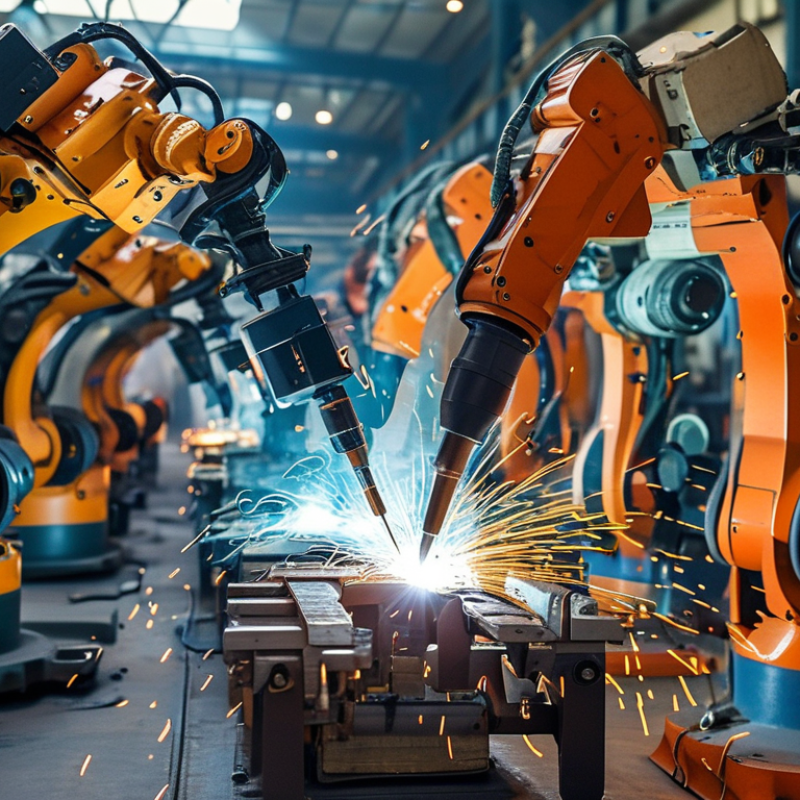
The market for automatic welding equipment in China has seen rapid growth. Factors like rising industrialization fuel this trend. Innovations in technology also play a key role. Chinese manufacturers increasingly focus on automation. This helps improve efficiency and reduce labor costs.
The demand for high-quality welding solutions rises as global buyers seek reliable equipment. Many Chinese companies invest heavily in research and development. This leads to advanced features and improved reliability. However, some manufacturers still struggle with quality consistency. Potential buyers should carefully evaluate suppliers’ reputations.
Moreover, understanding local regulations is vital. Compliance can impact the choice of equipment. Language barriers may also pose challenges during transactions. Global buyers must remain vigilant and adaptable. The dynamic nature of this market presents both opportunities and risks.
| Equipment Type | Application | Power Supply (KW) | Welding Speed (m/min) | Weight (kg) | Price (USD) |
|---|---|---|---|---|---|
| MIG Welding Machine | Metal Fabrication | 20 | 12 | 50 | 1200 |
| TIG Welding Machine | Precision Welding | 15 | 10 | 40 | 1500 |
| Plasma Cutting Machine | Metal Cutting | 25 | 15 | 70 | 2000 |
| Laser Welding Machine | Thin Sheet Welding | 30 | 20 | 60 | 3000 |
| Spot Welding Machine | Electronics | 10 | 8 | 30 | 800 |
| Submerged Arc Welding Machine | Heavy-duty Applications | 35 | 20 | 100 | 2500 |
| Robotic Welding Arm | Automated Production | 50 | 15 | 200 | 5000 |
| Arc Welding Robot | Manufacturing | 45 | 10 | 180 | 4500 |
| CNC Welding Machine | Complex Designs | 60 | 25 | 250 | 6000 |
| Portable Welding Machine | Field Work | 5 | 6 | 15 | 600 |
When selecting automatic welding equipment, several key features warrant consideration. The welding process type is critical. Different applications require varied equipment, such as MIG, TIG, or stick welding. Each technique has its distinct characteristics and optimal use cases. For instance, reports indicate that MIG welding is widely favored for its speed and ease of use in industrial applications.
Another significant factor is the duty cycle. This indicates how long the machine can operate before it needs to cool down. A higher duty cycle is often essential for heavy-duty tasks. Studies show equipment with a 60% duty cycle is preferred for continuous operation. Additionally, versatility is vital. Equipment that can handle different materials, thicknesses, and joint configurations can save costs.
Portability is also an aspect worth reflecting on. While many buyers prioritize lightweight equipment, compact designs often compromise power. Advanced models may offer integrated features, yet they can present challenges regarding ease of maintenance. The proper balance between functionality and convenience is essential. Buyers are advised to consider their specific use cases before making a choice.
Automatic welding equipment plays a vital role in various industries. China has emerged as a leader in manufacturing such equipment, attracting global buyers. The competitive landscape is filled with numerous manufacturers, each offering unique solutions for different welding needs. Many companies focus on innovation and technology to enhance the welding process. Some specialize in robotic welding systems, while others excel in MIG and TIG welding machines.
Tips: When choosing equipment, consider the specific applications and production capacity. Look for user-friendly interfaces. It's essential to evaluate after-sales service and technical support as well.
Quality is paramount in welding processes. The reliability of the equipment can impact production efficiency. However, not all manufacturers achieve consistent quality across their product lines. Research and reviews can be helpful in identifying the best options.
Tip: Pay attention to customer feedback. Engaging with current users can provide valuable insights. Additionally, exploring training resources from manufacturers can enhance your team's skills. Networking within industry forums can also aid in making informed decisions.
When exploring automatic welding equipment in China, price and performance are pivotal for global buyers. The competition is fierce, and many brands offer unique features. Some models feature advanced automation, improving efficiency significantly. However, the reliability of these machines can differ. Lower-priced options may compromise quality or support.
Another factor to consider is the learning curve associated with each brand. Some equipment is user-friendly, promoting quick adoption. Others may require extensive training, impacting initial productivity. Maintenance also varies widely; simpler designs may need less upkeep, while complex systems could strain resources.
Global buyers should also research customer feedback before making decisions. Testing performance against the specifications helps to understand real-world applications. Despite appealing prices, a machine’s long-term performance may reveal shortcomings. Reflecting on previous choices can provide valuable insights into future investments.
Automatic welding technology is rapidly advancing in China, reflecting global industry trends. Innovations focus on enhanced precision and efficiency in welding processes. These developments help manufacturers meet increasing demands for high-quality outputs. Automation minimizes human error and improves consistency, leading to higher productivity.
New materials and techniques are emerging in the field. For instance, companies explore the use of robots to expedite welding without sacrificing quality. This shift addresses the skill gap in the workforce. However, the implementation of advanced equipment can require significant initial investments, which some companies might hesitate to make.
Furthermore, sustainability is becoming a key consideration. As industries adopt greener practices, the need for energy-efficient welding solutions grows. This trend pushes manufacturers to rethink production processes. Balancing innovation with cost-effectiveness presents a challenge. Companies must adapt to remain competitive, constantly assessing both technology and market needs.
„Thanks to the LUVIR technology, the solder resist process could be switched directly from the previously used mask exposure to direct exposure. As an outstanding digital solution on the market, this technology has been able to demonstrate fast process times and superior quality on our certified conventional ink in production. This allowed us to fully digitize the solder mask process at low cost – without process or ink adjustments. An excellent benefit to our production in Rot am See.“
Ralf Göhringer (Head of Production WE Rot am See)
I would definitely recommend the Limata machine and team for a future company purchase
Michael Greenaway
Compunetics Inc.
“The Limata ldi has been amazing!! Best thing we did was buy this machine”
Richard Brady
GM
Circuitlabs
“Since 2019, we have been running the Limata X1000 LDI system (including LUVIR for solder mask imaging) in daily production as an addition to our current process with film. The machine was capable of properly exposing Taiyo PSR-4000 BN (DI) solder mask types on normal to high-copper boards using a new and unique direct imaging process. The machine operating interface is very user friendly which allowed for a quick technical training curve. The pre-registration processing reduced several seconds of production time at every print. Limata support and service staff is incomparable. They supported our team every step of the way at basically any time of the day or night, with literally, an immediate response time, customizing the software interface to best fit our Operations and needs.
We have exposed more than 8,000 prints since end of October, on various solder mask colors and some resist film panels. Limata, has proven to be very capable and innovative. They are a strong contender in the industry.
We have very much enjoyed this project, and working with the team!
Thank you Limata for the continued support and being a part of our growth.”
Bill Sezate
Vice President, GM
Summit Interconnect
As a replacement to our current contact exposure process with film, the LIMATA X2000 system including LUVIR-Technology was capable of properly exposing non-LDI solder mask types using a direct imaging process. The machine offers cutting edge software with a very intuitive operating interface which allowed for quick technician training curve. The dual drawer system combined with pre-registration processing reduced several seconds of production time at every machine cycle. Limata support and service staff is world class. They added software patches to keep production running at shortest possible response times, customized the software interface to best fit our in-house Operations system, and even wrote a step-by-step machine processing manual. As a result of the project, we have exposed more than 16,000 times on various product types and solder mask brands/colors. Limata, in a very short timeframe as a company, has definitely shown they are truly innovative and will be challenging the industry of direct imaging for the top spot.
Kevin Beattie
Process Engineer
TTM Technologies
Forest Grove Division
