
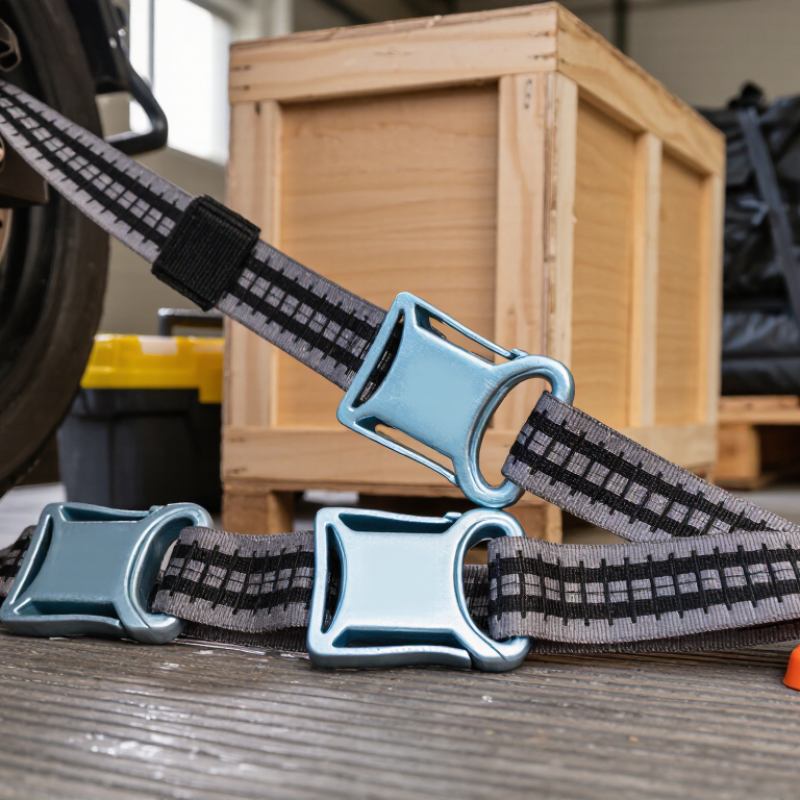
Top Buckle Tie Down Straps for Secure Cargo
Choosing a tie down strap starts with the material. Polyester resists sunlight, moisture, and stretching, making it suitable for trailers and outdoor hauling. Nylon feels softer and absorbs shock, but it stretches more under changing loads. That movement can loosen cargo. For sharp-edged equipment, use edge protectors. A buckle should close firmly without forcing it. Test it by hand.
Length matters more than many users expect. A strap that barely reaches around the load leaves little room for safe tensioning. Measure the cargo circumference, then add enough length for the buckle and anchor points. Excess webbing should be secured, not left flapping near wheels. Too much slack is risky. I once selected a strap by vehicle size alone, which was a poor shortcut. The actual cargo shape mattered more.
Check the working load limit, not only the advertised breaking strength. The working limit should exceed the cargo weight with a clear safety margin. Consider vibration, braking, wind, and uneven roads. Inspect stitching, webbing, and buckle teeth before every trip. Replace straps with cuts, melted fibers, bent hardware, or faded labels. A clean strap is not automatically a safe strap. Follow the manufacturer’s instructions and local transport requirements, especially when securing dense machinery or unusually shaped loads.