China has become a major sourcing center for automotive filtration, with manufacturers serving passenger cars, commercial vehicles, and aftermarket distributors. A reliable car engine air filter supplier must offer more than a competitive factory price. It should provide stable media quality, accurate dimensions, strong sealing foam, and repeatable production records. Even a small gap around the filter frame can let dusty air reach the engine intake.
Dr. Mark R. Johnson, an automotive filtration consultant, states, “A clean air path protects engine performance before the driver notices a problem.” This practical view explains why buyers should examine filtration efficiency, airflow resistance, dust-holding capacity, and service life together. One impressive test result is not enough. Factory audits, sample inspections, and batch comparison remain important.
This guide introduces leading China car engine air filter manufacturers and suppliers through a buyer-focused lens. It considers OEM capability, private-label support, export experience, certifications, packaging, and communication quality. Some suppliers may show excellent catalogs but provide limited technical evidence. That weakness deserves attention. It is also easy to overvalue a low quotation. Cheap filters can create higher replacement rates, fitment complaints, or avoidable engine intake contamination.
The strongest supplier is not always the largest supplier. It is the one that matches your vehicle range, sales channel, and quality expectations. Product data should be checked against real samples. Claims should be tested, not simply repeated. This article aims to make that comparison clearer, while acknowledging that supplier performance can change over time.
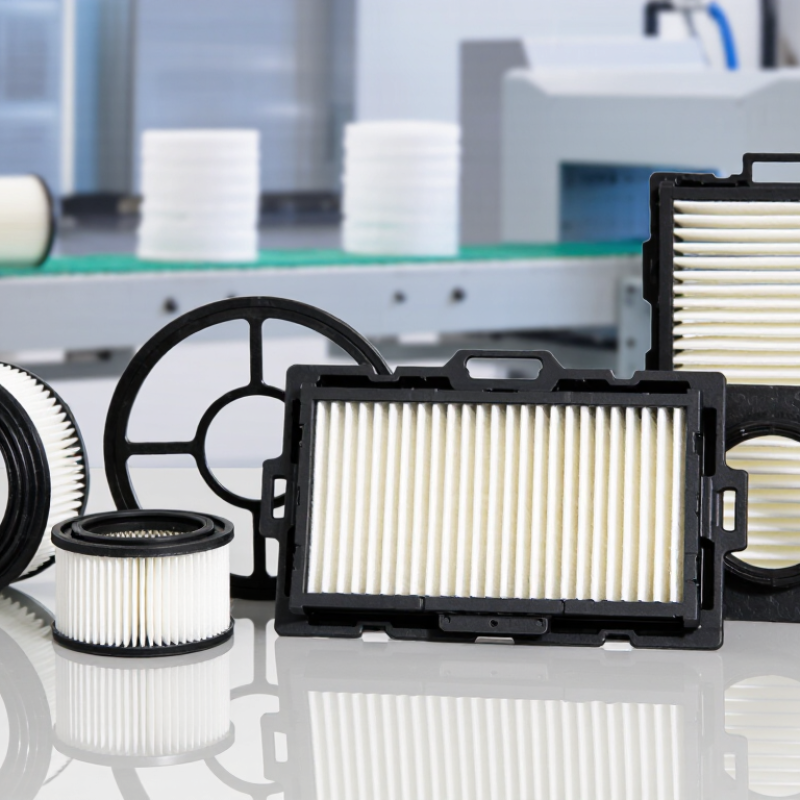
A top China car engine air filter manufacturer proves performance with data, not attractive product photos. The factory should test filtration efficiency, dust-holding capacity, airflow resistance, and sealing quality under controlled conditions. Testing aligned with recognized automotive procedures, such as ISO 5011, adds credibility. Independent laboratory reports are useful, but batch records matter too.
Experience shows that small details often decide filter reliability. The pleats should remain evenly spaced after handling. The gasket must stay flexible in cold and hot conditions. A clean fit prevents unfiltered air from bypassing the media. Strong manufacturers inspect dimensions, paper weight, adhesive coverage, and seal compression during production. They also retain samples from each batch for later checks.
Traceability matters. A reliable supplier can identify the raw material lot, production date, inspection results, and responsible line. Clear technical drawings reduce fitting errors. Responsive engineers should explain pressure-drop changes instead of hiding them. No factory gets every batch perfect. That is a practical reality. What matters is how quickly problems are detected, documented, and corrected. Some suppliers still rely too heavily on visual inspection, which cannot reveal every weakness. Buyers should request sample testing, packaging checks, and long-term communication before approving regular orders.
When evaluating China’s top car engine air filter manufacturers and suppliers, laboratory data deserves careful attention. ISO 5011 measures air cleaner performance under controlled airflow and dust conditions. Engineers record pressure loss, filtration efficiency, and dust-holding capacity. These figures show how much resistance the filter creates and how much contaminant it removes.
SAE J726 provides another established framework for testing engine air cleaners. It commonly examines airflow restriction, dust penetration, and service capacity. A test may begin with a clean filter, then add standardized dust gradually. The pressure drop can rise like a tightening door hinge. Efficiency may also change as the filter loads. Small test differences matter.
In practical supplier audits, I compare results at the same airflow, dust concentration, and reporting method. I also inspect seals, pleats, and housing fit. A strong laboratory result can fail in service if dust bypasses the gasket. That is easy to miss. ISO 5011 and SAE J726 should not be treated as interchangeable certificates. Their procedures and test conditions may differ. Ask for complete test reports, not only headline efficiency percentages. Repeat testing is wise, because one result may hide manufacturing variation. Field checks still matter, especially after driving on dusty roads.
For car engine air filters, supplier selection should begin with certification evidence, not catalog claims. The ISO Survey 2023 recorded 1,265,216 ISO 9001 certificates worldwide, showing how widely quality management systems are adopted. Yet ISO 9001 alone does not confirm automotive process capability. Buyers should request a valid certificate, site address, scope, expiry date, and certification body. The certificate must cover filter production, not only trading or warehouse operations.
IATF 16949 adds stricter controls for risk management, traceability, supplier evaluation, and defect prevention. The IATF 2023 Annual Report describes certification activity across more than 80 countries. This global reach helps buyers compare qualified suppliers across manufacturing regions. During an audit, inspect pleat consistency, gasket compression, adhesive curing, and airflow test records. Ask for batch identification on cartons and retained samples. Small details matter. A certificate is not proof of a flawless filter. It only shows that a defined system passed an audit. Production discipline still needs verification.
Independent laboratory reports should confirm filtration efficiency, pressure drop, dust-holding capacity, and temperature resistance. Testing methods must match recognized automotive or customer specifications. Some suppliers present impressive laboratory figures but provide limited production data. That gap deserves attention. A practical shortlist should include recent corrective-action records, process capability results, and evidence of controlled raw materials. IATF 16949 and ISO 9001 are useful gates, not final purchasing decisions.
China’s leading car engine air filter manufacturers usually compare three performance measures: filtration efficiency, airflow, and dust capacity. Filtration efficiency shows how well the filter captures fine particles, including road dust and soot. Higher efficiency protects sensitive engine components, but it may restrict airflow if the media is too dense.
Airflow affects combustion consistency, throttle response, and fuel use. A filter with strong airflow can support efficient engine breathing. However, airflow figures need testing under controlled conditions. Dust capacity measures how much contamination the filter holds before pressure drop becomes excessive. In real driving, a high-capacity filter may last longer on dusty roads. Yet laboratory results cannot perfectly represent every climate or driving route. That limitation deserves attention.
Tips: Ask suppliers for test standards, pressure-drop curves, efficiency data, and dust-loading results. Check whether tests use conditions similar to your vehicle. Inspect pleat spacing, sealing foam, frame strength, and media uniformity. A filter may show excellent efficiency but fail through poor edge sealing. Fit is equally important. Even a small gap can allow unfiltered air into the intake system. Experienced buyers should request sample testing before placing large orders. Compare results from several production batches, not only one sample. Specifications can look impressive. Real consistency matters more.
Representative ISO 5011-style benchmark values for common automotive air-filter media. Higher filtration efficiency and dust capacity are beneficial, while higher airflow indicates lower restriction under comparable test conditions. Actual results vary by filter geometry, vehicle application, and test setup.
Benchmark basis: representative non-branded values commonly used for comparative engineering analysis; they are not claims for any specific manufacturer or supplier.
A reliable supplier should prove its OEM capability with documents, not promises. Request drawings, material specifications, test reports, and production photos. Confirm whether the factory makes complete filters or only assembles imported media. Compare the sample with your engine model, sealing edge, pleat spacing, and airflow rating. A clean sample can still hide weak batch control. I learned that one approved sample never guarantees stable production.
MOQ reveals how a supplier manages materials and production planning. Ask for separate quantities for trial orders, private packaging, and regular production. A very low MOQ may increase unit costs or limit customization. A high MOQ can trap cash in slow-moving inventory. Request a written quotation showing tooling, packaging, inspection, and shipping charges. Check whether replacement orders use the same specifications.
Export data adds another layer of verification. Review shipment records, destination markets, product descriptions, and shipping frequency through reputable trade databases. Look for consistent export activity rather than one unusually large shipment. Then ask the supplier to explain mismatches between claimed capacity and visible export volume. Contact two or three previous buyers when possible, while protecting confidential information. Factory audits, video calls, and independent pre-shipment inspections strengthen the evidence, but none removes every risk. Supplier evaluation remains a process, not a single document.
„Thanks to the LUVIR technology, the solder resist process could be switched directly from the previously used mask exposure to direct exposure. As an outstanding digital solution on the market, this technology has been able to demonstrate fast process times and superior quality on our certified conventional ink in production. This allowed us to fully digitize the solder mask process at low cost – without process or ink adjustments. An excellent benefit to our production in Rot am See.“
Ralf Göhringer (Head of Production WE Rot am See)
I would definitely recommend the Limata machine and team for a future company purchase
Michael Greenaway
Compunetics Inc.
“The Limata ldi has been amazing!! Best thing we did was buy this machine”
Richard Brady
GM
Circuitlabs
“Since 2019, we have been running the Limata X1000 LDI system (including LUVIR for solder mask imaging) in daily production as an addition to our current process with film. The machine was capable of properly exposing Taiyo PSR-4000 BN (DI) solder mask types on normal to high-copper boards using a new and unique direct imaging process. The machine operating interface is very user friendly which allowed for a quick technical training curve. The pre-registration processing reduced several seconds of production time at every print. Limata support and service staff is incomparable. They supported our team every step of the way at basically any time of the day or night, with literally, an immediate response time, customizing the software interface to best fit our Operations and needs.
We have exposed more than 8,000 prints since end of October, on various solder mask colors and some resist film panels. Limata, has proven to be very capable and innovative. They are a strong contender in the industry.
We have very much enjoyed this project, and working with the team!
Thank you Limata for the continued support and being a part of our growth.”
Bill Sezate
Vice President, GM
Summit Interconnect
As a replacement to our current contact exposure process with film, the LIMATA X2000 system including LUVIR-Technology was capable of properly exposing non-LDI solder mask types using a direct imaging process. The machine offers cutting edge software with a very intuitive operating interface which allowed for quick technician training curve. The dual drawer system combined with pre-registration processing reduced several seconds of production time at every machine cycle. Limata support and service staff is world class. They added software patches to keep production running at shortest possible response times, customized the software interface to best fit our in-house Operations system, and even wrote a step-by-step machine processing manual. As a result of the project, we have exposed more than 16,000 times on various product types and solder mask brands/colors. Limata, in a very short timeframe as a company, has definitely shown they are truly innovative and will be challenging the industry of direct imaging for the top spot.
Kevin Beattie
Process Engineer
TTM Technologies
Forest Grove Division
