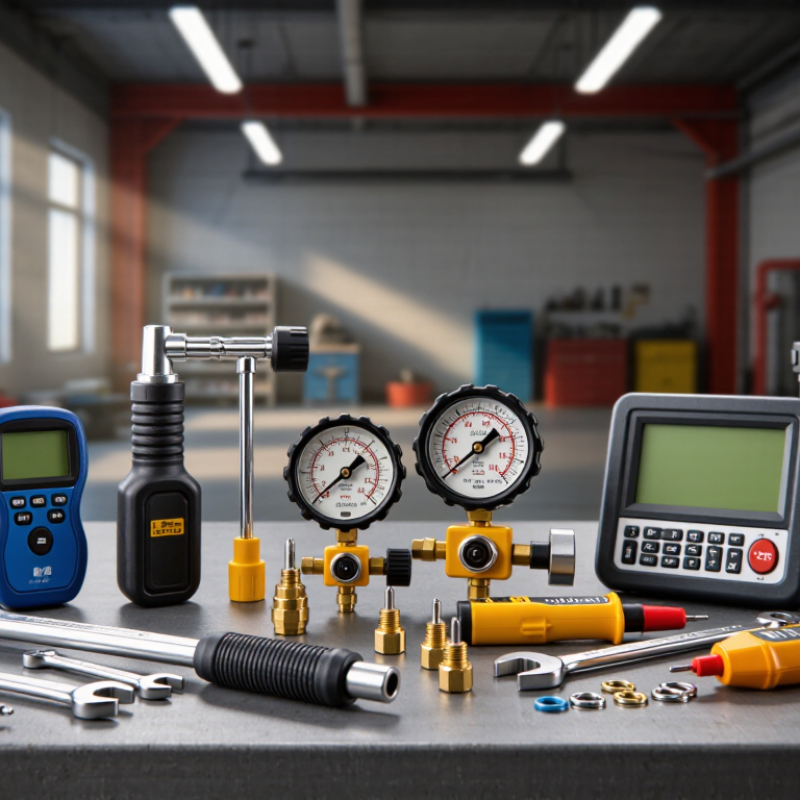
Choosing the right Compressor Tools can shape maintenance costs, uptime, and purchasing confidence across international markets. A workshop may need a torque wrench, leak detector, pressure gauge, filter wrench, or digital diagnostic meter. Each tool solves a different problem.
This guide reviews ten practical options for global buyers. It considers measurement accuracy, material quality, compatibility, repairability, packaging, and supplier support. A reliable pressure gauge should remain readable in bright sunlight and stable during repeated checks. A sturdy leak detector should identify problems around fittings without creating confusing readings. Buyers should also verify measurement units, calibration records, voltage requirements, spare-part availability, and delivery conditions before placing an order.
Field experience shows that the cheapest tool is rarely the cheapest choice. A weak handle can slow a service call. An unclear display can cause avoidable mistakes. Small details matter. However, no ranking is perfect. Workshop environments differ, and product specifications can change between batches or regions. This guide therefore treats the list as a practical starting point, not a universal answer. Professional technicians should compare manufacturer documentation, independent test results, and local service needs. They should also check whether a tool fits the compressor model, refrigerant system, and safety procedures involved. Careful selection supports dependable maintenance and more transparent purchasing decisions.
A top-ten compressor tool list is useful only when its measurements are comparable. Pressure tells you the force available at the outlet, usually shown in bar or psi. Flow tells you how much air the machine can deliver over time. These values are not interchangeable. A compressor may show impressive pressure but provide insufficient airflow for a continuous-duty tool.
In practical equipment evaluations, I check free air delivery rather than relying on displacement figures. Free air delivery reflects output under stated inlet conditions. Temperature, humidity, altitude, and outlet pressure can change the result. Small differences matter. A workshop using spray equipment, impact tools, or automated valves should match airflow demand with a safety margin. Otherwise, pressure drops may appear during normal operation.
ISO 1217 testing gives buyers a more reliable comparison method. The standard defines test conditions, measurement points, and performance reporting for displacement compressors. Ask for the test pressure, delivered flow, power input, and tolerance range. Do not compare numbers from different test conditions. That mistake is common. It can make a less efficient unit seem stronger on paper. I would also verify calibration records and test dates. Documentation can be incomplete, and that deserves scrutiny. A tool that performs well in a controlled test may still need field validation after installation, especially where long piping, filters, or changing ambient conditions reduce actual flow.
Compressed air can look clean, quiet, and harmless, yet it may consume 10–15% of a factory’s electricity. The U.S. Department of Energy highlights this significant energy burden. A small pressure loss can keep a large motor running longer. The waste is often invisible. Until the monthly power bill arrives.
For global buyers, the top ten compressor tools should support measurement, not guesswork. Useful options include flow meters, pressure loggers, ultrasonic leak detectors, dew-point meters, power analyzers, temperature probes, data loggers, receiver gauges, controller monitors, and audit software.
Flow data reveals demand changes across shifts. Leak detectors can locate a faint hiss near fittings or hoses. Power analyzers connect air production with actual electricity use. Dew-point meters protect sensitive processes from wet air.
Buyers should check calibration records, measurement ranges, language support, and local service access. A tool that works well in a dry workshop may struggle in a humid plant. I have seen audits miss leaks because testing happened during a quiet shift. That is a real weakness. Test during production, then repeat the readings. Pressure alone can mislead; a stable gauge does not prove efficient operation. Compare pressure, flow, runtime, and power together. Even basic records can expose an oversized compressor, unnecessary pressure, or a receiver that cannot manage demand peaks.
For global buyers comparing ten compressor tools, the ranking should begin with measured efficiency, not brochure claims. I check specific power, expressed as kilowatts per cubic meter per minute, at the required pressure. A calibrated flow meter and power analyzer reveal real performance. Small losses become expensive in factories running 6,000 hours yearly.
Air quality matters. Moisture, oil aerosols, and particles can damage valves, paint finishes, or sensitive instruments. I review filtration stages, dryer performance, pressure dew point, and maintenance access. ISO 8573-1 targets can guide comparisons, but the final requirement depends on the application. Numbers can mislead. A very clean outlet may require costly filters and more frequent replacements.
Duty cycle shows whether a tool can survive the workload. I compare continuous operation, thermal recovery, noise, and performance during repeated starts. Total cost includes electricity, installation, filters, service labor, shipping, spare parts, and possible downtime. A cheaper unit may lose its advantage after two years of heavy use. My ranking is not perfect because climate, voltage, labor rates, and local service quality vary widely. Buyers should test operating data under their own conditions before accepting a final score.
Top 10 Compressor Tools Compared by Capacity, Pressure, and Safety
In global purchasing checks, I compare compressor tools by real output, not advertised motor size. Portable direct-drive units suit light maintenance, with roughly 6–10 bar working pressure. Belt-driven piston models usually offer larger tanks and steadier workshop performance. Oil-free compressors support clean air tasks, but their duty cycles can be shorter. Small electric models remain practical where stable power is available.
Rotary screw compressors handle continuous production and higher capacity. Rotary scroll models run quietly and suit clean indoor environments. Rotary vane units provide smooth airflow for moderate demand. Reciprocating high-pressure compressors serve applications requiring pressure above standard workshop levels. Booster compressors raise existing pressure, yet they need careful heat management. Diesel-powered units support remote work, while electric versions reduce local exhaust concerns.
Safety changes the buying decision. I check the pressure vessel rating, relief valve, hose condition, thermal protection, and emergency stop. Guards should cover belts and couplings. Grounding matters around conductive floors. Never match a tool only by maximum pressure; usable airflow must exceed the connected equipment’s demand. I once approved a compact unit with an attractive capacity figure, then found its continuous output was unsuitable. That mistake was avoidable. The specification needed clearer duty-cycle data. Operators should also inspect oil levels, drains, filters, and unusual vibration before each shift. Small details prevent large failures.
Comparison of common compressor configurations using typical commercial specifications. Actual performance varies by model, altitude, temperature, and operating conditions.
| Rank | Compressor Tool Type | Drive & Technology | Typical Capacity | Typical Maximum Pressure | Recommended Duty | Key Safety Provisions | Best Use Case |
|---|---|---|---|---|---|---|---|
| 1 | Portable Piston Compressor | Single-stage, oil-lubricated piston | 24–50 L receiver; 120–200 L/min FAD | 8–10 bar / 116–145 psi | Intermittent | Pressure relief valve, thermal overload, automatic stop/start, guarded belt or fan | Nailers, staplers, tire inflation, light workshop tasks |
| 2 | Belt-Drive Workshop Compressor | Two-stage, oil-lubricated piston | 50–200 L receiver; 250–650 L/min FAD | 10–15 bar / 145–218 psi | Intermittent to medium duty | Interstage relief valve, pressure switch, motor protection, belt guard | Impact wrenches, spray guns, small maintenance shops |
| 3 | Oil-Free Piston Compressor | Oil-free reciprocating piston | 24–100 L receiver; 100–350 L/min FAD | 7–10 bar / 102–145 psi | Intermittent | Thermal cut-out, pressure relief valve, non-return valve, low-maintenance air path | Clean-air applications, laboratories, small pneumatic tools |
| 4 | Dental-Style Oil-Free Compressor | Oil-free piston with air drying | 20–50 L receiver; 100–250 L/min FAD | 7–8 bar / 102–116 psi | Short-cycle to medium duty | Pressure relief valve, thermal protection, moisture drain, enclosed motor | Dental instruments, airbrushing, clean technical equipment |
| 5 | Gasoline-Engine Portable Compressor | Two-stage piston with combustion engine | 20–30 L receiver; 300–650 L/min FAD | 8–10 bar / 116–145 psi | Intermittent to medium duty | Engine shutdown, pressure relief valve, hot-surface guards, fuel isolation | Outdoor construction, road service, remote maintenance |
| 6 | Compact Rotary Screw Compressor | Oil-injected rotary screw, fixed speed | 0.5–1.0 m³/min FAD; 200–500 L receiver | 7.5–10 bar / 109–145 psi | Continuous | Overtemperature trip, separator relief valve, emergency stop, phase protection | Small factories, CNC equipment, continuous pneumatic production |
| 7 | Variable-Speed Rotary Screw Compressor | Oil-injected rotary screw with inverter drive | 0.8–2.0 m³/min FAD; 300–1,000 L receiver | 7.5–13 bar / 109–189 psi | Continuous, variable demand | Electronic monitoring, overload protection, high-temperature shutdown, emergency stop | Facilities with changing air demand and energy-efficiency targets |
| 8 | Oil-Free Rotary Screw Compressor | Oil-free rotary screw with air cooling or water cooling | 1.0–4.0 m³/min FAD; 500–2,000 L receiver | 7–10 bar / 102–145 psi | Continuous | High-temperature protection, automatic shutdown, pressure monitoring, emergency stop | Food processing, pharmaceuticals, electronics, clean manufacturing |
| 9 | High-Pressure Reciprocating Compressor | Multi-stage piston, intercooled | 0.05–0.50 m³/min FAD; optional high-pressure receiver | 20–40 bar / 290–580 psi | Intermittent to medium duty | Multiple-stage relief valves, interstage pressure monitoring, temperature shutdown | Pressure testing, specialized automation, high-pressure cleaning |
| 10 | Low-Pressure Air Blower | Positive-displacement lobe or screw blower | 1.0–10.0 m³/min FAD | 0.3–1.0 bar / 4–15 psi | Continuous | Discharge relief valve, intake filter, belt guard, motor overload protection | Wastewater aeration, pneumatic conveying, drying and ventilation |
Global buyers comparing the top 10 compressor tools should begin with air quality, not catalog price. ISO 8573-1 classifies particles, water, and oil in compressed air. Match the required class to the application. A workshop may need different purity than food, pharmaceutical, or electronics production.
Compliance evidence must be specific. CE marking supports applicable European requirements, while UL certification may address relevant North American safety standards. Ask for current declarations, test reports, and the exact model number. Documents should match the supplied configuration. Generic certificates create doubt. Local electrical rules still matter.
Warranty terms can change the real cost. Check coverage periods, exclusions, response times, and authorized service access. Spare parts availability is equally important. A compressor that waits weeks for a valve can damage production schedules. Calculate ROI using energy consumption, expected duty cycle, maintenance labor, downtime, and resale value. Variable-speed control may reduce energy use, but only under suitable demand patterns. Do not assume it always pays back. I have seen attractive projections ignore idle hours and voltage differences. That is a costly mistake. Use measured operating data when possible, then test the assumptions with a conservative scenario. Reliability begins with evidence, not promises.
Use the required ISO 8573-1 purity class as the starting point, then verify CE or UL conformity for the target market, warranty coverage, service availability, and total cost of ownership.
Data basis: ISO 8573-1:2010 total oil concentration limits. Values are maximum total oil content in mg/m³ at reference conditions. Class 0 is application-defined and is not included because it has no single universal limit.
„Thanks to the LUVIR technology, the solder resist process could be switched directly from the previously used mask exposure to direct exposure. As an outstanding digital solution on the market, this technology has been able to demonstrate fast process times and superior quality on our certified conventional ink in production. This allowed us to fully digitize the solder mask process at low cost – without process or ink adjustments. An excellent benefit to our production in Rot am See.“
Ralf Göhringer (Head of Production WE Rot am See)
I would definitely recommend the Limata machine and team for a future company purchase
Michael Greenaway
Compunetics Inc.
“The Limata ldi has been amazing!! Best thing we did was buy this machine”
Richard Brady
GM
Circuitlabs
“Since 2019, we have been running the Limata X1000 LDI system (including LUVIR for solder mask imaging) in daily production as an addition to our current process with film. The machine was capable of properly exposing Taiyo PSR-4000 BN (DI) solder mask types on normal to high-copper boards using a new and unique direct imaging process. The machine operating interface is very user friendly which allowed for a quick technical training curve. The pre-registration processing reduced several seconds of production time at every print. Limata support and service staff is incomparable. They supported our team every step of the way at basically any time of the day or night, with literally, an immediate response time, customizing the software interface to best fit our Operations and needs.
We have exposed more than 8,000 prints since end of October, on various solder mask colors and some resist film panels. Limata, has proven to be very capable and innovative. They are a strong contender in the industry.
We have very much enjoyed this project, and working with the team!
Thank you Limata for the continued support and being a part of our growth.”
Bill Sezate
Vice President, GM
Summit Interconnect
As a replacement to our current contact exposure process with film, the LIMATA X2000 system including LUVIR-Technology was capable of properly exposing non-LDI solder mask types using a direct imaging process. The machine offers cutting edge software with a very intuitive operating interface which allowed for quick technician training curve. The dual drawer system combined with pre-registration processing reduced several seconds of production time at every machine cycle. Limata support and service staff is world class. They added software patches to keep production running at shortest possible response times, customized the software interface to best fit our in-house Operations system, and even wrote a step-by-step machine processing manual. As a result of the project, we have exposed more than 16,000 times on various product types and solder mask brands/colors. Limata, in a very short timeframe as a company, has definitely shown they are truly innovative and will be challenging the industry of direct imaging for the top spot.
Kevin Beattie
Process Engineer
TTM Technologies
Forest Grove Division
