When it comes to construction, selecting the right Construction Machinery Parts is crucial. These parts ensure safety and efficiency on job sites. Poor choices can lead to costly delays and equipment failures. As a buyer, understanding the different components is essential for making informed decisions.
There are key elements to consider. Quality and reliability should always be a priority. Not all parts are created equal, and some may not meet industry standards. Researching suppliers and reading reviews can help you avoid potential pitfalls.
Moreover, knowing the specific needs of your machinery can enhance performance. Compatibility is vital. An incompatible part can damage equipment and increase repair costs. Always verify specifications before making a purchase. Reflecting on your experiences with parts can guide future decisions, promoting better outcomes in your projects.
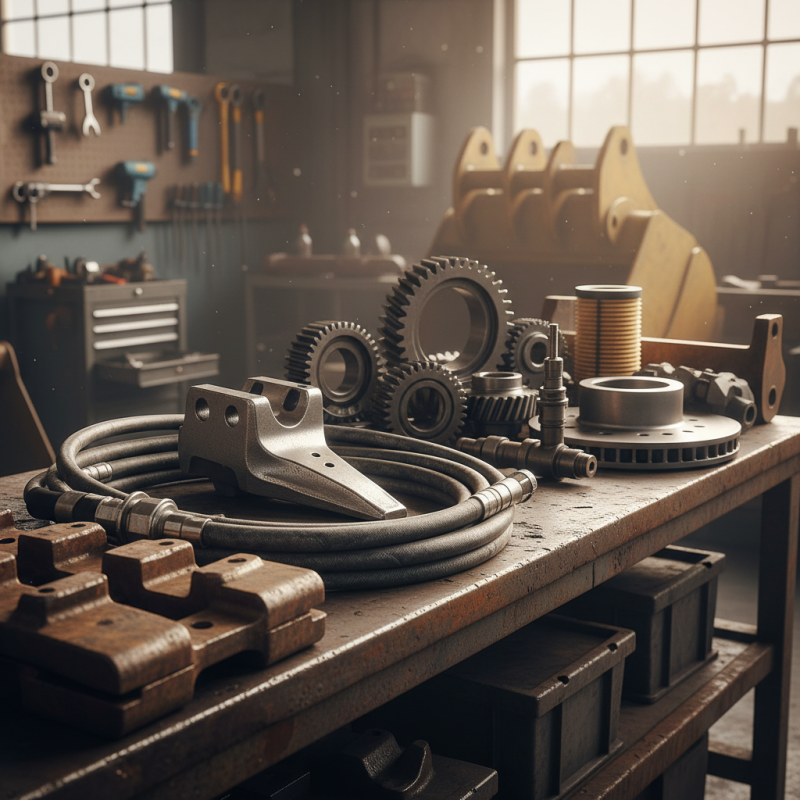
When working with construction machinery, understanding key components is crucial. Essential parts play a significant role in the efficiency and safety of operations. For instance, hydraulic systems are vital for lifting and moving heavy materials. They empower machinery to perform tasks with precision. Without fully functional hydraulics, performance diminishes significantly.
Another important aspect is the engine. A reliable engine ensures that machinery operates smoothly under varying conditions. Maintenance of engine oil and filters is often neglected, yet it’s essential for longevity. Ignoring these details can lead to significant downtime and expensive repairs.
Additionally, tracks and tires must be considered. They are the machinery's first point of contact with the job site. Worn-out tracks can lead to reduced traction and unstable handling. Operators should regularly inspect them for wear and tear. Recognizing early signs of damage can save time and resources later on. Each component requires attention and care, as they collectively determine machinery efficiency on the job.
High-quality machinery parts are crucial in construction. They directly impact efficiency, safety, and overall project success. For instance, according to a 2022 report by the Construction Equipment Association, using superior components can enhance a machine's lifespan by up to 30%. This reduction in wear and tear minimizes downtime, allowing projects to stay on schedule.
While investing in high-quality parts comes with a higher initial cost, the long-term benefits often outweigh these expenses. A study by the National Institute of Standards and Technology indicated that every dollar spent on quality leads to a saving of $2 to $5 in reduced maintenance and repairs. This presents a compelling case for contractors facing tight budgets. They must balance expenses with reliable performance and durability.
However, choosing the right part isn't always straightforward. Many buyers may focus on cost alone, overlooking quality indicators. Decisions based on price can result in hidden costs down the line. Moreover, inferior parts may result in safety risks. Evaluating supplier reputation and conducting thorough research is essential to avoid these pitfalls. Emphasizing quality ensures that machinery performs effectively and reliably.
| Part Type | Material Quality | Durability (Hours) | Cost ($) | Warranty Period (Years) |
|---|---|---|---|---|
| Hydraulic Cylinder | High-Grade Steel | 5000 | 150 | 3 |
| Excavator Bucket | Alloy Steel | 3000 | 200 | 2 |
| Piston Pump | Forged Aluminum | 4000 | 180 | 4 |
| Track Shoes | Heat-Treated Steel | 6000 | 100 | 2 |
| Wheel Loader Tire | Synthetic Rubber | 3000 | 250 | 1 |
| Transmission Gear | High-Carbon Steel | 4500 | 220 | 3 |
| Loader Arm | High-Manganese Steel | 5000 | 320 | 5 |
| Fuel Injector | Stainless Steel | 5000 | 75 | 2 |
| Main Control Valve | Ductile Iron | 6500 | 300 | 4 |
When purchasing construction machinery parts, several key factors come into play. Quality is paramount; high-quality parts ensure the longevity of machinery. Look for sources with a reputation for providing durable components. This often translates to less frequent replacements, ultimately saving money over time. Reliability is crucial. Make sure parts are compatible with existing machinery to avoid operational hiccups.
Cost is another important aspect. While it’s tempting to choose cheaper options, this can lead to greater expenses later due to failures or inefficiencies. It’s wise to balance quality and cost. Researching suppliers can also reveal insights into market trends. Ask for references and read reviews. These steps build trust in the purchasing process.
Finally, consider the after-sales support. Quality parts should come with support options. Warranty and service agreements can make a difference. A reliable supplier will assist with future issues. Remember, investing in parts is investing in the business’s success. Each decision should reflect long-term goals and operational excellence.
The construction machinery parts industry is vast and complex. It features many reputable brands and manufacturers. According to the Global Market Insights report, this sector is projected to reach over $60 billion by 2027. Strong demand is evident from infrastructure projects worldwide.
Key components like hydraulic systems, engines, and undercarriages play crucial roles in machinery efficiency. However, choosing the right suppliers can be challenging. Many companies struggle with inconsistent quality. Research indicates that 30% of construction projects face delays due to equipment failures.
Reliability in parts is paramount. Manufacturers that prioritize advanced technology and quality assurance generally outperform their competitors. In today's market, the focus has shifted to durability and innovation. Understanding these dynamics helps buyers make informed decisions. The landscape is evolving, and staying updated is essential for success in construction machinery procurement.
Maintaining construction machinery parts is essential for longevity and optimal performance. Research indicates that proper maintenance can extend the life of these components by up to 40%. Effective care reduces wear and tear, which often leads to costly repairs. Regular inspections can identify early signs of damage, preventing small issues from escalating.
Lubrication is a key factor in maintenance. A study found that machinery without adequate lubrication can experience a 25% increase in operational failures. Operators should check fluid levels and apply the correct lubricants. Using quality lubricants improves efficiency and reduces friction. This can significantly enhance the machinery's lifespan.
Daily cleaning is another critical habit. Dust and debris accumulation can lead to overheating. In fact, studies show that machinery operating in clean environments has a 15% lower failure rate. Operators often overlook this step, assuming it’s not necessary. However, a simple cleaning routine can result in significant savings over time. Regularly inspect filters and replace them to ensure optimal airflow and performance.
„Thanks to the LUVIR technology, the solder resist process could be switched directly from the previously used mask exposure to direct exposure. As an outstanding digital solution on the market, this technology has been able to demonstrate fast process times and superior quality on our certified conventional ink in production. This allowed us to fully digitize the solder mask process at low cost – without process or ink adjustments. An excellent benefit to our production in Rot am See.“
Ralf Göhringer (Head of Production WE Rot am See)
I would definitely recommend the Limata machine and team for a future company purchase
Michael Greenaway
Compunetics Inc.
“The Limata ldi has been amazing!! Best thing we did was buy this machine”
Richard Brady
GM
Circuitlabs
“Since 2019, we have been running the Limata X1000 LDI system (including LUVIR for solder mask imaging) in daily production as an addition to our current process with film. The machine was capable of properly exposing Taiyo PSR-4000 BN (DI) solder mask types on normal to high-copper boards using a new and unique direct imaging process. The machine operating interface is very user friendly which allowed for a quick technical training curve. The pre-registration processing reduced several seconds of production time at every print. Limata support and service staff is incomparable. They supported our team every step of the way at basically any time of the day or night, with literally, an immediate response time, customizing the software interface to best fit our Operations and needs.
We have exposed more than 8,000 prints since end of October, on various solder mask colors and some resist film panels. Limata, has proven to be very capable and innovative. They are a strong contender in the industry.
We have very much enjoyed this project, and working with the team!
Thank you Limata for the continued support and being a part of our growth.”
Bill Sezate
Vice President, GM
Summit Interconnect
As a replacement to our current contact exposure process with film, the LIMATA X2000 system including LUVIR-Technology was capable of properly exposing non-LDI solder mask types using a direct imaging process. The machine offers cutting edge software with a very intuitive operating interface which allowed for quick technician training curve. The dual drawer system combined with pre-registration processing reduced several seconds of production time at every machine cycle. Limata support and service staff is world class. They added software patches to keep production running at shortest possible response times, customized the software interface to best fit our in-house Operations system, and even wrote a step-by-step machine processing manual. As a result of the project, we have exposed more than 16,000 times on various product types and solder mask brands/colors. Limata, in a very short timeframe as a company, has definitely shown they are truly innovative and will be challenging the industry of direct imaging for the top spot.
Kevin Beattie
Process Engineer
TTM Technologies
Forest Grove Division
