Cylinder Servos play a pivotal role in modern automation systems. These devices enhance precision and efficiency across various industrial applications. They utilize advanced technology to deliver superior performance, contributing to faster production cycles.
In sectors like manufacturing, packaging, and robotics, Cylinder Servos optimize processes and improve reliability. High-speed operations demand accurate movement and positioning, which Cylinder Servos provide. Their ability to handle heavy loads with minimal energy consumption is notable. However, integrating these systems requires expertise. Misalignment or incorrect settings can lead to operational inefficiencies.
The versatility of Cylinder Servos allows for diverse implementations. They are not limited to a single industry, showcasing adaptability. Addressing these challenges ensures these systems can reach their full potential. Despite the advancements, a constant reassessment of their application is crucial. Continuous improvement and fine-tuning can lead to significant enhancements in automation efficiency.
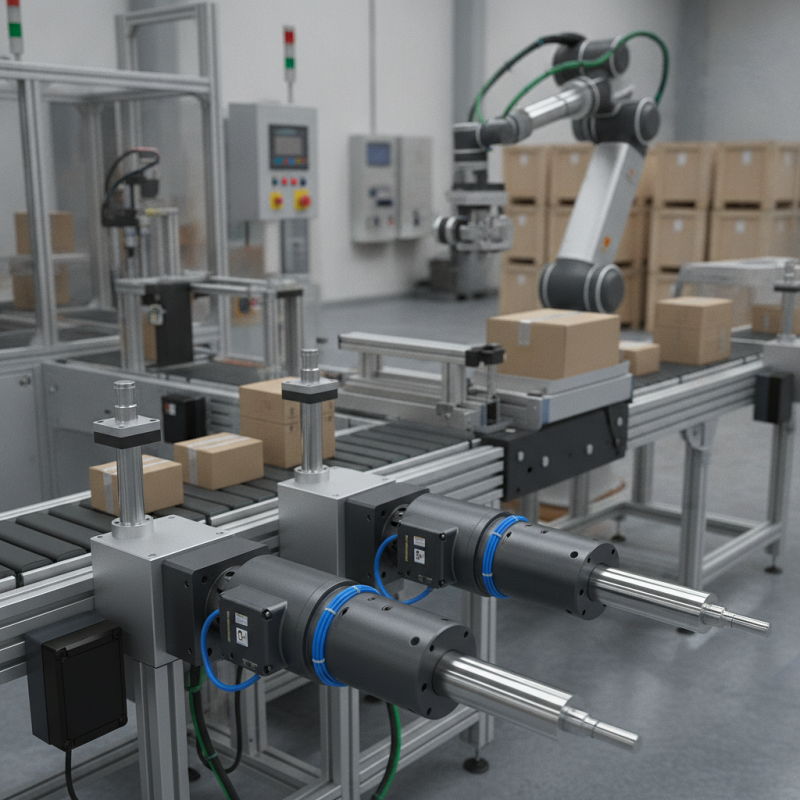
Cylinder servo systems play a crucial role in manufacturing automation. These systems are designed for precise control and high efficiency. They offer rapid response times and can handle significant loads. This makes them suitable for various tasks within factories.
In assembly lines, cylinder servos excel at positioning and controlling components. Their ability to adjust quickly ensures optimal workflow. Moreover, they can work in environments that may challenge traditional systems. For example, they are effective in both high-speed and high-precision applications. However, the integration of these systems can be complex. Engineers must carefully consider the specific requirements of each application.
Quality control processes also benefit from cylinder servo technology. Automated inspection stations utilize these systems for accurate measurements. This helps reduce human error and increases reliability. Yet, companies must maintain these systems diligently. Neglect can lead to performance drops, affecting productivity. The ongoing assessment of usage will enhance overall effectiveness.
| Application Area | Type of Cylinder Servo | Efficiency Gains | Key Benefits |
|---|---|---|---|
| Automotive Assembly | Electric Cylinder Servo | 30% reduction in cycle time | Improved precision and lower energy consumption |
| Packaging Solutions | Pneumatic Servo Cylinder | 25% increase in throughput | Faster packing speeds and reduced waste |
| Material Handling | Hydraulic Servo Cylinder | 40% lower energy costs | Increased load capacity and enhanced safety |
| Robotic Automation | Linear Servo Cylinder | 50% more flexibility in operations | Higher adaptability to different tasks |
| Textile Machinery | AC Servo Cylinder | 20% improvement in fabric handling | Reduced fabric damage and better fabric quality |
Cylinder servos have gained popularity in automation due to their efficiency. These devices convert rotational motion into linear movement. This transformation enhances precision in various applications. Improved accuracy leads to better product quality and reduced waste. In manufacturing, every part counts. A small error can cause significant issues.
Utilizing cylinder servos also reduces energy consumption. Traditional systems often waste power through friction and heat. In contrast, servos operate smoothly, minimizing energy loss. This is vital when assessing overall operational costs. Additionally, fewer moving parts mean less maintenance. Businesses can save time and resources.
However, transitioning to servo technology may require initial investment. Companies must consider long-term benefits versus upfront costs. Staff training is also necessary to maximize efficiency. While the learning curve exists, the long-term gains are significant. Therefore, organizations should weigh potential challenges against the efficiency boost.
Cylinder servo technology is gaining traction across various industries. Its precision and efficiency are crucial in sectors like manufacturing, automation, and robotics. These industries benefit significantly from enhanced control and responsiveness. In manufacturing, cylinder servos manage movements with remarkable accuracy. This leads to reduced errors and higher production rates.
In the automotive sector, cylinder servos play a vital role in assembly lines. They enable seamless operation of robotic arms and conveyor systems. This integration streamlines processes and minimizes downtime. However, poor implementation can disrupt production. Monitoring performance regularly is essential to avoid such pitfalls.
Tips: Ensure proper training for operators. Misunderstandings in handling equipment can lead to costly mistakes. Regular maintenance checks can prevent unexpected failures. In robotics, leveraging cylinder servo technology can also introduce complexity. Balancing automation and human oversight remains a challenge that requires careful consideration.
Implementing cylinder servo systems in automation offers several benefits, but it is not without challenges. One major challenge is ensuring proper integration with existing machinery. Many facilities operate with older equipment that may not be fully compatible with advanced servo technology. This often requires custom solutions, which can be time-consuming and costly.
Another significant issue is the calibration of these systems. Achieving precise movement and response times demands meticulous setup. Errors in calibration can lead to inconsistent performance, which may disrupt production. Additionally, ongoing maintenance is crucial to sustain efficiency. A lack of regular checks can lead to gradual decline in performance, which some managers underestimate.
Training staff to operate and maintain these systems also poses a challenge. Not all operators are familiar with sophisticated servo technology. This can lead to hesitation in using the systems properly, affecting overall productivity. Investing in comprehensive training programs can alleviate this issue, but it requires commitment and resources. Each of these challenges highlights the need for careful planning and assessment before implementation.
This bar chart illustrates the efficiency percentages of various top cylinder servo applications, highlighting their significance in driving efficient automation across different industries.
The cylinder servo market is evolving. Future trends show an increasing demand for efficiency and precision in automation. According to recent reports, the global cylinder servo market is projected to grow at a CAGR of 7.5% from 2023 to 2028. This indicates a strong shift towards automated solutions that provide enhanced operational capabilities.
One key area of development is the integration of AI technology with servo systems. AI can analyze data in real-time, allowing for adaptive control strategies. This leads to improved productivity and reduced downtime. Additionally, the rise of Industry 4.0 mandates systems that can communicate seamlessly. Cylinder servos equipped with smart sensors can provide valuable feedback for process optimization.
Tips: Regularly assess your automation systems. Identify areas that require improvement. Investing in upgraded servo technologies may yield substantial returns. Consider the role of predictive maintenance. This can minimize unexpected failures, ultimately saving costs. Engaging in continuous training for your workforce ensures your team can maximize the benefits of new technologies. Embrace these upcoming trends to stay competitive in an evolving market.
„Thanks to the LUVIR technology, the solder resist process could be switched directly from the previously used mask exposure to direct exposure. As an outstanding digital solution on the market, this technology has been able to demonstrate fast process times and superior quality on our certified conventional ink in production. This allowed us to fully digitize the solder mask process at low cost – without process or ink adjustments. An excellent benefit to our production in Rot am See.“
Ralf Göhringer (Head of Production WE Rot am See)
I would definitely recommend the Limata machine and team for a future company purchase
Michael Greenaway
Compunetics Inc.
“The Limata ldi has been amazing!! Best thing we did was buy this machine”
Richard Brady
GM
Circuitlabs
“Since 2019, we have been running the Limata X1000 LDI system (including LUVIR for solder mask imaging) in daily production as an addition to our current process with film. The machine was capable of properly exposing Taiyo PSR-4000 BN (DI) solder mask types on normal to high-copper boards using a new and unique direct imaging process. The machine operating interface is very user friendly which allowed for a quick technical training curve. The pre-registration processing reduced several seconds of production time at every print. Limata support and service staff is incomparable. They supported our team every step of the way at basically any time of the day or night, with literally, an immediate response time, customizing the software interface to best fit our Operations and needs.
We have exposed more than 8,000 prints since end of October, on various solder mask colors and some resist film panels. Limata, has proven to be very capable and innovative. They are a strong contender in the industry.
We have very much enjoyed this project, and working with the team!
Thank you Limata for the continued support and being a part of our growth.”
Bill Sezate
Vice President, GM
Summit Interconnect
As a replacement to our current contact exposure process with film, the LIMATA X2000 system including LUVIR-Technology was capable of properly exposing non-LDI solder mask types using a direct imaging process. The machine offers cutting edge software with a very intuitive operating interface which allowed for quick technician training curve. The dual drawer system combined with pre-registration processing reduced several seconds of production time at every machine cycle. Limata support and service staff is world class. They added software patches to keep production running at shortest possible response times, customized the software interface to best fit our in-house Operations system, and even wrote a step-by-step machine processing manual. As a result of the project, we have exposed more than 16,000 times on various product types and solder mask brands/colors. Limata, in a very short timeframe as a company, has definitely shown they are truly innovative and will be challenging the industry of direct imaging for the top spot.
Kevin Beattie
Process Engineer
TTM Technologies
Forest Grove Division
