In various industrial applications, safety is paramount. The use of Explosion-proof Multi-turn Series Electric Actuators has gained significant attention. These actuators are designed to operate in hazardous environments. Their robust construction ensures they can withstand high-pressure situations.
Choosing the right actuator can be challenging. Factors such as the environment, load, and specific application must be considered. Additionally, users often struggle with maintenance, which can affect performance. Understanding the nuances of these actuators can lead to more effective use.
Experts emphasize the benefits of these electric actuators. They offer precise control while enhancing safety. However, reliance on them should not overshadow regular inspections. There is always room for improvement in selecting and maintaining these systems effectively.
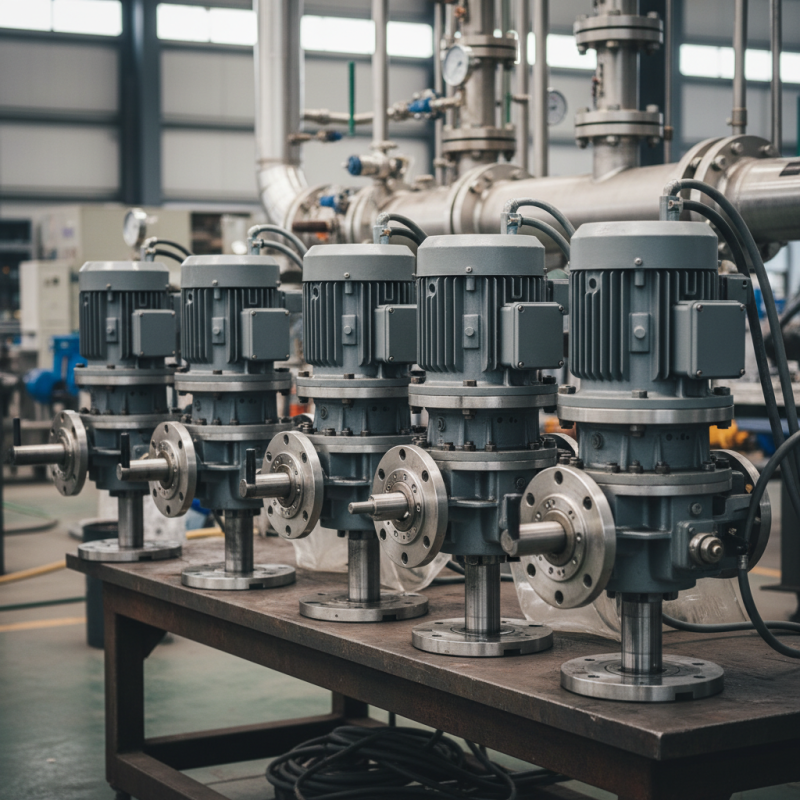
Explosion-proof multi-turn electric actuators are essential in hazardous environments. These devices are designed to operate safely in locations where flammable gases or dust may be present. According to a recent industry report, the global market for explosion-proof actuators is expected to grow by 6.5% annually, reaching significant milestones in various sectors.
Multi-turn actuators provide precise control and high torque, making them ideal for valve operations. They typically convert electrical energy into mechanical motion through multiple turns of a screw. This process is vital in industries like oil and gas, where safety is paramount. Data shows that 30% of workplace incidents occur in these high-risk areas, highlighting the importance of reliable equipment.
Despite the advancements, challenges remain. Many installations face issues like inadequate sealing and component wear. Regular maintenance is often overlooked, leading to increased operational risks. These factors illustrate the need for continuous improvements in actuator design and reliability testing. Stakeholders must focus on innovation to enhance performance without compromising safety.
When working in hazardous areas, explosion-proof electric actuators are crucial for safety and reliability. These devices are designed to prevent ignition of explosive gases or dust. According to a recent industry report, nearly 30% of workplace accidents occur due to equipment failures in hazardous zones. This highlights the need for robust solutions.
Explosion-proof actuators feature multiple layers of protection. They often include flameproof casings and pressure release mechanisms. In environments with volatile substances, choosing the right actuator reduces risks dramatically. An estimated 40% of maintenance incidents could be avoided with proper actuator selection. Effective training on these features improves operational safety.
However, not all explosion-proof actuators are created equal. Variations in design and materials can lead to unexpected issues. Regular assessments are necessary to ensure compliance with safety standards. Many companies still underestimate the consequences of using subpar equipment. A thorough understanding of the operating environment will guide better decision-making. It is a common, yet critical oversight that can have severe implications.
The demand for multi-turn electric actuators is growing steadily. Industries such as oil and gas, water treatment, and manufacturing increasingly rely on these devices. These actuators provide precise control over valves and dampers. As processes become more automated, the need for reliable equipment is paramount.
Market trends indicate a shift towards explosion-proof designs. These designs ensure safety in hazardous environments. Multi-turn actuators can handle high torque requirements, essential in specific applications. They offer improved durability and longevity, reducing maintenance costs. However, some users report challenges in integrating new technologies with legacy systems. The learning curve can be steep.
Adoption is often hindered by budget constraints. Not all companies have the resources for high-end solutions. Balancing cost and performance can be difficult. Nonetheless, the push for efficiency drives innovation. Providers are responding with versatile solutions that adapt to various needs. As the demand grows, manufacturers must ensure they meet safety and reliability standards.
Explosion-proof actuators are essential in hazardous environments. They must meet rigorous industry standards and certifications. This ensures safe operation in volatile atmospheres. Key standards include ATEX, UL, and IECEx. Each certification has specific requirements to guarantee safety.
ATEX is relevant in Europe. It categorizes equipment based on its risk of igniting an explosion. UL is crucial in North America. This certification covers product safety and performance. IECEx is recognized globally. It ensures compliance with international safety standards. Compliance with these standards is vital for manufacturers.
The design and materials of explosion-proof actuators matter greatly. Using robust materials helps in reducing ignition risks. However, flaws in manufacturing can lead to failures. Testing processes often have room for improvement. It’s critical to continually refine these aspects. This helps ensure overall reliability and performance in real-world applications.
When analyzing explosion-proof multi-turn electric actuators, key features emerge across different brands. These devices are engineered for hazardous environments. They perform critical operations where safety is a priority. The materials used in their construction are often resistant to corrosive substances. However, not all brands uniformly meet these safety standards.
Power and torque are important metrics to consider. Many actuators have varying performance ratings. Some may excel in specific applications, while others may fall short. The difference in energy efficiency among various models can impact operational costs. Additionally, installation processes can differ, sometimes complicating maintenance efforts. These challenges warrant a closer look at the design and engineering behind the actuators.
User feedback indicates varying levels of reliability. While some products demonstrate consistent performance, others may require frequent servicing. Understanding these nuances is vital for organizations relying on these actuators. Analyzing warranty options and support services can provide further insights into a brand's credibility. The right choice involves examining both specifications and real-world performance data to ensure optimal functionality in critical applications.
| Model | Torque Range (Nm) | Power Supply (V) | Temperature Class | Protection Rating | Weight (kg) | Features |
|---|---|---|---|---|---|---|
| Model A | 50-300 | 24 | T3 | IP67 | 12 | High duty cycle, Modbus compatibility |
| Model B | 80-500 | 230 | T4 | IP66 | 15 | Compact design, Overload protection |
| Model C | 100-600 | 110 | T5 | IP68 | 20 | Remote control, High precision |
| Model D | 150-800 | 380 | T6 | IP65 | 25 | Smart integration, Long lifespan |
| Model E | 200-1000 | 24-230 | T3/T4 | IP67 | 30 | Dual voltage, Customizable options |
„Thanks to the LUVIR technology, the solder resist process could be switched directly from the previously used mask exposure to direct exposure. As an outstanding digital solution on the market, this technology has been able to demonstrate fast process times and superior quality on our certified conventional ink in production. This allowed us to fully digitize the solder mask process at low cost – without process or ink adjustments. An excellent benefit to our production in Rot am See.“
Ralf Göhringer (Head of Production WE Rot am See)
I would definitely recommend the Limata machine and team for a future company purchase
Michael Greenaway
Compunetics Inc.
“The Limata ldi has been amazing!! Best thing we did was buy this machine”
Richard Brady
GM
Circuitlabs
“Since 2019, we have been running the Limata X1000 LDI system (including LUVIR for solder mask imaging) in daily production as an addition to our current process with film. The machine was capable of properly exposing Taiyo PSR-4000 BN (DI) solder mask types on normal to high-copper boards using a new and unique direct imaging process. The machine operating interface is very user friendly which allowed for a quick technical training curve. The pre-registration processing reduced several seconds of production time at every print. Limata support and service staff is incomparable. They supported our team every step of the way at basically any time of the day or night, with literally, an immediate response time, customizing the software interface to best fit our Operations and needs.
We have exposed more than 8,000 prints since end of October, on various solder mask colors and some resist film panels. Limata, has proven to be very capable and innovative. They are a strong contender in the industry.
We have very much enjoyed this project, and working with the team!
Thank you Limata for the continued support and being a part of our growth.”
Bill Sezate
Vice President, GM
Summit Interconnect
As a replacement to our current contact exposure process with film, the LIMATA X2000 system including LUVIR-Technology was capable of properly exposing non-LDI solder mask types using a direct imaging process. The machine offers cutting edge software with a very intuitive operating interface which allowed for quick technician training curve. The dual drawer system combined with pre-registration processing reduced several seconds of production time at every machine cycle. Limata support and service staff is world class. They added software patches to keep production running at shortest possible response times, customized the software interface to best fit our in-house Operations system, and even wrote a step-by-step machine processing manual. As a result of the project, we have exposed more than 16,000 times on various product types and solder mask brands/colors. Limata, in a very short timeframe as a company, has definitely shown they are truly innovative and will be challenging the industry of direct imaging for the top spot.
Kevin Beattie
Process Engineer
TTM Technologies
Forest Grove Division
