Geo Geocell solutions are transforming construction and civil engineering around the world. These innovative systems enhance soil stability and control erosion, making them vital in various projects. Global buyers are increasingly seeking reliable geocell products that meet their specific needs, ensuring quality and durability.
In this article, we explore the top five Geo Geocell solutions currently available. Each option demonstrates unique strengths and applications tailored to different environments. From cost-effective choices to high-performance variants, the right geocell can significantly impact project success.
While the benefits are clear, selecting the ideal geo geocell solution may present challenges. Factors such as environmental conditions and soil types require careful consideration. Emphasizing expert knowledge, we aim to guide buyers in making informed decisions that ultimately lead to successful outcomes.
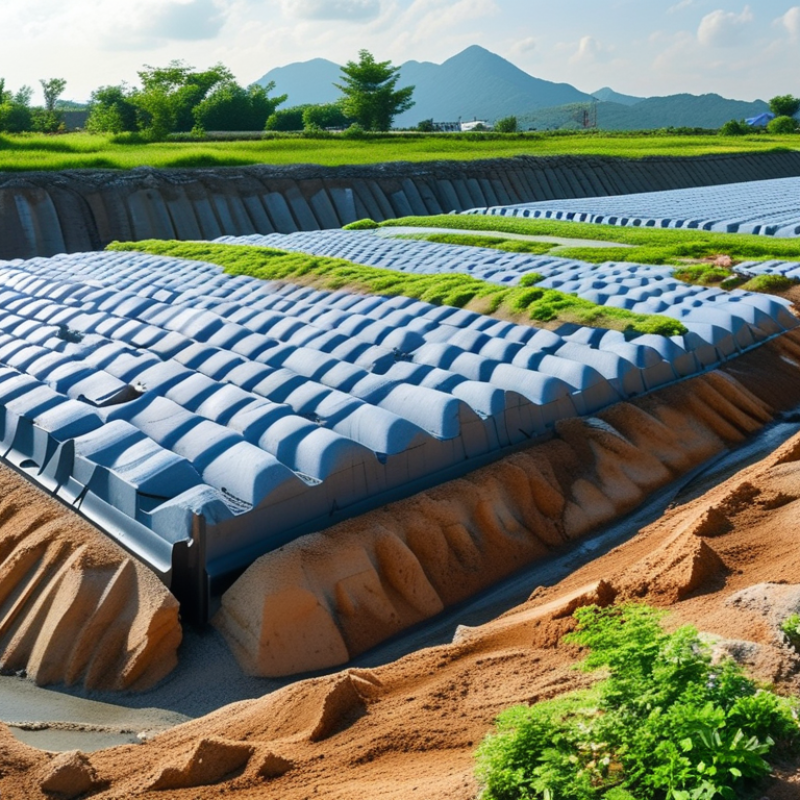
In 2023, the geocell industry has seen significant advancements, providing innovative solutions for various engineering challenges. Market leaders are focusing on enhanced durability and versatility, ensuring their products meet the evolving needs of global buyers. Geocells are widely used for soil stabilization, erosion control, and load distribution. These applications are essential in construction and environmental protection.
Tips: When choosing geocell solutions, consider material quality. High-density polyethylene is a reliable choice for longevity. Test the flexural strength and ensure compatibility with local soil types.
Furthermore, buyers should evaluate installation processes. Efficiency can significantly impact project timelines and costs. Clear installation guidelines and training materials are crucial for successful deployment. Always seek products that offer user-friendly installation designs to minimize risks and improve outcomes.
In an industry filled with competition, quality should never be compromised. Not all products meet rigorous standards. Confirm certifications and customer feedback before making decisions. Always be prepared to adapt as technology and materials advance.
Geocell technology has evolved significantly, providing innovative solutions for various applications. These advancements focus on durability, flexibility, and ease of installation. Modern geocells offer enhanced resistance to environmental factors. They are lightweight yet strong, making them ideal for use in construction and landscaping.
A major feature is their ability to improve soil stability. This allows efficient load distribution over weak soils. Engineers can design safer structures with confidence. Additionally, many geocells are made from recycled materials, promoting sustainability in construction. This approach not only saves costs but also reduces environmental impact.
Tips for considering geocell solutions: Evaluate the local soil conditions before selection. Understand how the geocell will perform under different loads. Always review the manufacturer's specifications for durability ratings. Engaging with experts can provide insights into suitable choices for specific needs. Understanding these aspects can help in making informed decisions and optimizing the use of geocells.
Geocells are transforming infrastructure projects globally. These cellular confinement systems enhance soil stability and improve load-bearing capacity. According to the International Geosynthetics Society, geocell applications have increased by 20% annually in recent years. They are especially vital in regions with unstable soils.
In road construction, geocells reduce settling at a lower cost. Using geocells can cut the amount of material needed for sub-base layers by 30%. In erosion control, their ability to contain soil is significant. A study from the Geosynthetic Research Institute showed that sites using geocells reduced erosion by up to 60%. This is not just a trend; it's a necessity in environmentally sensitive areas.
Challenges do exist. Not every project can benefit equally from geocell use. Climate, soil types, and application methods vary widely. Many engineers find it difficult to choose the right materials. More education is needed in the field. Despite obstacles, the future of geocells remains promising with innovations on the rise.
The geocell market is experiencing significant growth, driven by infrastructure development and environmental concerns. Projections indicate a remarkable increase in demand for geocell solutions by 2025. This trend highlights the importance of soil stabilization and erosion control in various construction projects. The longevity and adaptability of geocell technology contribute to its rising popularity among contractors and engineers.
Market analysis shows that innovative materials are gaining traction. These materials offer enhanced durability and efficiency. More construction sites are acknowledging the environmental benefits of using geocells. This leads to reduced construction costs and a smaller ecological footprint. Yet, challenges remain. Some companies struggle to find the right suppliers or effective materials.
Additionally, the global awareness of climate change is reshaping customer priorities. Clients are looking for sustainable options that align with green building practices. This demand creates opportunities for companies specializing in eco-friendly solutions. As the market evolves, buyers face the task of staying informed about new technologies and applications. This is essential for making educated procurement decisions.
Sustainability in geocell materials has become a pressing concern in today's construction landscape. Environmental impact assessments reveal that traditional geocell solutions often rely on petroleum-based products. This reliance poses significant challenges regarding long-term sustainability. Reports indicate that the construction sector accounts for nearly 40% of global greenhouse gas emissions. As a result, there is a growing push for innovative materials that minimize environmental footprints.
Recent studies show that bio-based geocell solutions are emerging. Such options can reduce carbon emissions by up to 50% compared to conventional counterparts. These materials are derived from renewable resources, providing a more sustainable alternative. The application of recycled content in geocell manufacturing also presents an opportunity to lower resource consumption. Studies indicate that using recycled plastics can cut energy usage by about 30%.
However, challenges remain in scaling production efficiently. The integration of sustainable materials in geocells still lacks widespread recognition in the industry. Some geocell products are not yet fully recyclable. This factor raises questions about their long-term viability. Eventually, the quest for a fully sustainable geocell solution must address potential environmental hazards while meeting market demands.
„Thanks to the LUVIR technology, the solder resist process could be switched directly from the previously used mask exposure to direct exposure. As an outstanding digital solution on the market, this technology has been able to demonstrate fast process times and superior quality on our certified conventional ink in production. This allowed us to fully digitize the solder mask process at low cost – without process or ink adjustments. An excellent benefit to our production in Rot am See.“
Ralf Göhringer (Head of Production WE Rot am See)
I would definitely recommend the Limata machine and team for a future company purchase
Michael Greenaway
Compunetics Inc.
“The Limata ldi has been amazing!! Best thing we did was buy this machine”
Richard Brady
GM
Circuitlabs
“Since 2019, we have been running the Limata X1000 LDI system (including LUVIR for solder mask imaging) in daily production as an addition to our current process with film. The machine was capable of properly exposing Taiyo PSR-4000 BN (DI) solder mask types on normal to high-copper boards using a new and unique direct imaging process. The machine operating interface is very user friendly which allowed for a quick technical training curve. The pre-registration processing reduced several seconds of production time at every print. Limata support and service staff is incomparable. They supported our team every step of the way at basically any time of the day or night, with literally, an immediate response time, customizing the software interface to best fit our Operations and needs.
We have exposed more than 8,000 prints since end of October, on various solder mask colors and some resist film panels. Limata, has proven to be very capable and innovative. They are a strong contender in the industry.
We have very much enjoyed this project, and working with the team!
Thank you Limata for the continued support and being a part of our growth.”
Bill Sezate
Vice President, GM
Summit Interconnect
As a replacement to our current contact exposure process with film, the LIMATA X2000 system including LUVIR-Technology was capable of properly exposing non-LDI solder mask types using a direct imaging process. The machine offers cutting edge software with a very intuitive operating interface which allowed for quick technician training curve. The dual drawer system combined with pre-registration processing reduced several seconds of production time at every machine cycle. Limata support and service staff is world class. They added software patches to keep production running at shortest possible response times, customized the software interface to best fit our in-house Operations system, and even wrote a step-by-step machine processing manual. As a result of the project, we have exposed more than 16,000 times on various product types and solder mask brands/colors. Limata, in a very short timeframe as a company, has definitely shown they are truly innovative and will be challenging the industry of direct imaging for the top spot.
Kevin Beattie
Process Engineer
TTM Technologies
Forest Grove Division
