The global market for injection molding machines is rapidly expanding, driven by rising demand across various industries. Reports indicate a projected growth rate of 4.9% in this sector from 2023 to 2030, with an expected value of over $30 billion by the end of the forecast period. This surge emphasizes the crucial role of Injection Molding Machine Exporters in meeting international needs.
An injection molding machine exporter not only provides essential machinery but also ensures compliance with regional standards. Countries like China, Japan, and Germany dominate in production and export capacities, showcasing advanced technology and robust infrastructure. In 2022, China alone accounted for approximately 40% of the global market share, underscoring its prominence.
However, challenges persist for exporters, including fluctuating raw material costs and evolving customer preferences. Buyers are increasingly seeking energy-efficient machines, which presents both a risk and an opportunity. Offering innovative solutions remains key for maintaining competitiveness. Thus, understanding the dynamics of machine exports can guide global buyers towards making informed decisions in this competitive landscape.
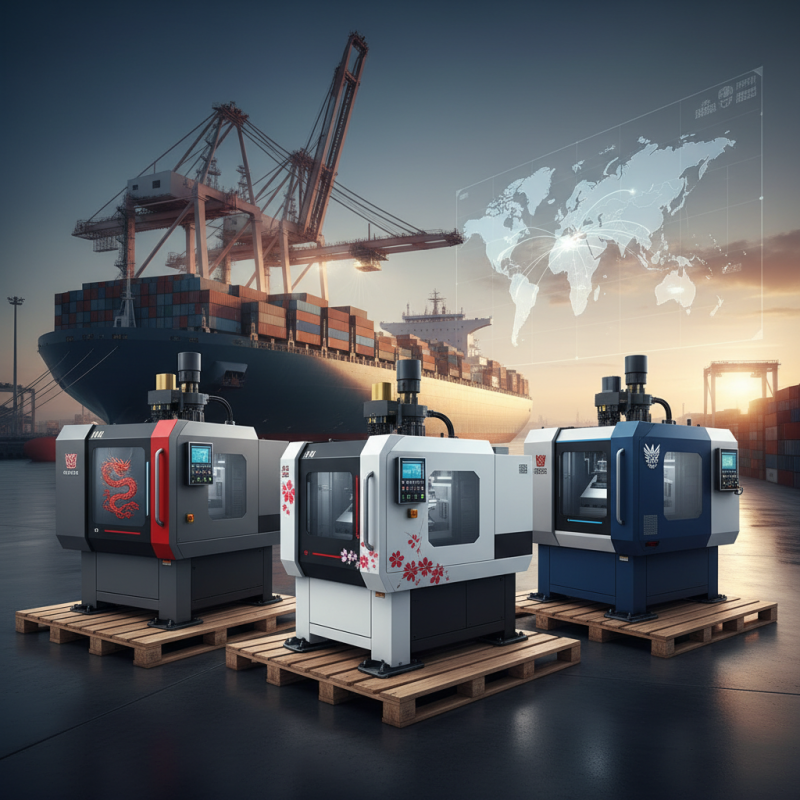
The global injection molding machine market is witnessing significant dynamism. Industry reports indicate that the market is projected to reach USD 19.83 billion by 2025, growing at a CAGR of 4.9%. This growth is fueled by rising demand in sectors like automotive and consumer goods, which heavily rely on advanced manufacturing processes.
A significant portion of the injection molding machinery is exported from nations with strong manufacturing bases. Countries such as Germany and China lead in production, emphasizing quality and innovation. The machinery produced is often equipped with advanced features, enhancing efficiency and reducing waste. However, there are challenges related to sustainability and pollution, which many exporters are currently addressing. The industry's focus on regular upgrades and compliance with environmental regulations is crucial for long-term growth.
Additionally, the reliance on specific innovations may not be sufficient. Trade policies and global supply chain disruptions pose risks that could affect market stability. Reports suggest that up to 30% of exporters may face logistical challenges that impact their ability to meet demands. This area warrants continuous monitoring as the landscape evolves in response to innovations and global market changes.
When exploring the landscape of injection molding machine exporters, several key factors emerge that significantly impact their success. Market demand is a crucial driver. According to a report by MarketsandMarkets, the global injection molding machine market is projected to reach $25.5 billion by 2025. This growth is fueled by industries like automotive and packaging. Exporters must stay aligned with this demand, adapting their offerings to local markets.
In addition to demand, technological innovation plays a vital role. Reports suggest that 70% of successful exporters invest in R&D to enhance machine efficiency and automation. These innovations lead to lower production costs and higher product quality. However, not all exporters manage this transition smoothly. Some struggle with implementing advanced technologies due to limited resources. This gap can hinder their competitive edge in global markets.
Understanding regulatory environments is also essential. Compliance with international standards is non-negotiable for exporters. Research indicates that companies overlooking this aspect face significant penalties. Navigating these regulations can be daunting. Exporters must invest time in understanding both local and international compliance requirements. Failing to do so can lead to setbacks in their export journeys.
| Country | Annual Exports (USD) | Market Share (%) | Key Industries Served | Growth Rate (%) |
|---|---|---|---|---|
| Germany | 2,500,000,000 | 25% | Automotive, Electronics | 5% |
| China | 3,000,000,000 | 30% | Consumer Goods, Packaging | 8% |
| USA | 1,800,000,000 | 20% | Medical, Aerospace | 6% |
| Japan | 1,200,000,000 | 15% | Electronics, Industrial | 4% |
| Italy | 900,000,000 | 10% | Packaging, Consumer Goods | 3% |
When discussing the global manufacturing of injection molding machines, several countries stand out. Germany leads in technology and efficiency. The country produces high-quality machines favored in automotive and consumer goods sectors. According to the German Engineering Federation (VDMA), the industry reached a production value of approximately €2.9 billion in 2022.
The United States ranks second, with a focus on innovation. American manufacturers emphasize versatility in their machines, catering to a wide array of applications. A report from the Plastics Industry Association states that the U.S. injection molding machine market is projected to grow at a CAGR of 4.5% until 2027. This indicates strong demand in various industries, including packaging and medical.
China is also a significant player in this market. The country's output of injection molding machines has surged, primarily due to rising domestic demand. However, the challenge lies in balancing quality with rapid production. Some local manufacturers still struggle to meet international standards, leading to inconsistent product quality. This situation creates room for improvement and further development in China's manufacturing protocols.
Injection molding is a crucial process in manufacturing various plastic products. For global buyers, understanding leading brands in this field can facilitate better investment decisions. The top brands excel in durability, precision, and innovation.
Several major players focus on research and development to enhance machine efficiency. They prioritize energy-saving technologies, which are vital for sustainable operations. Their machines can produce a range of items, from small components to large industrial parts. Efficiency in these processes is often a point of reflection for buyers. High-quality output should ideally match the production rate promised.
Buyers should also consider after-sales support. Reliable technical assistance can make a significant difference regarding machine longevity and performance. Some brands might overstate their capabilities, so thorough research is essential before purchasing. Each brand has unique features worth exploring, and buyer reviews can provide essential insights. Understanding the real-world performance of the machines helps in making informed choices.
The injection molding machine industry is undergoing significant changes. As global markets evolve, the demand for advanced manufacturing solutions is rising. Reports indicate that the global injection molding machine market size was valued at over $20 billion in 2022. Analysts predict a CAGR of around 4.5% through 2030. This growth underlines the shift towards automation and sustainability.
Emerging technologies are influencing exports. Machine learning and IoT integration are becoming standard. These developments enhance efficiency and reduce waste. Nevertheless, challenges such as fluctuating raw material prices and geopolitical tensions could impact export figures. For instance, the United States and China have seen trade tensions that may affect suppliers and manufacturers alike.
Environmental considerations are increasingly relevant. The demand for eco-friendly machines is rising. Recent studies show that 67% of manufacturers are prioritizing sustainability in production. However, many still struggle with the transition. Regulatory compliance and technological upgrades can be daunting. Addressing these issues is vital for future competitiveness in the global market.
„Thanks to the LUVIR technology, the solder resist process could be switched directly from the previously used mask exposure to direct exposure. As an outstanding digital solution on the market, this technology has been able to demonstrate fast process times and superior quality on our certified conventional ink in production. This allowed us to fully digitize the solder mask process at low cost – without process or ink adjustments. An excellent benefit to our production in Rot am See.“
Ralf Göhringer (Head of Production WE Rot am See)
I would definitely recommend the Limata machine and team for a future company purchase
Michael Greenaway
Compunetics Inc.
“The Limata ldi has been amazing!! Best thing we did was buy this machine”
Richard Brady
GM
Circuitlabs
“Since 2019, we have been running the Limata X1000 LDI system (including LUVIR for solder mask imaging) in daily production as an addition to our current process with film. The machine was capable of properly exposing Taiyo PSR-4000 BN (DI) solder mask types on normal to high-copper boards using a new and unique direct imaging process. The machine operating interface is very user friendly which allowed for a quick technical training curve. The pre-registration processing reduced several seconds of production time at every print. Limata support and service staff is incomparable. They supported our team every step of the way at basically any time of the day or night, with literally, an immediate response time, customizing the software interface to best fit our Operations and needs.
We have exposed more than 8,000 prints since end of October, on various solder mask colors and some resist film panels. Limata, has proven to be very capable and innovative. They are a strong contender in the industry.
We have very much enjoyed this project, and working with the team!
Thank you Limata for the continued support and being a part of our growth.”
Bill Sezate
Vice President, GM
Summit Interconnect
As a replacement to our current contact exposure process with film, the LIMATA X2000 system including LUVIR-Technology was capable of properly exposing non-LDI solder mask types using a direct imaging process. The machine offers cutting edge software with a very intuitive operating interface which allowed for quick technician training curve. The dual drawer system combined with pre-registration processing reduced several seconds of production time at every machine cycle. Limata support and service staff is world class. They added software patches to keep production running at shortest possible response times, customized the software interface to best fit our in-house Operations system, and even wrote a step-by-step machine processing manual. As a result of the project, we have exposed more than 16,000 times on various product types and solder mask brands/colors. Limata, in a very short timeframe as a company, has definitely shown they are truly innovative and will be challenging the industry of direct imaging for the top spot.
Kevin Beattie
Process Engineer
TTM Technologies
Forest Grove Division
