In the world of kart racing, safety is paramount. One crucial element that enhances safety during races is the use of effective Kart Racing Barriers. These barriers not only protect drivers but also serve to contain karts on the track, reducing the risk of accidents. Innovative designs and materials offer various levels of protection tailored to different racing environments.
While it might seem straightforward, choosing the right Kart Racing Barriers can be complex. Different tracks require unique barriers suitable for their layout and the expected speed of karts. Experience in this field reveals that common barriers may not always perform well. Relying on outdated designs can lead to unforeseen issues.
Investing in high-quality barriers, however, can significantly enhance the racing experience. Barriers should absorb impact effectively to minimize injuries. Karting facilities must continually assess their needs and stay updated on the latest innovations. Balancing safety with excitement is vital for both racers and spectators.
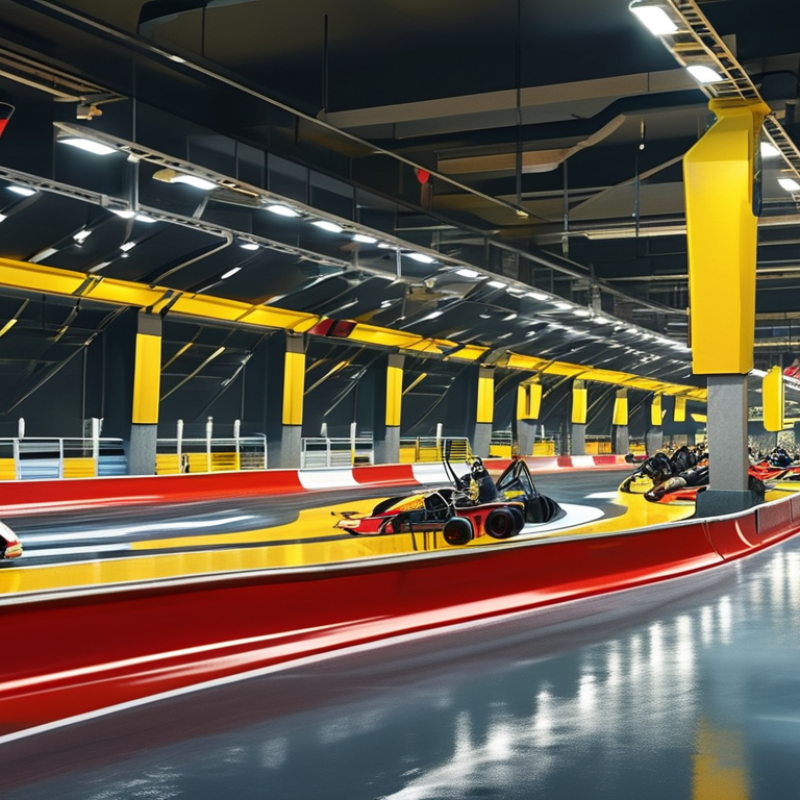
When it comes to kart racing, the safety of drivers is paramount. Various types of barriers are employed to ensure both protection and excitement on tracks. These barriers can be categorized into soft and hard types, each serving a unique purpose. Soft barriers, like inflatable ones, absorb impact and minimize injuries. Hard barriers, typically made of concrete or steel, provide robust protection but can increase the risk of severe injury.
Recent studies have shown that over 40% of racing incidents occur during collisions with barriers. Thus, designing effective barriers is crucial. Experts recommend a combination of both barrier types to achieve optimal safety. For instance, using soft barriers in high-collision zones and hard barriers in less trafficked areas can prevent injuries and enhance the overall racing experience.
Tips for selecting barriers include evaluating the track layout and expected speed. Consider the types of karts used. Lightweight karts may require more forgiving barriers, while heavier models can withstand more rigid setups. Regular inspections of barriers are essential to ensure structural integrity. Always look for wear and tear, especially after high-traffic events. This diligence can prevent potential accidents and keeps the excitement alive on the track. Balancing safety and thrilling racing experiences is a continuous journey in kart racing.
| Barrier Type | Material | Height (ft) | Effectiveness | Common Usage |
|---|---|---|---|---|
| Plastic Barriers | Polyethylene | 3 | Moderate | Rental Tracks |
| Concrete Barriers | Concrete | 4 | High | Permanent Tracks |
| Tire Barriers | Rubber | 2.5 | Good | Race Tracks |
| Air-Filled Barriers | PVC | 3.5 | Very High | Professional Tracks |
| Flexi Barriers | Polypropylene | 4 | High | Racing Circuits |
Safety is paramount in kart racing. The high-speed nature of the sport means that even minor incidents can lead to serious injuries. According to a report by the International Karting Federation, nearly 40% of karting accidents occur from improper barriers. This highlights the critical need for effective safety measures in racing environments.
Proper barriers can significantly reduce risks. Many tracks are now utilizing advanced materials. For example, concrete blocks and tire walls absorb impact better than older systems. A study from the Kart Racing Safety Institute revealed that improved barriers have reduced serious injuries by over 30% in recent years. However, some tracks still use outdated barriers, raising concerns about their effectiveness.
In the pursuit of thrilling experiences, safety can sometimes take a backseat. While speed attracts racers, the presence of reliable safety barriers is essential. Track owners must regularly assess their facilities. Implementing innovative safety features can enhance overall protection for racers. A commitment to safety can mean the difference between an exhilarating day on the track and a potential tragedy.
When choosing kart racing barriers, material and design are critical. The right barrier can enhance safety and ensure thrilling experiences for drivers. Common materials include plastic, rubber, and metal. Each has pros and cons. For instance, while plastic barriers are lightweight and flexible, they may not provide adequate protection during high-speed impacts.
Design plays a significant role in the effectiveness of barriers. Studies show that barriers with a curved design absorb impact better than flat ones. In fact, a report from the International Kart Federation states that well-designed barriers can reduce collision forces by up to 30%. This is vital for ensuring the safety of racers, especially in competitive settings.
However, implementing the best materials and designs is not without its challenges. Budget constraints often limit choices. Additionally, not all materials perform equally under different weather conditions. For example, rubber barriers might degrade over time if exposed to UV light. Reflecting on these limitations is essential. Continuous testing and improvement in design standards can help address these issues effectively.
When it comes to kart racing, barriers play a crucial role in safety and excitement. Installing these barriers requires careful planning. They must be placed strategically around the track, considering potential collision zones. One should evaluate the materials used in barrier construction. Soft barriers absorb impact better. However, hard barriers can keep racers within the track limits.
Maintenance of racing barriers is just as important. Regular inspections are essential. Check for wear and tear often. Even small damage can worsen over time. It's wise to document these inspections. This helps track the condition of barriers effectively. Unexpected issues can arise, but staying proactive can mitigate risks significantly.
Training staff on proper installation and maintenance procedures is vital. Experienced personnel can prevent common mistakes. Regular workshops can enhance skills. It’s an investment in safety. Racing is thrilling, but it should never come at the cost of safety. Continuous improvement in installation techniques and maintenance practices is necessary for keeping the racing environment secure and enjoyable.
Innovative technologies in kart racing safety are crucial for enhancing driver experiences. According to industry reports, the integration of advanced barriers has reduced injury rates by over 40%. An example is the use of soft impact barriers that absorb energy during collisions. These barriers adjust to the speed and weight of karts, offering better protection in various racing scenarios.
Another area of focus is the development of smart helmets. These helmets come equipped with sensors that monitor vital signs. They can detect impacts and even send alerts to medical teams if a serious injury occurs. Data from the International Kart Racing Safety Commission shows that 30% of accidents result from head injuries. Smart helmets can potentially change this statistic significantly.
Moreover, track design must incorporate these technologies. Poorly designed tracks can lead to accidents. Data indicates that 60% of karting injuries happen due to track layout flaws. Race organizers should prioritize regular reviews of track safety measures. Continuous improvements are necessary to ensure both excitement and safety in kart racing. Balancing thrill and risk remains a challenge for the industry.
„Thanks to the LUVIR technology, the solder resist process could be switched directly from the previously used mask exposure to direct exposure. As an outstanding digital solution on the market, this technology has been able to demonstrate fast process times and superior quality on our certified conventional ink in production. This allowed us to fully digitize the solder mask process at low cost – without process or ink adjustments. An excellent benefit to our production in Rot am See.“
Ralf Göhringer (Head of Production WE Rot am See)
I would definitely recommend the Limata machine and team for a future company purchase
Michael Greenaway
Compunetics Inc.
“The Limata ldi has been amazing!! Best thing we did was buy this machine”
Richard Brady
GM
Circuitlabs
“Since 2019, we have been running the Limata X1000 LDI system (including LUVIR for solder mask imaging) in daily production as an addition to our current process with film. The machine was capable of properly exposing Taiyo PSR-4000 BN (DI) solder mask types on normal to high-copper boards using a new and unique direct imaging process. The machine operating interface is very user friendly which allowed for a quick technical training curve. The pre-registration processing reduced several seconds of production time at every print. Limata support and service staff is incomparable. They supported our team every step of the way at basically any time of the day or night, with literally, an immediate response time, customizing the software interface to best fit our Operations and needs.
We have exposed more than 8,000 prints since end of October, on various solder mask colors and some resist film panels. Limata, has proven to be very capable and innovative. They are a strong contender in the industry.
We have very much enjoyed this project, and working with the team!
Thank you Limata for the continued support and being a part of our growth.”
Bill Sezate
Vice President, GM
Summit Interconnect
As a replacement to our current contact exposure process with film, the LIMATA X2000 system including LUVIR-Technology was capable of properly exposing non-LDI solder mask types using a direct imaging process. The machine offers cutting edge software with a very intuitive operating interface which allowed for quick technician training curve. The dual drawer system combined with pre-registration processing reduced several seconds of production time at every machine cycle. Limata support and service staff is world class. They added software patches to keep production running at shortest possible response times, customized the software interface to best fit our in-house Operations system, and even wrote a step-by-step machine processing manual. As a result of the project, we have exposed more than 16,000 times on various product types and solder mask brands/colors. Limata, in a very short timeframe as a company, has definitely shown they are truly innovative and will be challenging the industry of direct imaging for the top spot.
Kevin Beattie
Process Engineer
TTM Technologies
Forest Grove Division
