Choosing among the top laser machine manufacturers worldwide requires more than comparing prices or advertised power. A reliable evaluation considers engineering quality, application experience, safety systems, and long-term customer support. Manufacturers serving metal fabrication, electronics, medical devices, and signage may use different designs and production standards. Therefore, one company cannot be the best choice for every workshop.
This guide examines established manufacturers through practical criteria, including beam stability, cutting accuracy, automation, software integration, and maintenance access. It also considers real installation records, operator training, warranty clarity, and the availability of replacement parts. A machine that performs well during a showroom demonstration may behave differently in a dusty production environment. Ask for material samples, cycle-time data, and references from businesses with similar workloads. Details matter.
Technical documentation should be clear and verifiable. Independent certifications, documented testing, and responsive engineering teams can strengthen a manufacturer’s credibility. However, public information is sometimes incomplete, and rankings can reflect marketing rather than performance. That limitation deserves attention. Buyers should compare total ownership costs, not only the initial quotation. Energy use, lens replacement, software updates, and downtime can change the final investment significantly. An experienced supplier will explain these issues without promising unrealistic results.
The following overview introduces leading laser machine manufacturers and the strengths they may offer across different industries. It does not treat reputation as proof. Instead, it encourages careful comparison, direct questions, and evidence-based decisions. A suitable manufacturer should match your materials, production volume, technical skills, and future plans. That fit is often more valuable than a famous name.
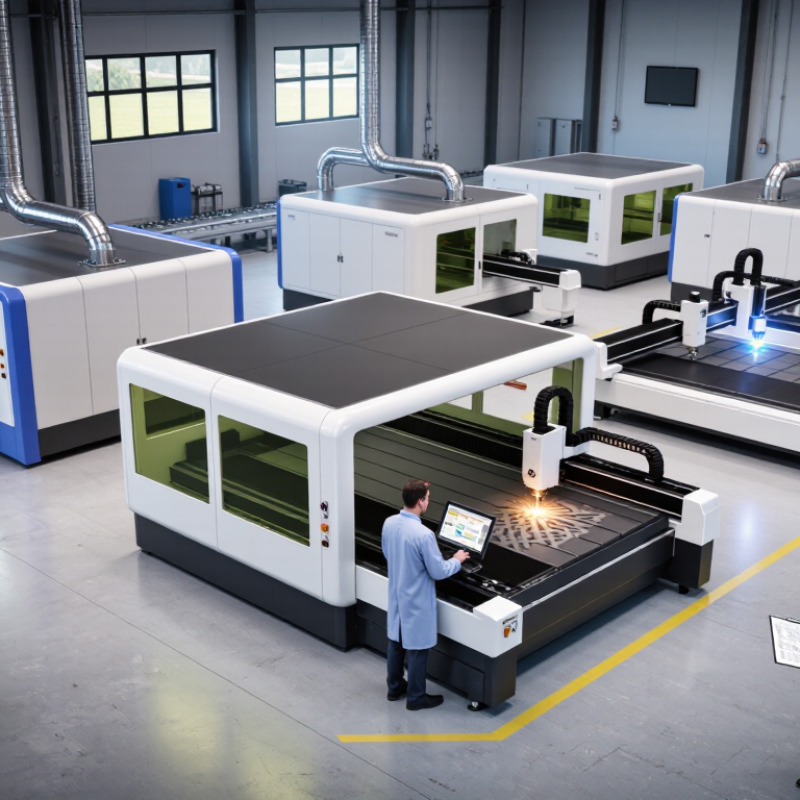
Laser machine manufacturing is the engineering process of designing, assembling, and testing equipment that uses focused light for industrial work. These machines may cut, weld, mark, drill, or clean selected materials with controlled energy. A typical system includes a laser source, motion platform, optics, cooling unit, software, and protective enclosure. Each component affects accuracy, safety, speed, and maintenance needs.
The industry scope reaches metal fabrication, electronics, medical equipment, automotive parts, packaging, and research laboratories. Manufacturers must match power levels, beam quality, worktable size, and material thickness to the customer’s process. They also provide installation guidance, operator training, preventive maintenance, and technical documentation. In a real workshop, a small lens contaminant can create uneven edges within minutes. That detail matters.
Laser manufacturing also supports shorter production cycles and more repeatable results. Engineers use sensors and software to monitor position, temperature, and energy delivery. Reliable suppliers test machines under practical conditions, not only in clean demonstration rooms. However, published specifications do not tell the whole story. Some machines perform well on thin sheet but struggle with reflective alloys. We should admit that selection errors still happen. Careful trials, verified samples, and transparent service terms make the decision more dependable.
Top Laser Machine Manufacturers Worldwide?
The strongest laser machine manufacturers usually specialize in specific technologies and production needs. Fiber lasers deliver high speed for cutting steel, aluminum, and other sheet metals. CO2 lasers remain useful for wood, acrylic, leather, and selected nonmetal materials. UV lasers create low-heat marks on electronics, glass, plastics, and delicate surfaces. Ultrafast lasers support precise micromachining with minimal thermal damage. Results depend on more than laser power.
Product categories include cutting systems, engraving machines, marking equipment, welding platforms, cleaning machines, and compact micromachining tools. Gantry systems suit large sheets and repeated fabrication work. Galvo scanners handle rapid marking across smaller fields. Robotic laser cells support complex welding paths and higher production volumes. Automation can improve consistency, but poor calibration still creates defects. No machine wins every test.
Tips: Ask for sample processing before purchase. Check edge quality, kerf width, marking contrast, and cycle time. Review source life, lens availability, software support, extraction systems, and operator training. Safety interlocks and protective enclosures are essential, even in small workshops. A lower purchase price may hide costly maintenance. Honestly, specifications can look impressive while real production results remain uncertain. Evaluate materials, workload, tolerances, and future upgrades together.
Evaluating leading laser machine manufacturers worldwide requires more than comparing prices or polished product pages. In a real workshop, the decision begins with application fit. Ask for cutting samples using your actual material, thickness, and smallest required feature. A glossy sample proves little. Measure edge taper, heat effects, hole roundness, and cycle time. Request raw test data, not only selected photographs. An experienced manufacturer should explain beam delivery, power stability, motion accuracy, and maintenance intervals in practical terms.
Technical credibility also appears in documentation. Check whether specifications are clear, test methods are repeatable, and safety systems meet the rules in your operating region. Ask for manuals, installation requirements, training plans, and spare-part lead times before signing. Speak with comparable users, preferably those running similar shifts and materials. One factory tour can reveal useful details: calibration records, finished-machine inspection, cleanliness, and how technicians handle failed tests. Evidence matters. Do not accept vague promises about lifetime accuracy. Demand measurable tolerances and a written service response process.
Total cost deserves equal attention. Include lenses, nozzles, filters, software updates, energy use, downtime, and operator training. A low purchase price may become expensive when local support is weak. Confirm regional service coverage and training availability. Warranty language matters. Check exclusions, travel charges, response times, and who performs repairs. During one evaluation, I focused too heavily on cutting speed and overlooked setup time. That mistake changed the shortlist. Manufacturers should welcome difficult questions and admit limits. Confidence grows when evidence survives scrutiny, not when sales language sounds perfect.
Top Laser Machine Manufacturers Worldwide?
Regional Profiles of Major Laser Machine Manufacturing Hubs
Laser machine production is concentrated in several technically mature regions. Each hub reflects its industrial history, supplier network, and engineering priorities. China offers broad production capacity, strong component supply, and competitive pricing. Manufacturers often serve metal fabrication, electronics, and general industrial processing. Quality varies. Buyers should verify beam stability, motion accuracy, software support, and service response.
Germany and neighboring Central European markets emphasize precision, automation, and long operating life. Their systems commonly integrate fiber sources, robotic handling, sensors, and production monitoring. These features suit demanding automotive and engineering plants. However, advanced automation can increase training requirements and maintenance costs. A detailed factory acceptance test remains important.
Japan is known for disciplined manufacturing, compact designs, and dependable process control. Its equipment often supports electronics, medical components, and fine cutting applications. North American manufacturers typically focus on flexible production cells, custom integration, and local technical support. Italy has particular strength in sheet-metal machinery and practical fabrication systems. Switzerland contributes specialized expertise in precision mechanics and microprocessing. The comparison is not simple. A lower purchase price may hide slower support, limited spare parts, or difficult software upgrades. Experienced buyers should inspect sample cuts, review maintenance records, and confirm regional compliance before selecting a machine.
Top laser machine manufacturers worldwide are judged by more than cutting speed. Their systems serve automotive workshops, medical device production, aerospace fabrication, electronics, and custom metalwork. Each application demands different power, wavelength, beam control, and motion accuracy. A thin stainless-steel sheet may need a fine beam, while a thick structural plate requires stable energy delivery.
Quality begins with measurable evidence. Manufacturers should provide repeatability data, thermal testing records, and clear maintenance instructions. Independent audits can verify production controls and calibration practices. International safety standards also matter, especially for enclosure design, emergency stops, electrical protection, and operator training. Traceable components reduce uncertainty when a machine works for long shifts. A clean brochure is not proof.
Real factories are messier. Dust affects optics, operators miss cleaning intervals, and software updates can interrupt production. I have seen performance decline when routine inspection was treated as optional. That weakness deserves honest attention.
Future machines will combine adaptive sensors, automated parameter adjustment, and predictive maintenance. Energy monitoring may reduce waste during idle periods. Better interfaces will help smaller teams operate complex equipment safely. However, artificial intelligence cannot replace skilled judgment when material behavior changes unexpectedly. Cybersecurity will also become essential as connected machines exchange production data. Progress should be tested on the factory floor, not only in demonstrations.


„Thanks to the LUVIR technology, the solder resist process could be switched directly from the previously used mask exposure to direct exposure. As an outstanding digital solution on the market, this technology has been able to demonstrate fast process times and superior quality on our certified conventional ink in production. This allowed us to fully digitize the solder mask process at low cost – without process or ink adjustments. An excellent benefit to our production in Rot am See.“
Ralf Göhringer (Head of Production WE Rot am See)
I would definitely recommend the Limata machine and team for a future company purchase
Michael Greenaway
Compunetics Inc.
“The Limata ldi has been amazing!! Best thing we did was buy this machine”
Richard Brady
GM
Circuitlabs
“Since 2019, we have been running the Limata X1000 LDI system (including LUVIR for solder mask imaging) in daily production as an addition to our current process with film. The machine was capable of properly exposing Taiyo PSR-4000 BN (DI) solder mask types on normal to high-copper boards using a new and unique direct imaging process. The machine operating interface is very user friendly which allowed for a quick technical training curve. The pre-registration processing reduced several seconds of production time at every print. Limata support and service staff is incomparable. They supported our team every step of the way at basically any time of the day or night, with literally, an immediate response time, customizing the software interface to best fit our Operations and needs.
We have exposed more than 8,000 prints since end of October, on various solder mask colors and some resist film panels. Limata, has proven to be very capable and innovative. They are a strong contender in the industry.
We have very much enjoyed this project, and working with the team!
Thank you Limata for the continued support and being a part of our growth.”
Bill Sezate
Vice President, GM
Summit Interconnect
As a replacement to our current contact exposure process with film, the LIMATA X2000 system including LUVIR-Technology was capable of properly exposing non-LDI solder mask types using a direct imaging process. The machine offers cutting edge software with a very intuitive operating interface which allowed for quick technician training curve. The dual drawer system combined with pre-registration processing reduced several seconds of production time at every machine cycle. Limata support and service staff is world class. They added software patches to keep production running at shortest possible response times, customized the software interface to best fit our in-house Operations system, and even wrote a step-by-step machine processing manual. As a result of the project, we have exposed more than 16,000 times on various product types and solder mask brands/colors. Limata, in a very short timeframe as a company, has definitely shown they are truly innovative and will be challenging the industry of direct imaging for the top spot.
Kevin Beattie
Process Engineer
TTM Technologies
Forest Grove Division
