Selecting the Top Pet Backlit Film Suppliers for Global Buyers requires more than comparing prices. PET backlit film sits between material science, digital printing, lighting design, and international logistics. Buyers must examine film thickness, haze, light diffusion, whiteness, ink adhesion, roll consistency, and resistance to heat. A bright sample may still show banding when installed inside a large, edge-lit display. That detail matters.
The Smithers report, The Future of Global Printing to 2029, identifies shorter print runs, customization, and faster production as major industry directions. The IMARC Group’s Digital Printing Market report also highlights continued demand for flexible, high-impact visual communication. These trends support wider use of Pet Backlit Film in retail boxes, airport displays, trade-show walls, and illuminated signs. However, market reports often combine several media categories. Their figures should not be treated as direct Pet Backlit Film sales data. That limitation deserves attention.
As materials consultant Dr. Seshadri Ramkumar has stated, “Sustainability is not a destination; it is a journey.” His observation applies to suppliers evaluating recycled PET content, solvent-free coatings, recyclable packaging, and responsible production records. Global buyers should request technical datasheets, batch samples, aging-test results, and clear certificates before signing contracts. A supplier with attractive photographs but weak documentation creates avoidable risk. This guide compares leading suppliers through measurable performance, application experience, quality control, export capability, and practical customer feedback. No supplier is perfect. The strongest choice depends on the printer, light source, climate, and installation environment.
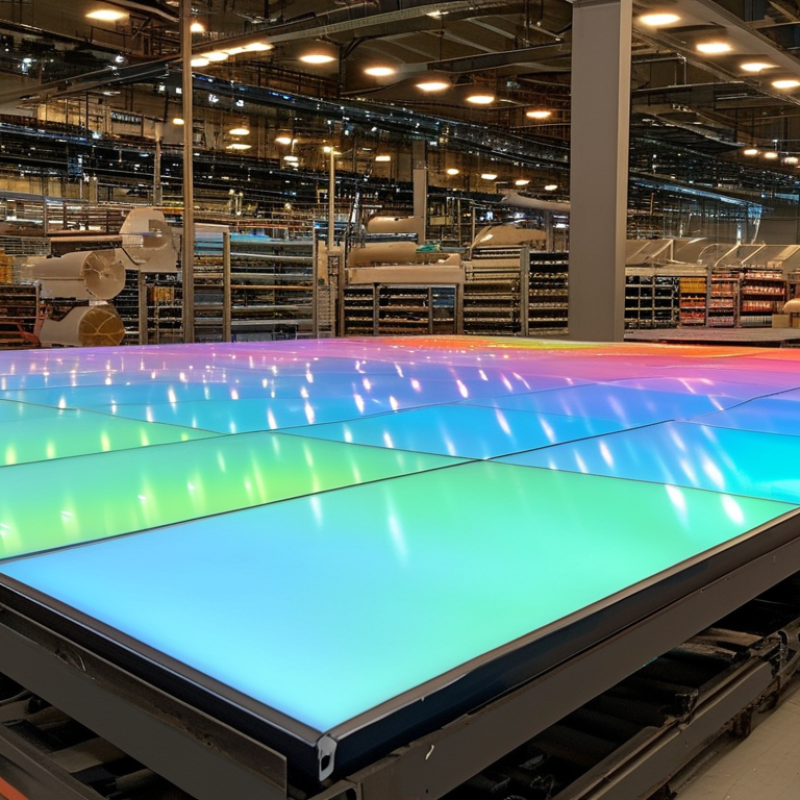
PET backlit film is a translucent polyester sheet made for illuminated graphic displays. Its coated surface accepts solvent, latex, or UV inks, depending on the printer and material specification. When LEDs shine behind it, the film distributes light across the image and reduces harsh bright spots. The result is a clear, glowing graphic without the weight of rigid acrylic. Lightweight and flexible.
Common applications include retail lightboxes, airport wayfinding, trade-show walls, cinema posters, and indoor menu panels. Outdoor use needs careful testing because humidity, heat, wind, and ultraviolet exposure can affect performance. Installers should check viewing distance, LED spacing, color consistency, and edge tension before approving production. A small test panel can reveal banding or dull corners. This step is easy to skip.
Global buyers should request technical data, roll-width tolerance, coating compatibility, packaging details, and sample approval procedures from potential suppliers. Reliable suppliers should explain optical density, whiteness, ink adhesion, and recommended storage conditions. Batch identification also helps maintain consistency during repeat orders. A bright sample is not enough. I would compare the printed film under the actual LED module, not office lighting. The film may look excellent from one angle yet show uneven diffusion from another. That limitation deserves honest discussion. No single PET backlit film suits every display, so practical testing matters more than attractive catalogue claims.
PET backlit film is a polyester-based transparent media designed for reverse printing and illumination from behind. Its dimensional stability, smooth surface, and light-diffusion properties make it suitable for indoor and outdoor illuminated graphics.
Medium-thickness Pet Film is commonly used for illuminated posters, in-store displays, and promotional graphics.
Thin PET backlit media is suitable for lightweight window graphics and transparent illuminated signage.
Thicker grades provide additional handling strength for large light boxes, exhibitions, and transit advertising.
The chart shows representative commercial PET backlit film thicknesses by common application. Actual specifications vary according to printer compatibility, lighting system, installation method, and required durability.
Comparing PET backlit film suppliers requires more than checking price and sample brightness. Start with measurable specifications: film thickness, light transmission, haze, whiteness, and surface uniformity. A reliable supplier should state test methods, tolerances, and measurement conditions. Ask for samples from different production batches. One attractive sheet proves very little.
Print performance matters in real production. Check ink adhesion, drying time, color density, and resistance to scratching. The film should feed smoothly through the intended printer without curling or slipping. For illuminated displays, inspect the printed film on a lightbox, not only under office lighting. Uneven areas may appear after installation. Request data on dimensional stability, especially after heat and humidity exposure.
Long-term reliability also separates experienced suppliers from casual traders. Review accelerated aging results, UV resistance, roll winding quality, and packaging protection. Batch identification and retained samples support traceability when problems occur. Ask whether the supplier controls thickness and coating variation during production. An independent laboratory report is useful, but its test conditions must match your application. No supplier meets every metric perfectly. I have seen excellent brightness paired with weak ink adhesion. That trade-off deserves discussion before a purchase order. A technically honest supplier will explain limitations, recommend suitable grades, and provide repeatable quality records.
Evaluating a PET backlit film manufacturer requires more than comparing prices. Ask for technical data on thickness, light transmission, haze, whiteness, and dimensional stability. These figures affect image brightness and mounting performance. Request samples from different production batches. Samples reveal habits.
Test the film with your intended printer, ink, and light box. Check ink adhesion after drying, surface scratches, curl, and color consistency. Measure the roll width and thickness at several points. A perfect sample can mislead. In practical sourcing, small variations often appear during long production runs. This is where factory quality records matter.
Reliable manufacturers should explain their raw material controls, coating process, inspection steps, and corrective actions. Request recent test reports, packaging photos, and a clear inspection standard. A factory should also confirm monthly capacity, lead times, pallet protection, and shipping documents. Communication is part of quality. Slow or vague replies may create costly delays later. However, fast communication does not prove technical ability. Arrange a video audit or independent inspection when order value is significant. Review how staff handle rejected rolls, not only how they display finished goods. Do not rush. Leave room for verification.
China remains a major sourcing region for PET backlit film, especially in Guangdong, Jiangsu, and Zhejiang. Suppliers there often provide broad thickness ranges, large roll widths, and competitive production volumes. Many factories also support custom matte finishes, light diffusion levels, and adhesive options. In practical sourcing work, buyers should inspect coating consistency across the entire roll. A bright sample can hide uneven areas.
South Korea and Japan are known for tighter process control and stable optical performance. Their suppliers often focus on clean surfaces, precise thickness, and reliable color transmission. These strengths suit premium displays, retail lighting panels, and indoor advertising equipment. European suppliers, especially those serving Germany and nearby markets, commonly emphasize documentation, traceability, and lower-odor materials. Their lead times may be longer, and prices can be higher. That trade-off is real.
Turkey and India are developing regional options for buyers seeking shorter routes into nearby markets. Their advantages may include flexible order discussions and regional logistics. However, technical consistency can vary between factories. Buyers should request test rolls, production records, and recent inspection data before placing volume orders. Check curling after heat exposure. Test print adhesion, surface haze, and light uniformity under the intended LEDs. Packaging also matters; poorly protected rolls can develop edge damage during ocean transport. No region is perfect. A supplier’s actual coating line, quality team, and communication habits matter more than its location alone.
| Supplier Region | Regional Market Strength | Key Manufacturing Advantages | Typical PET Backlit Film Capabilities | Quality and Compliance Focus | Best Fit for Global Buyers |
|---|---|---|---|---|---|
| Mainland China | Very strong manufacturing and export capacity | Large-scale polyester-film production, broad converting capacity, competitive production costs, and extensive export infrastructure | Glossy and matte surfaces; printable grades for solvent, eco-solvent, UV, and latex workflows; roll and sheet formats; common commercial thicknesses from approximately 100–250 micrometres | Thickness uniformity, optical clarity, dimensional stability, coating adhesion, RoHS and REACH documentation when required | High-volume orders, private-label programs, customized widths, and buyers seeking broad price-to-performance options |
| Japan | Established premium materials and precision-film market | Strong expertise in high-performance polyester films, precision coating, clean processing, and stable long-term quality control | High-clarity films, controlled haze, precise thickness, consistent light diffusion, and specialty grades for demanding display applications | Tight optical tolerances, low surface defects, excellent dimensional stability, and detailed technical documentation | Premium signage, high-end retail displays, long-life indoor graphics, and buyers prioritizing consistency over the lowest price |
| South Korea | Strong advanced-film and electronics-materials ecosystem | Advanced polymer processing, coating know-how, automation, and experience with high-specification functional films | Optically uniform PET, anti-static or specialty-coated options, controlled surface energy, and films designed for reliable printing and illumination | Surface treatment consistency, print adhesion, haze control, tensile performance, and batch-to-batch repeatability | Technical buyers needing engineered films, reliable performance, and stable quality for repeat programs |
| Taiwan | Established export-oriented film-converting and display-materials base | Flexible converting operations, strong export experience, responsive customization, and close links to printing and display industries | Printable frontlit and backlit polyester films, matte or gloss finishes, customized roll widths, and small-to-medium production runs | Print compatibility, coating uniformity, roll quality, packaging protection, and export documentation | Distributors, sign-media importers, and buyers requiring customization with moderate order flexibility |
| Germany and Central Europe | Strong engineering, specialty-coating, and compliance-oriented market | High process control, specialized coating technologies, advanced converting equipment, and proximity to major European industrial customers | Specialty PET films, precise technical coatings, low-defect surfaces, and application-specific grades for professional graphics and displays | REACH and RoHS support, product traceability, technical data sheets, quality-management systems, and testing aligned with European buyer requirements | European buyers requiring documented compliance, engineering support, and dependable technical performance |
| United States and Canada | Strong downstream demand, converting, distribution, and application expertise | Mature signage and wide-format-printing channels, strong technical support, established distribution networks, and application-focused converting | Ready-to-use printable films, standardized roll sizes, indoor display grades, and products optimized for common wide-format printing systems | Print-system compatibility, safety documentation, consistent packaging, domestic inventory, and technical application support | Buyers prioritizing short replenishment cycles, local inventory, technical service, and standardized product specifications |
| Italy and Southern Europe | Established graphics, signage, decorative-printing, and converting market | Strong expertise in visual communications, specialty finishing, flexible converting, and design-led display applications | Decorative backlit graphics, specialty surface finishes, printable polyester media, and customized formats for retail and exhibition use | Color consistency, surface appearance, print receptivity, finishing quality, and European regulatory documentation | Retail displays, exhibitions, interior graphics, and buyers seeking design flexibility and regional service |
| Southeast Asia | Growing regional manufacturing, converting, and distribution base | Improving industrial capacity, strategic access to Asian shipping routes, competitive operating costs, and proximity to fast-growing sign markets | Standard printable PET media, converted rolls and sheets, indoor signage grades, and selected customized products | Basic performance testing, print compatibility, moisture-resistant packaging, and documentation for cross-border trade | Regional buyers seeking shorter Asian supply routes, competitive pricing, and flexible order quantities |
When comparing PET backlit film suppliers, global buyers should treat ordering as a technical project, not a price request. Send a clear specification sheet covering thickness, roll width, core diameter, surface finish, light transmission, and packaging. Ask for a pre-production sample. A small sample can reveal curl, coating marks, or uneven diffusion under a real lightbox. Confirm the minimum order quantity, production lead time, payment terms, and replacement policy in writing. Keep every detail documented.
Quality control should follow measurable checkpoints. Request a certificate of analysis for each lot, including thickness tolerance, basis weight, haze, and tensile strength. Inspect random rolls after arrival, not only the first roll. Check edge damage, telescoping, blocking, dust, and splice marks. Store samples from each shipment for comparison. Numbers matter. Yet laboratory results may not predict installation behavior. Test printed film in the buyer’s actual printer and lighting system. This step is often skipped, and it can expose ink adhesion problems or color shifts. A perfect inspection plan still needs human judgment.
International shipping adds practical risks. Confirm whether rolls need moisture-barrier bags, desiccants, corner protection, or heat-resistant wrapping. Agree on pallet dimensions and container loading before production. Clarify the delivery term, insurance responsibility, customs documents, and product classification with a qualified broker. Ask suppliers to photograph sealed pallets before dispatch. Track humidity-sensitive cargo during long transit when possible. Delays happen. I would also leave buffer time, because my earlier schedules were too optimistic. A cheaper quote can become expensive after demurrage, rework, or damaged rolls.
„Thanks to the LUVIR technology, the solder resist process could be switched directly from the previously used mask exposure to direct exposure. As an outstanding digital solution on the market, this technology has been able to demonstrate fast process times and superior quality on our certified conventional ink in production. This allowed us to fully digitize the solder mask process at low cost – without process or ink adjustments. An excellent benefit to our production in Rot am See.“
Ralf Göhringer (Head of Production WE Rot am See)
I would definitely recommend the Limata machine and team for a future company purchase
Michael Greenaway
Compunetics Inc.
“The Limata ldi has been amazing!! Best thing we did was buy this machine”
Richard Brady
GM
Circuitlabs
“Since 2019, we have been running the Limata X1000 LDI system (including LUVIR for solder mask imaging) in daily production as an addition to our current process with film. The machine was capable of properly exposing Taiyo PSR-4000 BN (DI) solder mask types on normal to high-copper boards using a new and unique direct imaging process. The machine operating interface is very user friendly which allowed for a quick technical training curve. The pre-registration processing reduced several seconds of production time at every print. Limata support and service staff is incomparable. They supported our team every step of the way at basically any time of the day or night, with literally, an immediate response time, customizing the software interface to best fit our Operations and needs.
We have exposed more than 8,000 prints since end of October, on various solder mask colors and some resist film panels. Limata, has proven to be very capable and innovative. They are a strong contender in the industry.
We have very much enjoyed this project, and working with the team!
Thank you Limata for the continued support and being a part of our growth.”
Bill Sezate
Vice President, GM
Summit Interconnect
As a replacement to our current contact exposure process with film, the LIMATA X2000 system including LUVIR-Technology was capable of properly exposing non-LDI solder mask types using a direct imaging process. The machine offers cutting edge software with a very intuitive operating interface which allowed for quick technician training curve. The dual drawer system combined with pre-registration processing reduced several seconds of production time at every machine cycle. Limata support and service staff is world class. They added software patches to keep production running at shortest possible response times, customized the software interface to best fit our in-house Operations system, and even wrote a step-by-step machine processing manual. As a result of the project, we have exposed more than 16,000 times on various product types and solder mask brands/colors. Limata, in a very short timeframe as a company, has definitely shown they are truly innovative and will be challenging the industry of direct imaging for the top spot.
Kevin Beattie
Process Engineer
TTM Technologies
Forest Grove Division
