The global Tablet Counter market is gaining attention as pharmaceutical and nutraceutical manufacturers pursue faster, cleaner, and more traceable packaging lines. Grand View Research reports continued growth in pharmaceutical manufacturing equipment, driven by automation, quality control, and production efficiency. PMMI’s 2024 pharmaceutical packaging research also highlights labor shortages, digital monitoring, and flexible machinery as important investment factors. These pressures make tablet counting more than a simple counting task. It affects accuracy, downtime, changeover speed, and product protection.
“Reliable automation begins with measurable process control,” says Brian D. Smith, a pharmaceutical industry consultant and manufacturing strategist. His view offers a useful warning. A fast machine is not automatically a dependable machine. Buyers should examine counting accuracy, sensor design, dust management, hopper capacity, software records, and service response. A stainless-steel frame may look impressive under factory lights, yet weak calibration support can create costly interruptions. Small details matter.
This guide compares the Top 10 Tablet Counter Manufacturers for Global Buyers through a practical purchasing lens. It considers machine configuration, output range, integration options, validation support, and regional service capability. Sources include PMMI pharmaceutical packaging research, Grand View Research market analysis, and manufacturer documentation available to buyers. No ranking is perfect. Specifications can change, and published claims require verification. Readers should request factory test records, sample-count results, and after-sales terms before making a final decision. Reliability is proven on the production floor, not only in a brochure.
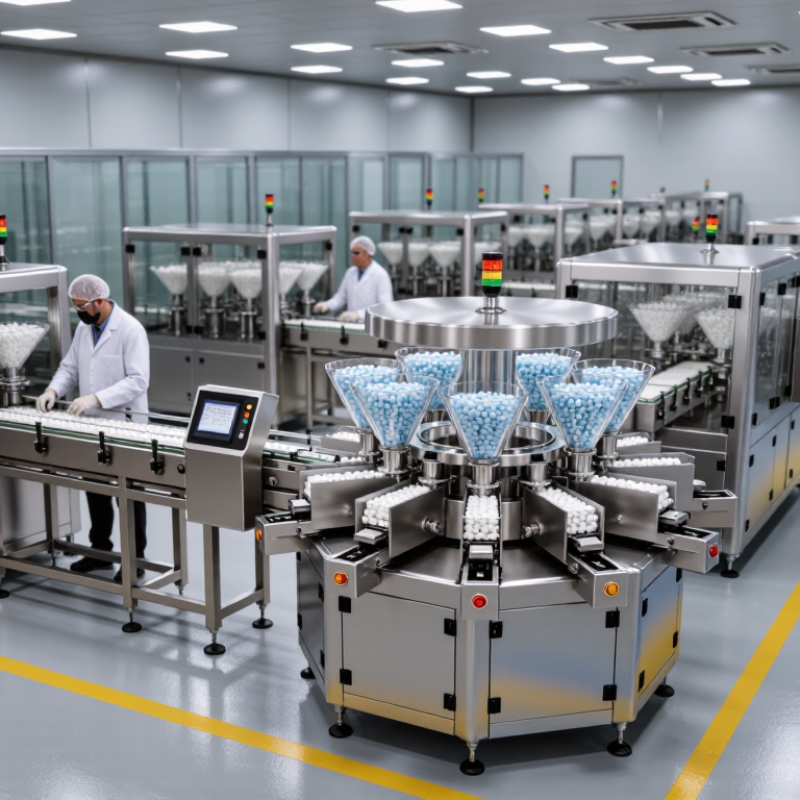
Tablet counter technology now reaches claimed accuracies of 99.9% and speeds up to 100 bottles per minute. These figures matter, but only under defined operating conditions. Tablet size, shape, coating, dust, vibration, and bottle neck design can change performance. A machine may count flawlessly during a demonstration, then struggle with chipped tablets on a busy production line.
The World Health Organization estimates that medication errors cost approximately US$42 billion annually. Accurate counting supports safer dispensing and reduces avoidable reconciliation problems. Buyers should request documented factory acceptance tests, challenge samples, calibration records, and batch traceability. FDA current good manufacturing practice rules also require suitable equipment, controlled processes, and reliable in-process checks. That makes validation more important than a headline number.
Look closely at the details. Does the counter detect double tablets? Can it reject an underfilled bottle without stopping production? Is the 100-bottle-per-minute rate measured with small tablets, or with difficult shapes? These questions expose weak specifications. Optical sensors, dust-control systems, and automatic rejection can improve consistency, yet they also require maintenance and operator training. The 99.9% figure should therefore be treated as a validated target, not a permanent promise. Even advanced equipment needs human review. Mistakes still happen. Reliable manufacturers explain those limits clearly and provide service support across regions.
For global buyers comparing the top 10 tablet counter manufacturers, compliance should guide the shortlist. A fast counting speed means little without documented process control. FDA cGMP expectations cover equipment design, cleaning, calibration, operator training, and batch records. Ask for recent validation protocols, deviation reports, and corrective action evidence.
EU GMP places strong emphasis on risk management and consistent pharmaceutical quality systems. A reliable tablet counter should support controlled access, cleaning verification, and repeatable counting accuracy. During factory evaluations, inspect product-contact surfaces closely. Small powder traps can create major contamination concerns. Request installation, operational, and performance qualification documents. Do not accept vague claims such as “GMP ready.”
For electronic records, 21 CFR Part 11 requires dependable audit trails, user controls, secure electronic signatures, and protected data. The software should show who changed a setting, when it changed, and why. Suppliers should explain backup testing and data-retention procedures in practical terms. A polished demonstration is not enough. I have seen strong hardware paired with weak documentation. That gap deserves attention. Global buyers should also confirm support for change control, cybersecurity updates, and local operator training. Compliance is not a certificate on a wall; it is visible in daily records, maintenance logs, and honest responses during an audit.
This ranking weighs speed, counting accuracy, changeover time, and total cost. Speed means sustained output, not a brief peak figure. Accuracy is tested with different tablet shapes, sizes, coatings, and feed rates. FDA process-validation guidance supports checking performance across normal operating ranges, not only ideal runs. PMMI’s 2023 Pharmaceutical and Medical Device Packaging Trends report also identifies automation, flexibility, and easier changeovers as important purchasing priorities.
Changeover time includes cleaning, tooling adjustment, recipe loading, and verification. A machine that changes formats in twelve minutes may outperform a faster unit requiring forty minutes. Total cost includes purchase price, spare parts, labor, energy, rejected products, and planned maintenance. Buyers should request factory acceptance data, site trials, and three production references. ISPE’s Pharma 4.0 guidance emphasizes connected data and measurable process control, yet software integration can increase training costs. That trade-off is often underestimated.
Tips: Ask suppliers for 24-hour performance records, not one-minute demonstrations. Measure rejected counts beside accepted counts. Record cleaning time with two operators present. Do not trust “up to” speed claims without product-specific evidence. A lower-cost counter may become expensive after frequent format changes. My own ranking method would still need revision after a real site trial. Conditions vary more than brochures suggest.
Top 10 Tablet Counter Manufacturers for Global Buyers
Top 10 Tablet Counter Manufacturers: Capacities from 30 to 100 BPM
A practical review of ten tablet counter manufacturers should begin with verified output, not brochure language. Machines rated at 30 BPM often suit small batches, clinical packaging, and frequent product changes. Systems reaching 60 to 80 BPM can support regular production with controlled feeding. High-capacity models near 100 BPM require stable tablet flow and careful sensor calibration.
Real performance depends on tablet diameter, shape, coating, and hopper design. During equipment evaluations, I check sample runs using the buyer’s actual tablets. A clean display is useful. Repeatable counting matters more. Operators should inspect reject handling, dust control, changeover time, and data records. A factory acceptance test can reveal problems before shipment.
The strongest manufacturers provide documented testing, responsive technical support, and clear maintenance procedures. They should explain counting accuracy at different speeds, rather than quoting one impressive figure. I once placed too much value on maximum BPM. That was a mistake. Faster is not always better. A stable 60 BPM may outperform an inconsistent 100 BPM line.
Global buyers should also examine electrical standards, spare-part availability, operator training, and remote troubleshooting. Stainless steel contact parts simplify cleaning, while tool-free adjustments can reduce downtime. Ask for videos, sample reports, and references from similar applications. Evidence builds trust. Claims alone do not.
| No. | Manufacturer Profile | Nominal Throughput (Bottles/Min) | Typical Tablet Diameter (mm) | Counting Accuracy | Hopper Capacity (L) | Recommended Application | Key Configuration |
|---|---|---|---|---|---|---|---|
| 1 | Manufacturer Profile 01 | 30 | 3–25 | ≥99.9% | 5 | Small-batch pharmaceutical and nutraceutical production | Single-lane counting, stainless-steel contact parts, basic touchscreen control |
| 2 | Manufacturer Profile 02 | 40 | 3–25 | ≥99.9% | 8 | Pharmacy packaging and contract filling | Dual-lane counting, dust-resistant enclosure, recipe storage |
| 3 | Manufacturer Profile 03 | 50 | 3–25 | ≥99.9% | 10 | Medium-volume tablet and capsule packaging | Multi-channel vibratory feeder, no-bottle/no-count detection, reject outlet |
| 4 | Manufacturer Profile 04 | 60 | 3–25 | ≥99.9% | 10 | General pharmaceutical production lines | Four-channel counting, automatic bottle indexing, conveyor integration |
| 5 | Manufacturer Profile 05 | 70 | 3–25 | ≥99.9% | 12 | High-frequency nutraceutical and supplement filling | High-speed vibratory feeder, PLC control, bottle accumulation conveyor |
| 6 | Manufacturer Profile 06 | 80 | 3–25 | ≥99.9% | 15 | Large-volume OTC and dietary supplement packaging | Six-channel counting, automatic speed adjustment, container presence sensor |
| 7 | Manufacturer Profile 07 | 90 | 3–25 | ≥99.9% | 15 | High-output contract manufacturing and export packaging | Eight-channel counting, servo-driven conveyor, batch data recording |
| 8 | Manufacturer Profile 08 | 100 | 3–25 | ≥99.9% | 20 | Continuous high-speed pharmaceutical packaging | Ten-channel counting, automatic bottle separation, integrated dust extraction |
| 9 | Manufacturer Profile 09 | 50–80 | 3–25 | ≥99.9% | 12 | Flexible production with frequent product changeovers | Tool-free contact-part removal, adjustable counting channels, quick-clean design |
| 10 | Manufacturer Profile 10 | 30–60 | 3–25 | ≥99.9% | 8 | Pilot lines, private-label packaging, and laboratory-scale production | Compact footprint, touchscreen interface, recipe management, optional capper connection |
Note: Throughput and accuracy are typical specification targets for tablet counting equipment. Actual performance depends on tablet size, shape, coating, friability, bottle format, and line configuration.
Choosing among the top 10 tablet counter manufacturers requires more than comparing prices or counting speeds. Global buyers should request factory acceptance testing records, calibration certificates, and performance data for different tablet sizes. Ask how the supplier validates counting accuracy at low, medium, and high speeds. Small tablets can expose weaknesses quickly.
Integration deserves equal attention. Confirm feeder dimensions, electrical requirements, dust-control options, and communication protocols before signing. Request layout drawings and a sample interface test with your existing packaging line. A reliable manufacturer should explain cleaning access, changeover time, sensor settings, and operator training. Vague answers are warning signs.
Warranty terms must cover parts, labor, software updates, and response times. Check whether remote diagnosis is included and whether critical spare parts can be shipped locally. Support should continue after installation, not end with delivery. A practical audit should include video training, troubleshooting guides, and documented escalation contacts. Some buyers focus too heavily on the warranty period. That is a mistake. Response quality often matters more than an extra year. However, even a detailed checklist cannot predict every production issue. Leave room for trial runs, corrective feedback, and realistic acceptance targets.
„Thanks to the LUVIR technology, the solder resist process could be switched directly from the previously used mask exposure to direct exposure. As an outstanding digital solution on the market, this technology has been able to demonstrate fast process times and superior quality on our certified conventional ink in production. This allowed us to fully digitize the solder mask process at low cost – without process or ink adjustments. An excellent benefit to our production in Rot am See.“
Ralf Göhringer (Head of Production WE Rot am See)
I would definitely recommend the Limata machine and team for a future company purchase
Michael Greenaway
Compunetics Inc.
“The Limata ldi has been amazing!! Best thing we did was buy this machine”
Richard Brady
GM
Circuitlabs
“Since 2019, we have been running the Limata X1000 LDI system (including LUVIR for solder mask imaging) in daily production as an addition to our current process with film. The machine was capable of properly exposing Taiyo PSR-4000 BN (DI) solder mask types on normal to high-copper boards using a new and unique direct imaging process. The machine operating interface is very user friendly which allowed for a quick technical training curve. The pre-registration processing reduced several seconds of production time at every print. Limata support and service staff is incomparable. They supported our team every step of the way at basically any time of the day or night, with literally, an immediate response time, customizing the software interface to best fit our Operations and needs.
We have exposed more than 8,000 prints since end of October, on various solder mask colors and some resist film panels. Limata, has proven to be very capable and innovative. They are a strong contender in the industry.
We have very much enjoyed this project, and working with the team!
Thank you Limata for the continued support and being a part of our growth.”
Bill Sezate
Vice President, GM
Summit Interconnect
As a replacement to our current contact exposure process with film, the LIMATA X2000 system including LUVIR-Technology was capable of properly exposing non-LDI solder mask types using a direct imaging process. The machine offers cutting edge software with a very intuitive operating interface which allowed for quick technician training curve. The dual drawer system combined with pre-registration processing reduced several seconds of production time at every machine cycle. Limata support and service staff is world class. They added software patches to keep production running at shortest possible response times, customized the software interface to best fit our in-house Operations system, and even wrote a step-by-step machine processing manual. As a result of the project, we have exposed more than 16,000 times on various product types and solder mask brands/colors. Limata, in a very short timeframe as a company, has definitely shown they are truly innovative and will be challenging the industry of direct imaging for the top spot.
Kevin Beattie
Process Engineer
TTM Technologies
Forest Grove Division
