Choosing China’s top Three Phase Surge Protector manufacturers requires more than comparing product prices or catalog photographs. A dependable Three Phase Surge Protector should protect industrial equipment from transient overvoltage, switching surges, and lightning-related disturbances. It should also match the system voltage, grounding arrangement, short-circuit rating, and installation environment. Small details matter. A factory control cabinet may need different protection from a solar inverter or a commercial distribution board.
This introduction evaluates leading Chinese manufacturers through practical and technical criteria. These include product design, testing capability, manufacturing consistency, technical documentation, warranty support, and field experience. Relevant IEC and applicable Chinese standards should guide the review. Key specifications include maximum continuous operating voltage, nominal discharge current, voltage protection level, response time, and backup protection requirements. A reputable supplier should provide traceable test reports, clear wiring diagrams, and realistic performance claims. Marketing language alone is not evidence.
The final shortlist should also consider how manufacturers handle custom configurations and after-sales questions. Can their engineers explain coordination between upstream and downstream protection devices? Do they offer replaceable modules, remote status contacts, and clear installation instructions? These questions often reveal more than a polished website. No ranking is perfect. Product quality can vary between series, batches, and distributors. Therefore, this comparison should be treated as a careful starting point, not an absolute verdict. Buyers should verify certificates, inspect samples, and confirm application data before selecting one of China’s top three phase surge protector manufacturers. Safety comes first.
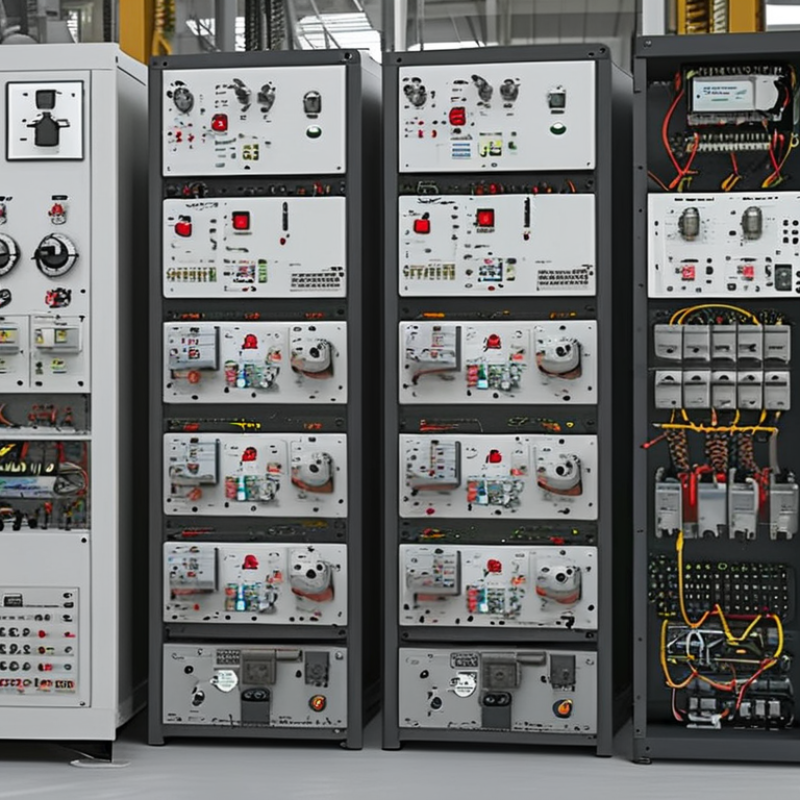
Three-phase surge protectors are parallel-connected devices that divert transient voltage away from electrical equipment. They limit sudden energy from lightning, switching operations, and utility faults. Unlike single-phase units, they coordinate protection across line-to-line, line-to-neutral, and neutral-to-earth paths. That coordination matters. One exposed phase can still damage motors, drives, servers, or control panels.
The World Meteorological Organization reports roughly eight million lightning flashes worldwide each day. NOAA explains that lightning channels can reach about 30,000 kelvins, showing why ordinary insulation may not withstand these events. IEC 61643-11 defines performance and testing requirements for low-voltage surge protective devices. IEEE C62.41.1 also classifies electrical environments and expected transient conditions. These references support a technical, evidence-based selection process.
Practical selection begins with system voltage, earthing arrangement, discharge current, and voltage protection level. Engineers should also verify short-circuit ratings and backup disconnection requirements. Short leads matter. Long wiring increases inductive voltage during a fast surge. Field inspections often find adequate devices installed with poor bonding or excessive cable length. That weakness is easy to overlook. A protector is not magic. Correct grounding, coordinated upstream protection, and routine inspection determine whether it performs when the installation is stressed. Manufacturers should provide test records, clear wiring diagrams, and traceable compliance documents, although paperwork alone cannot prove real-world performance.
Ranking China’s top three-phase surge protector manufacturers requires more than comparing catalog prices. A credible review begins with verified product evidence. I examine nominal discharge current, maximum discharge current, voltage protection level, response time, and short-circuit safety. Three-phase units should also show protection between phases, neutral, and ground. These figures must match test reports, not only sales brochures. Independent laboratory records add weight, especially when reports identify model numbers and test dates. Manufacturing consistency matters too. Auditors should inspect incoming components, automated assembly, thermal protection, and final electrical testing. Clear batch codes make defects easier to trace. Small details often reveal serious discipline.
Experience in real installations deserves equal attention. A supplier should explain protection choices for factories, data rooms, homes, and outdoor cabinets. Its engineers need to discuss grounding, backup protection, environmental exposure, and coordination between protection stages. I also rank technical support, spare-part access, warranty terms, and response speed after a fault. Export capability should include accurate documentation and compliance with relevant market requirements, rather than vague certificate claims. Financial stability and transparent ownership reduce supply risk during long projects. Still, no ranking is perfect. Factory visits can show polished samples, while field performance may vary. Customer references, recurring failure data, and independent retesting should influence the final score. The top three should earn trust through evidence, not loud marketing.
China’s Top Three Phase Surge Protector Manufacturers
China’s leading three-phase surge protector manufacturers usually differ by engineering focus, not appearance. The first group emphasizes high-volume production, with DIN-rail devices, thermal disconnects, and clear status indicators. Its strength is consistent output across commercial projects. However, a low price does not always reveal long-term performance.
The second group focuses on industrial protection. These manufacturers often provide Type 1, Type 2, and combined surge protection devices for factories, control cabinets, and photovoltaic systems. Experienced engineers check discharge capacity, response time, grounding design, and coordination between protection stages. Test records referencing IEC 61643-11 are useful, but buyers should verify the actual report. A certificate alone is not enough.
The third group provides customized solutions. It may adjust pole numbers, enclosure materials, remote alarm contacts, and installation dimensions. This flexibility helps contractors working with older panels or limited cabinet space. Good suppliers explain heat exposure, humidity, wiring length, and replacement procedures clearly. Still, product descriptions can be overly confident. Field feedback matters more than polished language.
Tips: Ask for factory audit evidence, batch testing records, and wiring diagrams before purchasing. Confirm the system voltage, maximum discharge current, short-circuit rating, and earthing method. Request samples when possible. A practical trial may reveal small weaknesses, such as loose terminals or unclear labels.
The chart compares representative three-phase surge protection product specifications commonly published by leading Chinese manufacturers. The indicators are based on IEC 61643-11 product parameters, including maximum discharge current, nominal discharge current, and voltage protection level. Manufacturer names and brands are intentionally omitted.
China’s Top Three-Phase Surge Protector Manufacturers
A practical comparison should examine products, testing, and installation evidence. Market Data Forecast estimates the global surge protection device market will grow steadily through 2030, driven by renewable energy, data centers, and industrial automation. China’s leading manufacturers usually offer Type 1, Type 2, and combined Type 1+2 protectors. Their products commonly use metal-oxide varistors, thermal disconnectors, and replaceable modules.
The first manufacturer profile focuses on high-discharge industrial protection. It may provide 12.5 kA or 25 kA impulse-current capability under IEC 61643-11 testing. The second emphasizes compact DIN-rail products for distribution boards, with remote signaling and visual status indicators. The third often targets photovoltaic and control systems, where DC voltage ratings, short-circuit behavior, and enclosure strength require closer review. Small details matter. Wiring length matters.
Certification comparison needs care. IEC 61643-11 supports international performance evaluation, while GB/T 18802.11 applies to China’s low-voltage surge protective devices. UL 1449 may be required for North American projects. TÜV or CE documentation can support market access, but these marks do not prove identical performance. A 2024 industry report from MarketsandMarkets identifies smart infrastructure and industrial electrification as major SPD growth drivers. However, laboratory data may hide field weaknesses. Buyers should verify test reports, production-batch traceability, leakage-current limits, and warranty terms. I would also request installation photos from comparable sites. Product tables alone are insufficient.
| Comparison Dimension | Manufacturer A Representative Product Profile | Manufacturer B Representative Product Profile | Manufacturer C Representative Product Profile |
|---|---|---|---|
| Primary Product Range | Low-voltage AC surge protective devices for residential, commercial, and light industrial distribution boards. | AC and DC surge protective devices for industrial control panels, photovoltaic systems, and power distribution equipment. | Modular AC surge protective devices for commercial buildings, data rooms, control cabinets, and general electrical installations. |
| Typical SPD Classification | Type 1+2Type 2 | Type 1+2Type 2PV DC | Type 2Type 2+3 |
| Applicable Electrical Systems | 230/400 V AC, single-phase and three-phase TN-S, TN-C, TN-C-S, and TT systems, subject to model selection. | 230/400 V AC systems, photovoltaic DC circuits up to 1,000 V DC on selected product families, and industrial control circuits. | 230/400 V AC single-phase and three-phase distribution systems, including sub-distribution and final-circuit protection. |
| Common Maximum Continuous Operating Voltage (Uc) | 275 V AC or 320 V AC for phase-to-neutral applications; exact value depends on system voltage and earthing arrangement. | 275 V AC, 320 V AC, or 385 V AC for selected AC configurations; PV versions use a DC-rated Uc matched to the array voltage. | 275 V AC or 385 V AC for common phase-to-neutral and phase-to-phase applications. |
| Typical Nominal Discharge Current (In) | 20 kA, 8/20 μs for common Type 2 modular products. | 20 kA or 25 kA, 8/20 μs for Type 2 products; higher-current Type 1+2 combinations are available in selected configurations. | 5 kA, 10 kA, or 20 kA, 8/20 μs depending on the product class and installation point. |
| Typical Maximum Discharge Current (Imax) | 40 kA, 8/20 μs for commonly specified Type 2 products. | 40 kA or 65 kA, 8/20 μs for selected Type 2 and combined Type 1+2 products. | 10 kA, 20 kA, or 40 kA, 8/20 μs depending on the module rating. |
| Lightning Impulse Current Capability | Type 1+2 products may use an Iimp rating such as 12.5 kA per pole, 10/350 μs; the value is model-specific. | Selected Type 1+2 products may be rated at 12.5 kA per pole or higher according to pole configuration and application. | Type 2 products generally emphasize In and Imax ratings; Type 1+2 versions require separate verification of the Iimp value. |
| Protection Technology | Metal-oxide varistor technology with thermal disconnection and visual status indication. | Metal-oxide varistors for AC and PV applications; selected high-energy designs may combine spark-gap and MOV technologies. | MOV-based modular protection with replaceable plug-in cartridges and mechanical end-of-life indication. |
| Response Time | Typically below 25 ns for MOV-based AC modules; the declared value depends on circuit design and test method. | Typically below 25 ns for MOV-based products; spark-gap designs may have different operating characteristics. | Typically below 25 ns for common Type 2 MOV products. |
| Protection Modes | L-N, L-PE, and N-PE protection modes are available according to the internal circuit and earthing system. | L-N, L-PE, N-PE, and DC positive-to-earth or negative-to-earth configurations are available for different applications. | L-N and L-PE protection modes are commonly offered, with multi-pole versions for three-phase systems. |
| Backup Overcurrent Protection | Requires coordination with an upstream fuse or circuit breaker; the maximum permitted backup protection must be checked on the datasheet. | Usually specified with a maximum backup fuse or circuit-breaker rating for safe thermal disconnection and short-circuit coordination. | External backup protection is generally required unless the selected product has an explicitly integrated protection design. |
| Remote Monitoring | Optional remote signaling contact is available on selected modular versions. | Optional dry-contact remote indication is commonly available for industrial and photovoltaic versions. | Optional remote status contact is available on selected replaceable-cartridge products. |
| Installation Format | DIN-rail modular design, commonly 1P, 2P, 3P, 3P+N, or 4P configurations. | DIN-rail modules and compact panel-mounted versions for AC, DC, PV, and control applications. | DIN-rail plug-in modules with replaceable cartridges and optional auxiliary contacts. |
| Applicable Product Standards | IEC 61643-11 for low-voltage AC SPDs; GB/T 18802.11 may apply to products marketed for the Chinese market. | IEC 61643-11 for AC SPDs and IEC 61643-31 for photovoltaic DC SPDs, where applicable. | IEC 61643-11 and corresponding national or regional adoptions, depending on the target market. |
| Common Test Documentation | Type-test reports covering Uc, Up, In, Imax, short-circuit behavior, and thermal disconnection. | Product test reports, photovoltaic DC test records where relevant, routine inspection records, and factory quality documentation. | Type-test reports, production inspection records, insulation and dielectric-strength test data, and end-of-life indication verification. |
| Market Conformity Documents to Verify | CE declaration for applicable European directives, RoHS material compliance, and third-party test reports where requested. | CE and RoHS documentation for relevant markets, plus CB or independent laboratory reports when specified by the purchaser. | CE and RoHS documentation where applicable, together with test reports demonstrating compliance with the declared product standard. |
| Typical Application Strength | General building protection, distribution boards, retail facilities, and small commercial installations. | Industrial facilities, photovoltaic power systems, control cabinets, and applications requiring broader AC/DC coverage. | Commercial buildings, data and communication rooms, building services, and installations favoring replaceable modules. |
| Key Selection Considerations | Verify system earthing type, Uc, Up, backup protection, short-circuit rating, and the required number of poles. | Verify AC or DC application, maximum PV voltage, polarity configuration, Iimp or Imax rating, and coordination with upstream protection. | Verify discharge rating, installation location, replacement-cartridge availability, remote signaling requirements, and coordination between SPD stages. |
China Top Three Phase Surge Protector Manufacturers
Choosing among China’s leading three-phase surge protector manufacturers requires more than comparing prices. Check whether the factory understands your system voltage, grounding method, and lightning exposure. A suitable device should match key ratings, including Uc, Up, In, and Imax. For high-risk sites, ask about impulse current capacity and thermal disconnection.
Request current test reports from independent laboratories. Confirm compliance with IEC 61643-11 or the standards required in your market. Factory certification helps, but it does not prove every product is consistent. Inspect production records, component traceability, aging tests, and final inspection procedures. Ask for samples before placing a large order. Test them under realistic cabinet conditions, not only on a spreadsheet.
Communication is equally important. A reliable manufacturer should explain wiring diagrams, backup fuse selection, remote alarm contacts, and replacement procedures clearly. Visit the facility when possible. Look at the testing room, storage conditions, and rejected-product records. A low quotation may hide weaker components or limited support. That deserves careful questioning. Also review warranty terms, response times, packaging, and spare-part availability. My own practical preference is a supplier that admits technical limits instead of promising universal protection. No manufacturer gets everything perfect. Your application may also reveal requirements that the original specification missed.
„Thanks to the LUVIR technology, the solder resist process could be switched directly from the previously used mask exposure to direct exposure. As an outstanding digital solution on the market, this technology has been able to demonstrate fast process times and superior quality on our certified conventional ink in production. This allowed us to fully digitize the solder mask process at low cost – without process or ink adjustments. An excellent benefit to our production in Rot am See.“
Ralf Göhringer (Head of Production WE Rot am See)
I would definitely recommend the Limata machine and team for a future company purchase
Michael Greenaway
Compunetics Inc.
“The Limata ldi has been amazing!! Best thing we did was buy this machine”
Richard Brady
GM
Circuitlabs
“Since 2019, we have been running the Limata X1000 LDI system (including LUVIR for solder mask imaging) in daily production as an addition to our current process with film. The machine was capable of properly exposing Taiyo PSR-4000 BN (DI) solder mask types on normal to high-copper boards using a new and unique direct imaging process. The machine operating interface is very user friendly which allowed for a quick technical training curve. The pre-registration processing reduced several seconds of production time at every print. Limata support and service staff is incomparable. They supported our team every step of the way at basically any time of the day or night, with literally, an immediate response time, customizing the software interface to best fit our Operations and needs.
We have exposed more than 8,000 prints since end of October, on various solder mask colors and some resist film panels. Limata, has proven to be very capable and innovative. They are a strong contender in the industry.
We have very much enjoyed this project, and working with the team!
Thank you Limata for the continued support and being a part of our growth.”
Bill Sezate
Vice President, GM
Summit Interconnect
As a replacement to our current contact exposure process with film, the LIMATA X2000 system including LUVIR-Technology was capable of properly exposing non-LDI solder mask types using a direct imaging process. The machine offers cutting edge software with a very intuitive operating interface which allowed for quick technician training curve. The dual drawer system combined with pre-registration processing reduced several seconds of production time at every machine cycle. Limata support and service staff is world class. They added software patches to keep production running at shortest possible response times, customized the software interface to best fit our in-house Operations system, and even wrote a step-by-step machine processing manual. As a result of the project, we have exposed more than 16,000 times on various product types and solder mask brands/colors. Limata, in a very short timeframe as a company, has definitely shown they are truly innovative and will be challenging the industry of direct imaging for the top spot.
Kevin Beattie
Process Engineer
TTM Technologies
Forest Grove Division
