In the competitive landscape of tissue production, choosing the right Tissue Converting Machine is crucial for maintaining quality and cost-effectiveness. Industry expert Dr. Emily Carter, a leading figure in tissue machinery, once stated, "Investing wisely in the right converting machine can significantly enhance product quality and lower operational costs." Her insights highlight the essential balance between quality and price in this sector.
Many manufacturers struggle with this balance. As production demands rise, so do expectations. It’s vital to select a machine that meets both your quality requirements and budget constraints. High-quality tissue converting machines often come with advanced technology, yet they can also have a steep price tag. Understanding the features and specifications of various models becomes critical.
Additionally, not all machines perform equally over time. Regular maintenance is necessary to avoid production downtimes. A well-chosen Tissue Converting Machine will not only satisfy current needs but also adapt to future challenges. Reflecting on the right choices today can lead to remarkable improvements tomorrow. However, it is important to remain aware of potential limitations and adapt accordingly.
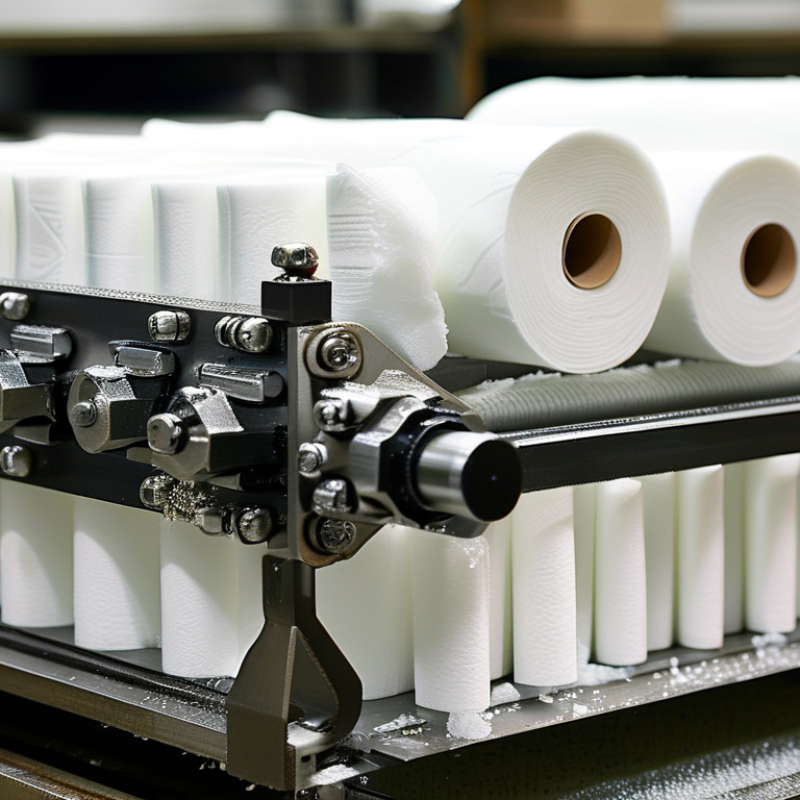
Tissue converting machines play a crucial role in the paper industry. These machines transform raw paper into essential products such as toilet paper, napkins, and tissues. They combine various processes, including rewinding, folding, and cutting. The efficiency of these machines influences production quality and speed.
In recent years, advancements in technology have refined their design. Various models offer distinct features that cater to different production needs. Choosing the right machine can be challenging. Factors such as production capacity, energy consumption, and maintenance costs need evaluation. Businesses that invest in reliable machines benefit from enhanced product quality and reduced operational costs.
While innovations bring improvements, not all machines perform flawlessly. Some may have high startup costs without promising returns. Thus, potential buyers should conduct thorough research. Seeking expert advice ensures the choice aligns with business goals. Careful selection aids in achieving a balance between quality and price.
The quality of tissue converting processes hinges on several key factors, particularly machine efficiency and material selection. According to recent industry studies, machine downtime can decrease overall production quality by up to 20%. This emphasizes the necessity of investing in reliable equipment.
Energy consumption is another critical aspect. Reports indicate that energy-efficient machines can reduce power usage by as much as 30%. Lower energy costs not only enhance production margins but also improve sustainability. Manufacturers must consider this balance between quality, price, and operational efficiency. It's vital to regularly evaluate existing processes and explore innovations in machinery that could enhance output quality.
While advancements in technology promise to elevate standards, they also present challenges. Integrating new machinery often disrupts existing workflows. Training operators to utilize advanced features takes time. Additionally, it can lead to inconsistencies as teams adapt. These reflections illustrate that maintaining high quality demands constant attention to both machines and human factors.
When selecting tissue converting machines, understanding their key features is essential. Different brands offer varying levels of automation, speed, and efficiency. A machine that processes quickly may have a higher initial cost but can lead to better productivity in the long run. It’s crucial to analyze how each brand's technology aligns with your production needs.
Invest in machines known for quality build and ease of maintenance. A reliable machine reduces downtime and prolongs lifespan. Simple designs often simplify the operation and can lessen the chance of user errors. Brands offering extensive customer support and training should be prioritized to ensure your team can maximize the equipment’s potential.
Tips: Look for demo models before making a final decision. Seeing how a machine operates in real-time can help assess its suitability. Conduct thorough research on each brand's reputation in the industry. Sometimes, less known brands may provide equal quality for a lower price. Always compare warranty options to safeguard your investment.
Balancing quality and price in tissue converting machines is crucial for consumers. Recent industry reports indicate that around 75% of businesses prioritize cost-effectiveness. This trend highlights the need for machines that deliver high-quality output without exorbitant costs. Machine uptime, maintenance frequency, and energy efficiency significantly influence cost-effectiveness.
Moreover, efficiency varies across different machine types. A study found that machines with automated features reduce labor costs by 30%. However, the initial investment can be higher. Consumers must assess long-term savings against upfront expenses. While some machines promise lower price tags, they may compromise on durability, leading to additional costs over time.
Quality assurance plays a vital role in this decision. Reports show that over 60% of consumers are willing to invest more in machines recognized for their reliability. Yet, this raises questions: How much is too much? Are the benefits worth the extra expense? These factors require thoughtful consideration from potential buyers in the tissue converting market.
| Machine Type | Production Capacity (Tons/Hour) | Quality Rating (out of 5) | Price Range (USD) | Energy Efficiency Rating |
|---|---|---|---|---|
| Mini Converting Machine | 0.5 | 4.2 | $15,000 - $20,000 | A+ |
| Standard Tissue Converting Machine | 1.0 | 4.5 | $25,000 - $35,000 | A |
| High-Speed Tissue Machine | 2.0 | 4.8 | $50,000 - $75,000 | A++ |
| Fully Automatic Converting Line | 3.0 | 4.6 | $100,000 - $150,000 | A+++ |
The future of tissue converting technology is evolving rapidly. Innovations will focus on improving efficiency and sustainability. Manufacturers are exploring new materials and processes. These advances promise to enhance product quality while reducing waste. New techniques for recycling and reusing materials are becoming essential. Automated systems will likely become standard in efficient production lines.
One area of interest is smart manufacturing. Integrating the Internet of Things (IoT) can enhance real-time data analysis. This leads to better decision-making in production. However, the reliance on technology can introduce challenges. Not every company can adapt quickly to these changes. Companies must balance investment with their existing capabilities.
Sustainability will remain a key trend. Consumers demand eco-friendly products, pushing manufacturers to innovate. Yet, achieving a truly sustainable process is complex. The industry must navigate regulatory pressures and market expectations. Breakthroughs in tissue converting technology are necessary, but not easily attained. Continuous improvement will be vital for staying competitive. Innovations must meet real market needs and environmental considerations.
„Thanks to the LUVIR technology, the solder resist process could be switched directly from the previously used mask exposure to direct exposure. As an outstanding digital solution on the market, this technology has been able to demonstrate fast process times and superior quality on our certified conventional ink in production. This allowed us to fully digitize the solder mask process at low cost – without process or ink adjustments. An excellent benefit to our production in Rot am See.“
Ralf Göhringer (Head of Production WE Rot am See)
I would definitely recommend the Limata machine and team for a future company purchase
Michael Greenaway
Compunetics Inc.
“The Limata ldi has been amazing!! Best thing we did was buy this machine”
Richard Brady
GM
Circuitlabs
“Since 2019, we have been running the Limata X1000 LDI system (including LUVIR for solder mask imaging) in daily production as an addition to our current process with film. The machine was capable of properly exposing Taiyo PSR-4000 BN (DI) solder mask types on normal to high-copper boards using a new and unique direct imaging process. The machine operating interface is very user friendly which allowed for a quick technical training curve. The pre-registration processing reduced several seconds of production time at every print. Limata support and service staff is incomparable. They supported our team every step of the way at basically any time of the day or night, with literally, an immediate response time, customizing the software interface to best fit our Operations and needs.
We have exposed more than 8,000 prints since end of October, on various solder mask colors and some resist film panels. Limata, has proven to be very capable and innovative. They are a strong contender in the industry.
We have very much enjoyed this project, and working with the team!
Thank you Limata for the continued support and being a part of our growth.”
Bill Sezate
Vice President, GM
Summit Interconnect
As a replacement to our current contact exposure process with film, the LIMATA X2000 system including LUVIR-Technology was capable of properly exposing non-LDI solder mask types using a direct imaging process. The machine offers cutting edge software with a very intuitive operating interface which allowed for quick technician training curve. The dual drawer system combined with pre-registration processing reduced several seconds of production time at every machine cycle. Limata support and service staff is world class. They added software patches to keep production running at shortest possible response times, customized the software interface to best fit our in-house Operations system, and even wrote a step-by-step machine processing manual. As a result of the project, we have exposed more than 16,000 times on various product types and solder mask brands/colors. Limata, in a very short timeframe as a company, has definitely shown they are truly innovative and will be challenging the industry of direct imaging for the top spot.
Kevin Beattie
Process Engineer
TTM Technologies
Forest Grove Division
