Choosing the right Plastic Ice Cooler Box is not simply a matter of size or color. A useful cooler must match the situation, load, travel time, and storage conditions. Beach trips, fishing outings, outdoor catering, and daily delivery work require different designs. A compact personal cooler may suit sandwiches and drinks. A heavy-duty wheeled model may perform better when carrying ice, meat, or bottled water across uneven ground.
Dr. Martin Bucknavage, a food safety specialist at Penn State Extension, offers a practical reminder: “A cooler is a temporary control, not a refrigerator.” That sentence deserves attention. Ice retention can change with sunlight, lid openings, outside temperature, and how tightly the contents are packed. The best Plastic Ice Cooler Box should therefore provide thick insulation, a secure lid, reliable handles, and easy cleaning. Drainage also matters. Meltwater sitting inside can become unpleasant quickly.
The main types include soft-sided plastic coolers, rigid insulated boxes, wheeled coolers, stackable commercial boxes, and high-performance ice chests. Each type has strengths, but none is perfect. Soft models are portable, yet less protective. Rigid boxes hold temperature better, yet they consume more storage space. Wheeled versions reduce lifting, though their handles and wheels may fail on rough paths. It is easy to overvalue advertised ice-retention hours. Real use is messier. This guide compares these cooler types through insulation, capacity, portability, hygiene, durability, and everyday practicality, helping buyers make a more careful and realistic choice.
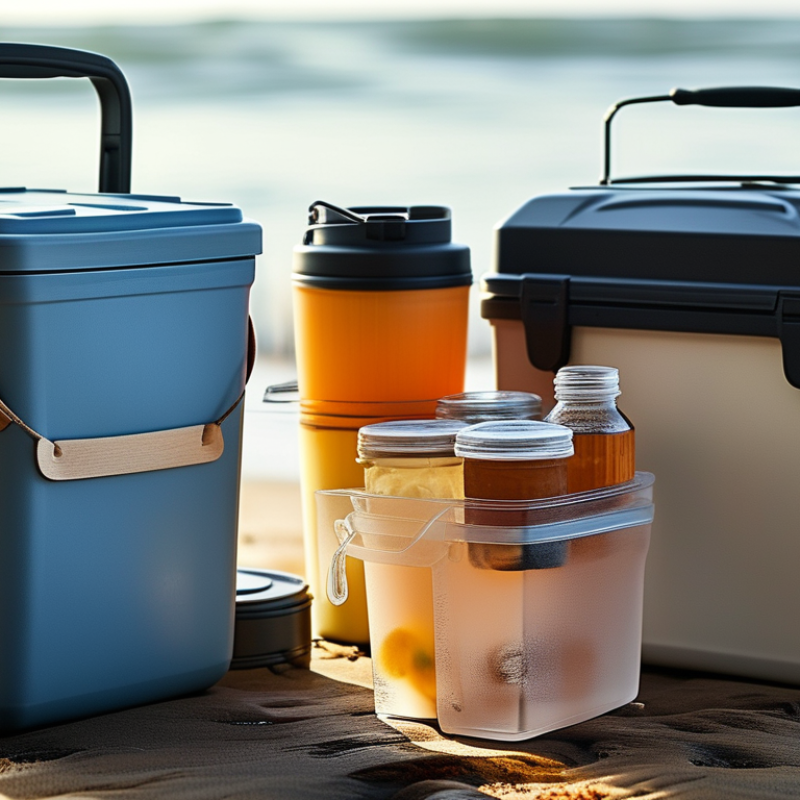
A plastic ice cooler box is more than a molded container. It combines a rigid plastic shell, insulated walls, a fitted lid, and space for ice. Common shells use high-density polyethylene or polypropylene. Polyurethane foam often provides the thermal barrier. The lid should close evenly, while a drain plug helps remove melted ice. USDA FSIS guidance recommends keeping perishable food at 40°F or below. Therefore, stable cold retention defines the product better than its appearance. A thick box can still perform poorly when its gasket leaks. Looks can mislead.
Industry data adds useful context. PlasticsEurope’s Plastics—The Fast Facts 2024 reports 413.8 million tonnes of global plastics production in 2023. The OECD Global Plastics Outlook reports 353 million tonnes of plastic waste in 2019, with only 9% recycled. These figures encourage buyers to examine durability, repairability, and material labeling. No single plastic wins every situation. Lightweight designs are easier to carry, but they may sacrifice insulation and hinge strength. Advertised capacity can also feel optimistic. Measure usable space after adding ice and food.
Tips: Pre-chill the cooler before loading it. Use large ice blocks for slower melting. Keep the lid closed. Check the internal temperature with a food thermometer. Clean the drain and gasket after each trip. I would also inspect cracks around the handles, because small damage often grows under heavy lifting.
Hard-sided plastic cooler boxes remain practical for daily errands, short trips, and outdoor meals. Their molded walls resist dents, while thick insulation helps slow heat transfer. A secure lid also reduces spills when the box sits in a car. For routine use, a 15 to 30-liter capacity often fits lunch containers, drinks, and reusable ice packs. Bigger is not always better. An oversized box can become awkward when fully loaded.
The most useful types differ by how people move and store them. Compact personal coolers suit office lunches, fishing sessions, and small picnics. Medium chest coolers offer more space for family meals and weekend drives. Wheeled hard-sided models help with heavy loads, especially across smooth pavement. However, wheels may struggle on sand or uneven grass. I have found that handles matter as much as insulation. A narrow grip can make a cold, full box uncomfortable to carry.
Look for documented food-contact-safe interior surfaces, sturdy hinges, and a drain plug that opens without tools. These details support cleaner, easier maintenance. Wash the interior with mild soap, rinse it well, and let it dry with the lid open. Pre-chilling the box and its contents can improve cooling performance. Ice placement also matters; cold air does not replace direct contact. Still, published capacity can feel optimistic after adding bottles and containers. Check the internal dimensions before buying, not only the outside measurements.
Soft-sided plastic cooler bags are practical for short trips, office lunches, picnics, and beach visits. Their flexible walls fit under car seats or inside crowded backpacks. Many use a plastic outer layer, insulated foam, and a wipe-clean inner lining. This combination helps slow temperature changes during transport.
Choose a bag with reinforced handles and wide, comfortable straps. A leaking seam can ruin more than the lunch. Look for heat-sealed joints, a secure zipper, and a stable base. A 12- to 20-liter capacity often suits one or two people. Smaller bags are easier to carry, but they may warm faster when packed tightly.
Cold packs work best when placed around the food, not only above it. Keep the bag closed as much as possible. I have found that a half-filled cooler warms unevenly, especially in direct sunlight. Soft bags are convenient, but they are not rigid containers. They can lose shape and offer less protection for delicate food. Wipe the interior after every use, then leave the zipper open until fully dry. This small step helps reduce lingering odors and moisture. Performance also depends on packing habits, ambient temperature, and travel time. Check chilled food before eating, particularly after several hours outdoors.
| Cooler Bag Type | Typical Capacity | Typical Empty Weight | Common Outer Materials | Insulation Construction | Best Transport Features | Typical Uses | Relative Portability |
|---|---|---|---|---|---|---|---|
| Personal Lunch Cooler | 5–12 L | 0.3–0.8 kg | Polyester fabric, PEVA lining, or PVC-coated fabric | Foam insulation, usually about 5–10 mm thick | Top carry handle; compact rectangular shape; easy to place in a work or school bag | One-person lunches, snacks, medicines, and short daily trips | Very high |
| Soft Cooler Tote | 15–30 L | 0.6–1.4 kg | Woven polyester or nylon with a waterproof plastic liner | Closed-cell foam with a heat-sealed or stitched liner | Two shoulder straps; wide opening; can carry food containers and drink bottles | Picnics, grocery shopping, beach visits, and family day trips | High |
| Soft Cooler Backpack | 15–30 L | 0.7–1.6 kg | Water-resistant polyester or nylon; PEVA or TPU-coated interior | Foam panels between the outer fabric and insulated liner | Padded shoulder straps; hands-free carrying; balanced weight distribution | Hiking, cycling, commuting, boating, and outdoor recreation | High |
| Shoulder-Strap Cooler Bag | 10–25 L | 0.5–1.2 kg | Polyester, nylon, or laminated synthetic fabric | Flexible foam insulation with a leak-resistant inner liner | Adjustable shoulder strap; quick access; folds relatively flat when empty | Short beach trips, travel, fishing, and outdoor lunches | High |
| Large Family Soft Cooler | 30–60 L | 1.2–2.8 kg | Heavy-duty polyester or nylon with reinforced plastic-coated lining | Thicker foam insulation and reinforced base and side panels | Dual handles, shoulder strap, reinforced bottom, and wide top opening | Family picnics, camping, road trips, and group outdoor activities | Moderate |
| Collapsible Soft Cooler | 10–35 L | 0.6–1.8 kg | Flexible polyester or nylon with PEVA, TPU, or PVC-lined interior | Foldable foam insulation designed to compress for storage | Collapsible panels, removable base insert, and compact storage profile | Travel, apartment storage, grocery transport, and occasional events | Very high when empty |
| Soft Cooler with Wheels | 35–65 L | 2.5–5.5 kg | Durable polyester or nylon with a plastic-coated insulated interior | Foam insulation with a rigid or semi-rigid base | Telescoping handle and wheels; reduces lifting for heavy loads | Large picnics, sporting events, camping, and longer walks over smooth surfaces | Moderate while rolling |
| Insulated Beverage Cooler Bag | 8–24 cans, approximately 6–18 L | 0.4–1.2 kg | Polyester or nylon with a waterproof plastic liner | Flexible foam insulation around the main compartment | Shoulder strap, bottle-friendly shape, and separate pockets in some designs | Drinks, sporting events, beach use, and casual outdoor gatherings | High |
Note: Capacity, weight, insulation thickness, and cooling performance vary by construction and load. Cooling duration depends on ambient temperature, the amount and temperature of ice, how often the bag is opened, and how fully it is packed.
Outdoor activity is expanding the need for mobile cold storage. The Outdoor Foundation’s 2024 Outdoor Participation Trends Report recorded 175.8 million U.S. outdoor participants in 2023. Camping adds another signal. The 2024 North American Camping Report counted 57.8 million active camping households in 2023. For heavy loads, wheels are not a luxury; they reduce lifting and carrying strain.
A practical example exposes the challenge. A 45-liter cavity filled with water weighs about 45 kilograms before ice, food, and the container. That load demands a rigid polyethylene body, a wide axle, and wheels sized for uneven ground. Large wheels roll better over gravel, while smaller wheels remain easier to store. Manufacturers should publish payload limits, not only internal volume. Volume can mislead. Tests should include a loaded pull, handle flex, lid sealing, and wheel impact. These checks reflect risk-based product safety engineering, although cooler standards vary by market.
Field experience also reveals compromises. A long telescoping handle improves posture, yet it can weaken under twisting loads. Drain placement matters when the cooler sits on a slope. Food-contact surfaces need smooth seams and easy cleaning. Insulation thickness helps retention, but it also reduces usable capacity. An independent laboratory can verify thermal retention through repeatable temperature testing. Still, published results deserve scrutiny. Test duration, ambient temperature, ice ratio, and opening frequency can change the outcome. Buyers should compare those conditions before trusting a headline performance figure.
Wheeled plastic coolers generally provide more storage capacity than personal and portable hard-shell models. Heavy-duty wheeled designs are suited to larger food, beverage, and ice loads, while smaller coolers are easier to carry for short trips.
Values show representative capacity midpoints calculated from commonly published market ranges; actual specifications vary by model.
Specialized plastic coolers support different outdoor routines, from short hikes to multi-day camping. The Outdoor Industry Association’s 2024 Outdoor Participation Trends Report recorded 175.8 million U.S. participants in outdoor recreation during 2023. That scale creates demand for practical, activity-specific cooling equipment.
A compact personal cooler suits cyclists, anglers, and day hikers. It fits beside a seat and limits unnecessary weight. For family camping, a hard-sided polyethylene cooler offers stronger insulation and better impact resistance. Rotomolded walls usually protect ice longer, although they can feel heavy after a steep walk. Wheeled models help during road trips and beach visits.
I have found that oversized wheels matter more than attractive handles on loose ground.
Fishing trips require drainage plugs, secure lids, and surfaces that clean easily. Some models include molded ruler guides or separate dry compartments. Their value depends on real use, not accessory counts.
The USDA Food Safety and Inspection Service recommends keeping perishable food at 40°F (4°C) or below. A cooler should therefore use enough ice, not just thick plastic. Ice packs work well for organized meals. Loose ice cools faster but creates meltwater.
One weakness remains. Performance claims often use controlled tests. Wind, opening frequency, and direct sunlight change results outdoors. The National Park Service advises visitors to pack food in sealed, leak-resistant containers. That guidance supports coolers with tight gaskets and washable interiors. Small details matter.
„Thanks to the LUVIR technology, the solder resist process could be switched directly from the previously used mask exposure to direct exposure. As an outstanding digital solution on the market, this technology has been able to demonstrate fast process times and superior quality on our certified conventional ink in production. This allowed us to fully digitize the solder mask process at low cost – without process or ink adjustments. An excellent benefit to our production in Rot am See.“
Ralf Göhringer (Head of Production WE Rot am See)
I would definitely recommend the Limata machine and team for a future company purchase
Michael Greenaway
Compunetics Inc.
“The Limata ldi has been amazing!! Best thing we did was buy this machine”
Richard Brady
GM
Circuitlabs
“Since 2019, we have been running the Limata X1000 LDI system (including LUVIR for solder mask imaging) in daily production as an addition to our current process with film. The machine was capable of properly exposing Taiyo PSR-4000 BN (DI) solder mask types on normal to high-copper boards using a new and unique direct imaging process. The machine operating interface is very user friendly which allowed for a quick technical training curve. The pre-registration processing reduced several seconds of production time at every print. Limata support and service staff is incomparable. They supported our team every step of the way at basically any time of the day or night, with literally, an immediate response time, customizing the software interface to best fit our Operations and needs.
We have exposed more than 8,000 prints since end of October, on various solder mask colors and some resist film panels. Limata, has proven to be very capable and innovative. They are a strong contender in the industry.
We have very much enjoyed this project, and working with the team!
Thank you Limata for the continued support and being a part of our growth.”
Bill Sezate
Vice President, GM
Summit Interconnect
As a replacement to our current contact exposure process with film, the LIMATA X2000 system including LUVIR-Technology was capable of properly exposing non-LDI solder mask types using a direct imaging process. The machine offers cutting edge software with a very intuitive operating interface which allowed for quick technician training curve. The dual drawer system combined with pre-registration processing reduced several seconds of production time at every machine cycle. Limata support and service staff is world class. They added software patches to keep production running at shortest possible response times, customized the software interface to best fit our in-house Operations system, and even wrote a step-by-step machine processing manual. As a result of the project, we have exposed more than 16,000 times on various product types and solder mask brands/colors. Limata, in a very short timeframe as a company, has definitely shown they are truly innovative and will be challenging the industry of direct imaging for the top spot.
Kevin Beattie
Process Engineer
TTM Technologies
Forest Grove Division
