The global machinery aftermarket is becoming more strategic, not merely corrective. Grand View Research estimates that the global construction equipment market reached approximately USD 241 billion in 2023, with continued expansion expected through 2030. This growth creates sustained demand for Heavy Machinery Spare Parts, including hydraulic pumps, undercarriage assemblies, filters, seals, and engine components. Off-Highway Research also reports strong equipment demand across Asia, Europe, and North America. More machines in operation mean more worn components in the field.
Yet the supplier landscape is not simple. A reliable distributor must prove part compatibility, warehouse capacity, delivery performance, and technical support. A bright website is not enough. A sealed bearing, packed beside a dusty loading bay, tells a more useful story about quality control. Caterpillar Chairman and CEO Jim Umpleby has stressed, “Our customers count on us to provide the parts and services they need, when they need them.” That principle explains why leading suppliers invest in regional inventories, remanufacturing, digital catalogs, and trained service teams.
This guide examines top Heavy Machinery Spare Parts suppliers worldwide through practical criteria. These include product breadth, original-equipment expertise, aftermarket coverage, warranty policies, and customer experience. Industry rankings remain imperfect. Some reports measure revenue, while others emphasize shipment volume or brand visibility. That difference matters. A smaller supplier may deliver faster than a global group in a remote mining region. Readers should verify certifications, serial-number matching, return procedures, and local availability before purchasing. Reliable parts protect uptime, operator safety, and long-term equipment value. Metrics matter. Field experience matters more.
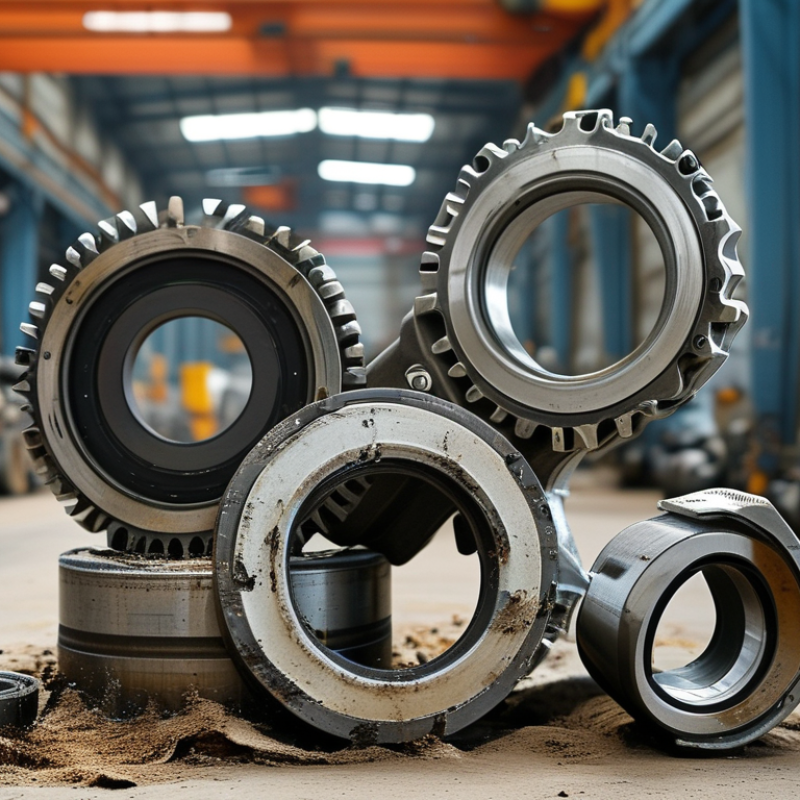
Heavy machinery spare parts fall into several practical groups. Engine parts include filters, pistons, gaskets, and fuel injectors. They support excavators, loaders, and haul trucks under high thermal pressure. Hydraulic parts include pumps, valves, hoses, and cylinders. These components control lifting, digging, steering, and attachment movement.
Undercarriage parts, such as tracks, rollers, idlers, and sprockets, serve tracked equipment on rough ground. Wear parts include bucket teeth, cutting edges, and crusher liners. They contact soil, rock, and concrete directly. Electrical parts, including sensors, alternators, and wiring harnesses, protect starting, monitoring, and control systems. KHL’s Yellow Table 2024 reported approximately US$243.4 billion in sales among the world’s leading construction equipment manufacturers in 2023. That large installed base creates continuing demand for dependable replacement parts.
Match each part with the machine’s serial number, operating load, and working environment. Check oil contamination before replacing hydraulic components. A clean filter may prevent a costly pump failure. Field maintenance teams should record temperature, vibration, and replacement intervals. Perfect prediction is rare. Parts can still fail earlier than expected, especially in dust, heat, or overloaded conditions. The KHL data measures equipment sales, not spare-part consumption, so replacement demand must be interpreted carefully.
Top Heavy Machinery Spare Parts Suppliers Worldwide
Key Criteria for Evaluating Global Spare Parts Suppliers
Choosing a global spare parts supplier requires more than comparing prices. Field experience shows that accurate fitment information prevents expensive machine downtime. Ask for part numbers, dimensions, material grades, and compatibility records. Clear technical drawings matter. They reduce ordering mistakes.
Reliable suppliers can trace each component to a production batch. They should provide inspection reports, certificates, and realistic delivery dates. A documented quality system, such as ISO 9001 certification, can support consistent processes. However, a certificate alone proves little. Review sample documents and inspect packaging before placing large orders. Rust inhibitors, sealed bags, and shock-resistant crates protect parts during long transport.
Communication is another practical test. Does the supplier answer technical questions directly? Can its team explain storage limits and installation requirements? Strong suppliers maintain responsive support across time zones. They also disclose production capacity and replacement policies. Ask about emergency orders, customs documents, and shipment tracking.
Price can mislead. A cheaper seal or bearing may create repeated failures. Yet higher prices do not guarantee better performance. This is where evaluation becomes imperfect. Buyers should compare total operating cost, not only invoice value. Request a small trial order when possible. Record fit, wear, delivery accuracy, and service response. One overlooked detail can change the entire supplier decision.
This 100-point procurement benchmark prioritizes the factors most relevant to heavy machinery spare parts sourcing: product quality and compatibility, parts availability, delivery reliability, technical support, and warranty and returns performance. Buyers can adjust the weighting to match their operating conditions, fleet age, and downtime costs.
North America remains a strong region for heavy machinery spare parts. Suppliers there support construction, mining, forestry, and road maintenance fleets. Their inventories often include hydraulic pumps, undercarriage components, filters, seals, and engine parts. Many warehouses use digital stock systems and provide serial-number verification. This reduces ordering errors when machines operate far from service centers. Delivery speed matters greatly during a breakdown. One idle excavator can delay an entire worksite.
Europe is recognized for engineering discipline and strict component testing. Manufacturers and distributors commonly document material grades, dimensional tolerances, and operating limits. Germany, Italy, and the United Kingdom have established supply networks for powertrain, hydraulic, and attachment parts. However, documentation is not always enough. Field technicians should compare actual wear patterns with maintenance records before selecting replacements. A technically correct component may still fail when installation conditions are ignored.
East Asia has become a major production and export center. The region offers broad coverage, competitive pricing, and increasingly reliable aftermarket components. China, Japan, and South Korea serve customers across Asia, Africa, and South America. India is also expanding its machining and parts distribution capabilities. In the Middle East and Africa, suppliers often focus on dust-resistant filters, reinforced cooling systems, and durable seals. Local climate knowledge helps, but it can be incomplete. Buyers should verify testing data, warranty terms, and traceability before shipment. Small details matter.
Choosing heavy machinery spare parts suppliers requires more than comparing prices. Capability starts with engineering depth: suppliers should provide dimensional drawings, material certificates, hardness records, and documented pressure or load ratings. Compatibility must cover more than physical fit. Tolerance, lubrication paths, seal compounds, heat treatment, and software-linked components can affect service life. A part may install easily and still fail early.
The ISO Survey 2022 reported 1,265,216 ISO 9001 certificates across 189 countries and economies. This figure shows quality systems are widespread, but certification alone proves little about every shipment. Reliable suppliers should connect each batch to inspection reports, calibrated instruments, and nonconformance records. Sampling plans, incoming material checks, and final functional tests matter. Small details matter more.
Global delivery also needs scrutiny. The World Bank’s 2023 Logistics Performance Index assessed 139 economies across customs, infrastructure, shipment arrangements, logistics quality, and timeliness. Suppliers operating across these conditions need practical export controls, protective packaging, and clear replacement procedures. Ask for compatibility evidence under real operating temperatures and loads, not only catalog dimensions. A certificate can look impressive. It cannot replace engineering judgment. Sometimes, the least expensive part exposes the weakest assumption in the purchasing process.
Selecting an international spare parts supplier starts with evidence, not attractive promises. Request traceable part numbers, material certificates, inspection records, and clear warranty terms. Experienced suppliers should explain fitment, operating limits, and expected service life. Ask how they support older machines. Inventory photos can mislead. Verify dimensions against drawings, not memory. A reliable supplier also explains its quality process clearly. This is where many buyers, including me, have been too trusting.
Tips: Compare three quotations, but never compare price alone. Check response times across several time zones. Ask for sample packaging and export documents. Confirm lead times in writing. Use a small trial order before committing to a larger shipment. Speak with recent customers when possible. If technical answers change between emails, pause. That hesitation can prevent expensive downtime.
For global work, communication matters as much as machining accuracy. A capable supplier should provide one technical contact, updated drawings, and practical installation guidance. Clarify payment stages, replacement procedures, and responsibility for damaged goods before purchase. Independent inspection may be worthwhile for critical components. It adds cost, but a failed seal, pump, or undercarriage part can stop an entire worksite. No supplier is perfect, and neither is every buyer’s specification. Recheck measurements, machine model, and working conditions before approval. Good decisions come from documented facts, patient questions, and challenging your first choice.
„Thanks to the LUVIR technology, the solder resist process could be switched directly from the previously used mask exposure to direct exposure. As an outstanding digital solution on the market, this technology has been able to demonstrate fast process times and superior quality on our certified conventional ink in production. This allowed us to fully digitize the solder mask process at low cost – without process or ink adjustments. An excellent benefit to our production in Rot am See.“
Ralf Göhringer (Head of Production WE Rot am See)
I would definitely recommend the Limata machine and team for a future company purchase
Michael Greenaway
Compunetics Inc.
“The Limata ldi has been amazing!! Best thing we did was buy this machine”
Richard Brady
GM
Circuitlabs
“Since 2019, we have been running the Limata X1000 LDI system (including LUVIR for solder mask imaging) in daily production as an addition to our current process with film. The machine was capable of properly exposing Taiyo PSR-4000 BN (DI) solder mask types on normal to high-copper boards using a new and unique direct imaging process. The machine operating interface is very user friendly which allowed for a quick technical training curve. The pre-registration processing reduced several seconds of production time at every print. Limata support and service staff is incomparable. They supported our team every step of the way at basically any time of the day or night, with literally, an immediate response time, customizing the software interface to best fit our Operations and needs.
We have exposed more than 8,000 prints since end of October, on various solder mask colors and some resist film panels. Limata, has proven to be very capable and innovative. They are a strong contender in the industry.
We have very much enjoyed this project, and working with the team!
Thank you Limata for the continued support and being a part of our growth.”
Bill Sezate
Vice President, GM
Summit Interconnect
As a replacement to our current contact exposure process with film, the LIMATA X2000 system including LUVIR-Technology was capable of properly exposing non-LDI solder mask types using a direct imaging process. The machine offers cutting edge software with a very intuitive operating interface which allowed for quick technician training curve. The dual drawer system combined with pre-registration processing reduced several seconds of production time at every machine cycle. Limata support and service staff is world class. They added software patches to keep production running at shortest possible response times, customized the software interface to best fit our in-house Operations system, and even wrote a step-by-step machine processing manual. As a result of the project, we have exposed more than 16,000 times on various product types and solder mask brands/colors. Limata, in a very short timeframe as a company, has definitely shown they are truly innovative and will be challenging the industry of direct imaging for the top spot.
Kevin Beattie
Process Engineer
TTM Technologies
Forest Grove Division
