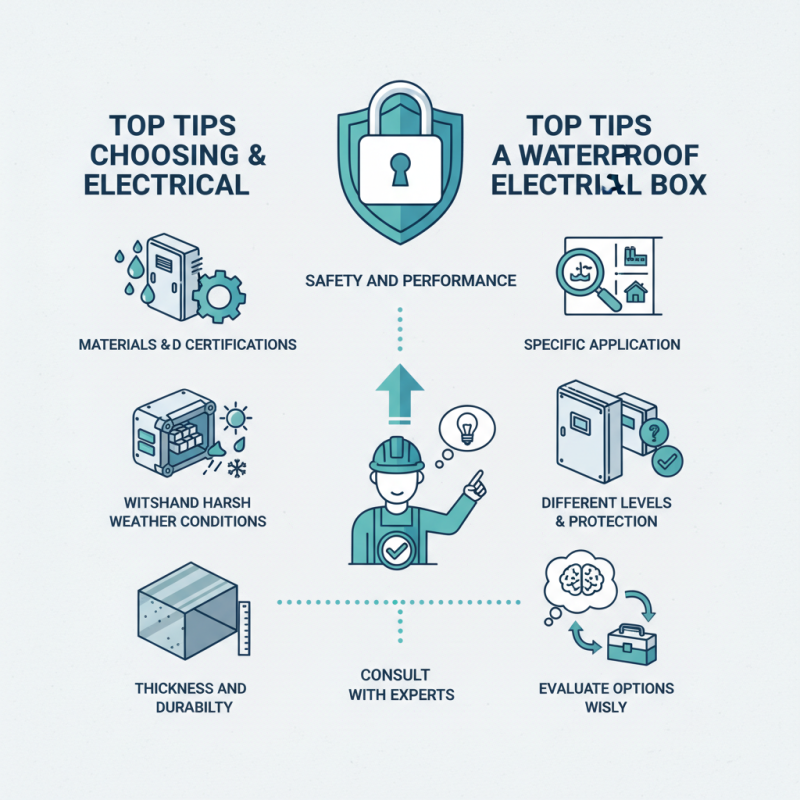
Choosing the right Waterproof Electrical Panel Box is crucial for safety and performance. A reliable panel protects against moisture, dust, and other elements. Proper selection ensures longevity and effectiveness in diverse environments.
Consider the materials and certifications when selecting a panel. Look for options that can withstand harsh weather conditions. The thickness of the box also plays a significant role in its durability. Consulting with experts can guide you in making the best choice for your needs.
Reflect on your specific application. Different settings may require different levels of protection. Not all waterproof boxes are created equal. Some may not meet the expected standards for your environment. Take time to evaluate your options wisely to avoid costly mistakes.
When selecting a waterproof electrical panel box, understanding waterproof ratings is crucial. These ratings indicate how well the box can resist water and moisture. Look for boxes with ratings like NEMA 4 or NEMA 6. These specifications ensure protection against splashing water and submersion. Knowing the right rating helps avoid potential hazards like short circuits or damage caused by moisture.
Consider the location of installation. Areas with high humidity or heavy rain require higher-rated boxes. Remember, a less-rated box could lead to costly repairs. Test and rethink your choices often. Not every application is straightforward. Sometimes, a box might seem waterproof but lacks proper sealing.
Choosing the right material also matters. Metal boxes might corrode in wet environments. Meanwhile, plastic options may not be as durable. Reflect on these details carefully. Check installation manuals and user reviews for insights. Every small decision impacts safety and reliability. Aim to stay informed, and don’t hesitate to consult experts if unsure. Your choices can dictate performance in challenging conditions.
When selecting a waterproof electrical panel box, material is a critical factor. Various materials offer distinct advantages. For instance, polycarbonate is lightweight and resistant to impacts, making it suitable for harsh environments. In contrast, stainless steel is durable and provides excellent corrosion resistance, but it comes with a higher price point. According to a recent industry report, the use of polycarbonate has increased by 25% in recent years due to its cost-effectiveness and versatile applications.
In addition to material type, the thickness and overall construction also matter. Thicker panels often better withstand external stressors. The National Electrical Manufacturers Association (NEMA) stresses that using appropriately rated enclosures is crucial for safety and longevity. Take into account the IP rating. An IP66 rating indicates excellent protection against dust and water ingress. Conversely, many users may overlook the importance of proper sealing techniques. An improper seal can lead to water intrusion, negating the benefits of a waterproof box.
Investing in quality materials can yield significant long-term benefits. However, budget constraints often lead to compromises. For instance, opting for a cheaper option may save costs initially, but it may lead to higher maintenance expenses down the line. Industry reports reveal that over 40% of electrical failures are related to water intrusion in improperly sealed enclosures. This statistic serves as a reminder of the need for thoughtful choices in material and construction.
When selecting a waterproof electrical panel box, consider its installation location and the surrounding environment. Areas prone to heavy rain, snow, or humidity require durable solutions. These conditions can accelerate wear and tear. For example, a coastal location might expose a panel to salty air. This can lead to corrosion over time. Choosing the right material, like fiberglass or stainless steel, can enhance longevity.
Also, evaluate potential hazards. If the box is near high foot traffic or construction zones, it needs added protection. Check local regulations regarding placement. Misplaced installations can lead to safety risks. Think about accessibility for maintenance too. A well-placed box is crucial, but it shouldn't be too exposed.
Lighting can affect the area as well. In poorly lit spots, the risk of accidental damage increases. Consider installing protective barriers around the panel. This added layer can minimize impact from external elements. Reflect on your choices regularly. Conditions may change, requiring adjustments to your setup. Keeping a close eye on your installation helps ensure ongoing reliability.
When selecting a waterproof electrical panel box, certain key features are vital. Look for a robust exterior material that can withstand harsh weather conditions. UL listings ensure safety and reliability, while high ingress protection (IP) ratings indicate effective resistance against water and dust. Choosing materials like polycarbonate or fiberglass enhances durability.
Consider the size and weight of the panel box. Ensure it meets your installation space needs without being cumbersome. A lightweight, compact design can ease the installation process significantly. Additionally, verify that the panel features adequate sealing mechanisms. Gaskets and seals play crucial roles in preventing water ingress.
Tips to remember: Always perform a compatibility check with your electrical components. If the box is too small, it may lead to overheating. Also, be cautious about pricing. While lower-priced options may seem appealing, they often compromise durability. Investing in a quality waterproof panel box pays off in the long run.
When selecting a waterproof electrical panel box, cost and manufacturer reliability are crucial factors. Industry studies reveal that approximately 20% of electrical system failures are due to substandard components. Investing in reliable manufacturers can significantly reduce maintenance costs in the long run. Many professionals recommend comparing warranties and customer reviews before purchasing. Reliable companies often provide comprehensive support and resources for installation.
Cost variations can be significant. Reports indicate that while cheaper panels may tempt budget-conscious buyers, they often lack essential features. High-quality waterproof panels can range from $200 to over $1,000, depending on specifications. Initially, this may seem excessive but remember, durability is paramount. Waterproof panels minimize the risk of corrosion and electrical faults, potentially saving thousands in repairs.
Tip: Look for panels with an IP65 rating or higher for optimal protection against dust and water.
Another consideration is the manufacturer's reputation. Research their track record. Make sure they comply with industry standards and regulations. Investigate any recalls or safety warnings related to their products. An informed choice can lead to peace of mind in challenging environments. Remember, the upfront cost can be a reflection of long-term reliability and safety.
| Feature | Description | Cost Range (USD) | Reliability Rating | Warranty Period |
|---|---|---|---|---|
| Ingress Protection Rating | Indicates the level of protection against dust and water. | $150 - $300 | 4.5/5 | 3 years |
| Material Quality | Durability of materials such as fiberglass, plastic, or metal. | $100 - $400 | 4/5 | 5 years |
| Size and Capacity | Ensure the panel box meets the electrical capacity needed. | $80 - $250 | 4.2/5 | 2 years |
| Ease of Installation | Consider kits that come with all necessary installation components. | $100 - $350 | 4.7/5 | 3 years |
| Certification Standards | Check if the panel meets industry safety standards. | $120 - $280 | 4.8/5 | 5 years |
„Thanks to the LUVIR technology, the solder resist process could be switched directly from the previously used mask exposure to direct exposure. As an outstanding digital solution on the market, this technology has been able to demonstrate fast process times and superior quality on our certified conventional ink in production. This allowed us to fully digitize the solder mask process at low cost – without process or ink adjustments. An excellent benefit to our production in Rot am See.“
Ralf Göhringer (Head of Production WE Rot am See)
I would definitely recommend the Limata machine and team for a future company purchase
Michael Greenaway
Compunetics Inc.
“The Limata ldi has been amazing!! Best thing we did was buy this machine”
Richard Brady
GM
Circuitlabs
“Since 2019, we have been running the Limata X1000 LDI system (including LUVIR for solder mask imaging) in daily production as an addition to our current process with film. The machine was capable of properly exposing Taiyo PSR-4000 BN (DI) solder mask types on normal to high-copper boards using a new and unique direct imaging process. The machine operating interface is very user friendly which allowed for a quick technical training curve. The pre-registration processing reduced several seconds of production time at every print. Limata support and service staff is incomparable. They supported our team every step of the way at basically any time of the day or night, with literally, an immediate response time, customizing the software interface to best fit our Operations and needs.
We have exposed more than 8,000 prints since end of October, on various solder mask colors and some resist film panels. Limata, has proven to be very capable and innovative. They are a strong contender in the industry.
We have very much enjoyed this project, and working with the team!
Thank you Limata for the continued support and being a part of our growth.”
Bill Sezate
Vice President, GM
Summit Interconnect
As a replacement to our current contact exposure process with film, the LIMATA X2000 system including LUVIR-Technology was capable of properly exposing non-LDI solder mask types using a direct imaging process. The machine offers cutting edge software with a very intuitive operating interface which allowed for quick technician training curve. The dual drawer system combined with pre-registration processing reduced several seconds of production time at every machine cycle. Limata support and service staff is world class. They added software patches to keep production running at shortest possible response times, customized the software interface to best fit our in-house Operations system, and even wrote a step-by-step machine processing manual. As a result of the project, we have exposed more than 16,000 times on various product types and solder mask brands/colors. Limata, in a very short timeframe as a company, has definitely shown they are truly innovative and will be challenging the industry of direct imaging for the top spot.
Kevin Beattie
Process Engineer
TTM Technologies
Forest Grove Division
