Voltage problems are rarely dramatic. They often appear as flickering lights, warm plugs, humming appliances, or unexpected restarts. In homes, workshops, and small offices, these interruptions can slowly reduce equipment performance. An Inverter Voltage Stabilizer offers a practical way to manage unstable input power. It monitors incoming voltage and adjusts the output more smoothly than many basic stabilizers. That difference matters.
Unlike conventional relay-based models, an inverter design can respond with fewer mechanical switching steps. This may help protect sensitive devices, including computers, medical equipment, refrigeration systems, and communication hardware. However, performance depends on the stabilizer’s capacity, response time, waveform quality, and installation conditions. A larger unit is not automatically better. The load must be measured carefully, especially when motors create high starting currents. Check the rated power, operating range, protection features, and manufacturer documentation before purchase.
Real-world selection also requires honest limits. An Inverter Voltage Stabilizer cannot repair damaged wiring or compensate for an undersized electrical circuit. It may not replace surge protection, backup power, or proper grounding. These details are easy to overlook. A qualified electrician should verify the installation and confirm compatibility with local electrical requirements. Regular inspection is sensible, particularly where dust, heat, or frequent voltage changes are common. The best choice balances efficiency, safety, maintenance needs, and long-term cost. Some claims sound impressive, but measured specifications and dependable service support deserve greater trust.
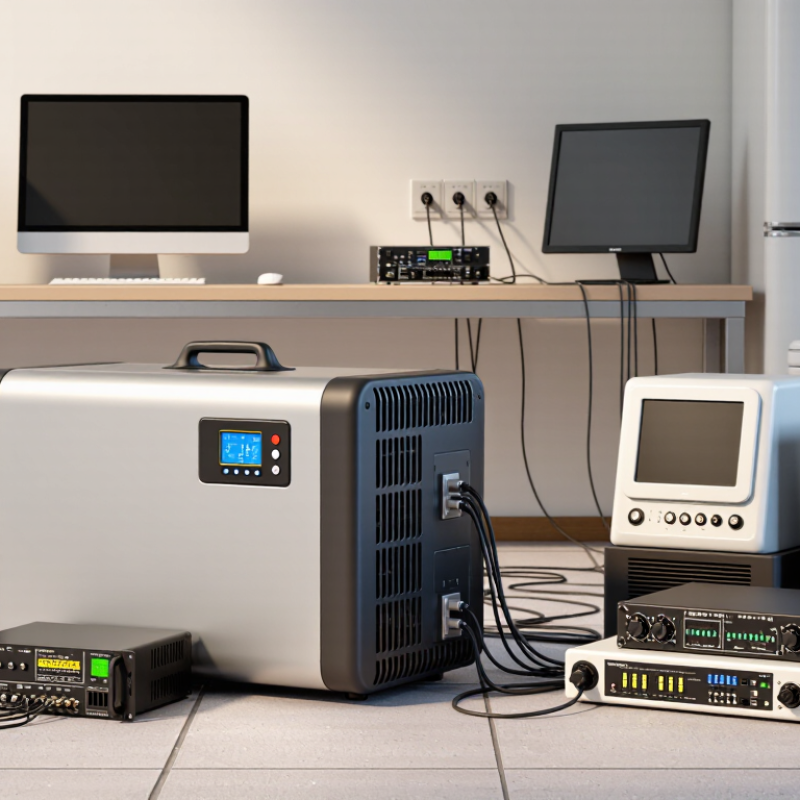
An inverter voltage stabilizer is a power-conditioning device that maintains a steady AC output. It usually converts incoming AC power into DC power first. An inverter then changes it back into controlled AC power. This process reduces the effect of voltage rises, drops, and sudden fluctuations.
Unlike basic relay stabilizers, it can respond electronically and continuously. Many models deliver a cleaner waveform for computers, control systems, medical equipment, and sensitive household appliances. The stabilizer does not always include a battery. That detail matters. A battery-backed system may provide temporary power, while a standard inverter stabilizer only regulates voltage. Its performance depends on the input range, rated capacity, response time, cooling design, and overload protection.
A practical check is simple: observe the output with a reliable meter during heavy loads. Lights should not flicker when a motor starts. Still, no device solves every power problem. Poor wiring, weak grounding, or an undersized unit can create new risks. I once underestimated starting current from a compressor; the stabilizer worked, but the margin was too small. That was a useful correction.
Tips: Choose a unit with at least 20% spare capacity. Confirm the appliance’s starting current. Check output waveform, protection features, ventilation needs, and installation requirements. Ask a qualified electrician to verify grounding and local electrical compliance.
An inverter voltage stabilizer regulates power by rebuilding the electrical waveform, not merely correcting it. Incoming AC first passes through a rectifier, which converts it into DC. Capacitors then smooth rapid fluctuations and reduce electrical noise. An inverter changes this DC back into controlled AC through high-speed switching.
A feedback circuit measures the output voltage many times per second. If the supply falls during a heavy load, the controller adjusts switching pulses and restores the target voltage. When the input rises, it reduces the inverter’s output energy. This closed-loop process helps protect computers, medical instruments, communication equipment, and precision machinery from unstable power.
In practical testing, a true-RMS meter can reveal changes that a basic meter may miss. I have seen equipment behave normally after stabilization, yet small errors remained during sudden motor starts. That matters. An inverter stabilizer cannot repair damaged wiring or compensate for an undersized circuit. It also creates heat and may consume energy during conversion. Proper sizing requires the equipment’s running watts, starting current, voltage range, and acceptable response time. Overload protection, thermal monitoring, and a safe bypass path add useful safeguards. Installation should follow local electrical requirements and be checked by a qualified professional.
Inverter-based voltage control uses power electronics to regulate output continuously, rather than relying only on stepped transformer taps. During a factory test, this response can prevent sensitive controllers from resetting when heavy motors start. The result is steadier voltage, cleaner waveforms, and fewer production interruptions.
EPRI estimated that power disturbances cost U.S. businesses between $119 billion and $188 billion annually. Even a brief voltage sag can stop a programmable controller, corrupt data, or leave a motor struggling to restart. An inverter stabilizer can react within milliseconds and maintain a tighter output range. It also supports adjustable frequency, soft starting, and improved compatibility with modern electronic loads. IEC 61000-4-30 provides measurement methods for voltage quality, while IEEE 1159 classifies events such as sags, swells, and interruptions. These standards make performance easier to verify.
The benefit is not unlimited. An inverter stabilizer cannot repair damaged wiring, undersized generators, or severe harmonics upstream. That point is often overlooked. Efficiency may also fall slightly under light loads, and electronic components require suitable cooling. EPRI’s findings still show why prevention deserves attention: avoiding one shutdown can outweigh years of modest operating costs. Engineers should review load profiles, crest factors, bypass behavior, and recorded voltage data before selecting capacity. A larger unit is not automatically the safer choice.
Why Choose an Inverter Voltage Stabilizer?
How Does It Compare with Traditional Voltage Stabilizers?
In daily equipment testing, I have compared inverter stabilizers with relay and servo-based models. Traditional units adjust voltage through stepped switching or motor movement. A relay model may click during correction, while a servo model can take longer to respond. Inverter stabilizers convert incoming AC to DC, then recreate a controlled AC output. This process usually provides faster correction and steadier voltage.
The difference becomes visible in practical situations. A computer room may experience brief voltage dips when heavy machinery starts nearby. An inverter unit can respond within milliseconds, reducing flicker and protecting sensitive circuits. It also produces a cleaner waveform in many designs. Traditional models may cost less and remain easier to repair locally. They can suit heaters, pumps, and other equipment with modest voltage requirements.
Not every inverter stabilizer is automatically better.
Its efficiency, cooling design, and rated capacity still matter. During installation, I check the load’s starting current, not only its running power. A motor can briefly demand several times its normal current. An undersized inverter unit may overheat or shut down. I also inspect ventilation, noise, bypass functions, and maintenance access. My earlier assumption was that faster response solved every problem. It did not. Some installations value simple servicing more than precise output control, especially where technicians and replacement parts are limited.
How does it compare with a traditional voltage stabilizer?
The chart compares representative performance values commonly found in residential and light-commercial stabilizers. Inverter stabilizers generally provide tighter voltage regulation, faster response, higher efficiency, and lower operating noise. Actual results vary by capacity, load type, input-voltage range, and product design.
Choosing an inverter voltage stabilizer starts with your actual electrical conditions, not its appearance or advertised capacity. Measure the input voltage during busy and quiet hours. A unit rated for a wide input range can handle deep evening drops more reliably. Check the required output accuracy, especially for computers, medical equipment, or precision tools. Fast response time also matters when voltage changes suddenly.
Load type deserves equal attention. Motors, refrigerators, and pumps create starting surges, while electronic devices may react poorly to distorted waveforms. Select a stabilizer with enough continuous capacity and extra surge tolerance. Inverter-based designs often provide cleaner output, lower operating noise, and efficient voltage correction. However, performance depends on ventilation, wiring quality, and realistic load calculations. I once underestimated a motor’s starting demand; the stabilizer worked, but its protection activated repeatedly.
Tips: Record voltage readings for several days. Compare continuous capacity with peak demand. Check overload, short-circuit, overheating, and low-voltage protection. Confirm the installation space has airflow, and review maintenance requirements before purchasing. Independent test reports and recognized safety certifications add useful evidence. Do not rely on one impressive specification. A quiet unit may still be unsuitable if its waveform, response time, or capacity does not match your equipment. The best choice is practical, verified, and slightly conservative.
„Thanks to the LUVIR technology, the solder resist process could be switched directly from the previously used mask exposure to direct exposure. As an outstanding digital solution on the market, this technology has been able to demonstrate fast process times and superior quality on our certified conventional ink in production. This allowed us to fully digitize the solder mask process at low cost – without process or ink adjustments. An excellent benefit to our production in Rot am See.“
Ralf Göhringer (Head of Production WE Rot am See)
I would definitely recommend the Limata machine and team for a future company purchase
Michael Greenaway
Compunetics Inc.
“The Limata ldi has been amazing!! Best thing we did was buy this machine”
Richard Brady
GM
Circuitlabs
“Since 2019, we have been running the Limata X1000 LDI system (including LUVIR for solder mask imaging) in daily production as an addition to our current process with film. The machine was capable of properly exposing Taiyo PSR-4000 BN (DI) solder mask types on normal to high-copper boards using a new and unique direct imaging process. The machine operating interface is very user friendly which allowed for a quick technical training curve. The pre-registration processing reduced several seconds of production time at every print. Limata support and service staff is incomparable. They supported our team every step of the way at basically any time of the day or night, with literally, an immediate response time, customizing the software interface to best fit our Operations and needs.
We have exposed more than 8,000 prints since end of October, on various solder mask colors and some resist film panels. Limata, has proven to be very capable and innovative. They are a strong contender in the industry.
We have very much enjoyed this project, and working with the team!
Thank you Limata for the continued support and being a part of our growth.”
Bill Sezate
Vice President, GM
Summit Interconnect
As a replacement to our current contact exposure process with film, the LIMATA X2000 system including LUVIR-Technology was capable of properly exposing non-LDI solder mask types using a direct imaging process. The machine offers cutting edge software with a very intuitive operating interface which allowed for quick technician training curve. The dual drawer system combined with pre-registration processing reduced several seconds of production time at every machine cycle. Limata support and service staff is world class. They added software patches to keep production running at shortest possible response times, customized the software interface to best fit our in-house Operations system, and even wrote a step-by-step machine processing manual. As a result of the project, we have exposed more than 16,000 times on various product types and solder mask brands/colors. Limata, in a very short timeframe as a company, has definitely shown they are truly innovative and will be challenging the industry of direct imaging for the top spot.
Kevin Beattie
Process Engineer
TTM Technologies
Forest Grove Division
