Global manufacturers often choose High Carbon Steel Coil when strength, hardness, and wear resistance matter more than easy forming. Its higher carbon content supports demanding applications, including springs, blades, saw components, agricultural tools, and industrial wear parts. Yet material selection should follow the finished product, not a general assumption that stronger is always better.
Experienced buyers examine more than the quoted price. They compare carbon content, thickness tolerance, coil width, surface condition, edge quality, hardness, and tensile performance. A practical inspection may include checking coil identification, packaging, rust protection, and visible edge damage before shipment. Mill test certificates should confirm chemical composition and mechanical properties. Relevant ASTM, EN, or ISO requirements must appear clearly in the purchase agreement. Traceability matters.
Small details decide outcomes.
Global sourcing also requires dependable logistics and communication. Suppliers should explain production capacity, lead times, minimum order quantities, inspection procedures, and export packaging. Photographs of finished coils can help, but they cannot replace independent inspection or verified documents. Buyers may request samples, third-party testing, or a pre-shipment review before approving large volumes. A low offer can hide extra costs from rework, delays, rejected material, or unsuitable hardness. No supplier is perfect, and specifications can still be misunderstood. A careful sourcing process leaves room for questions, corrective action, and honest review. When technical evidence, consistent quality, and responsive service align, High Carbon Steel Coil becomes a more reliable choice for international manufacturing supply chains.
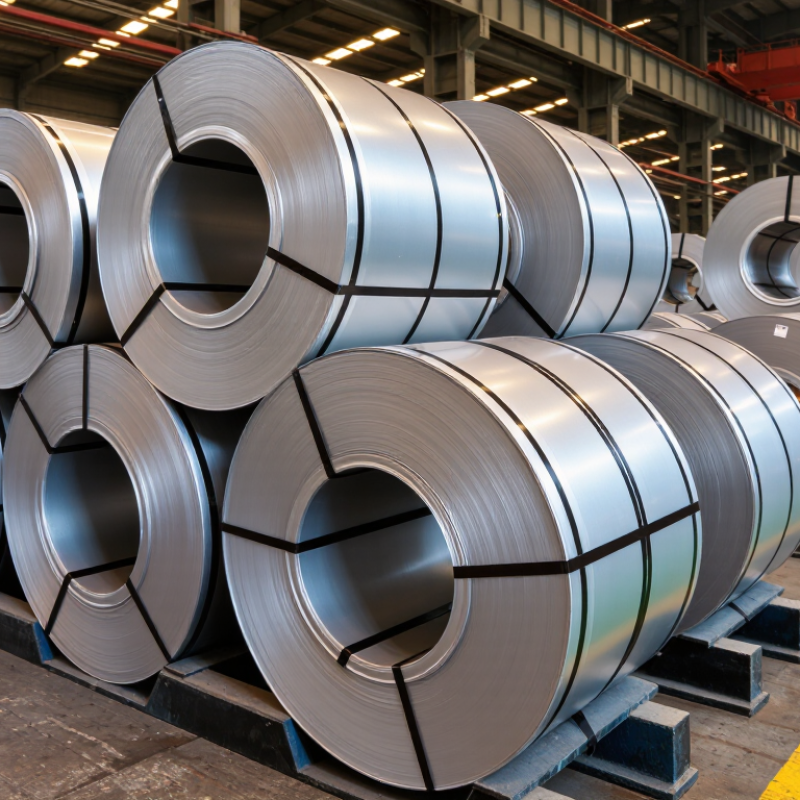
High carbon steel coil is flat-rolled steel supplied in wound, continuous strips. It commonly contains about 0.60–1.00% carbon, although standards and producers may set different limits. That carbon level increases hardness, tensile strength, and wear resistance after suitable processing. It also reduces ductility and weldability. Heat treatment can change the balance. Buyers should treat the grade, not the label, as the specification.
Global demand makes consistent sourcing important. The World Steel Association reported 1,888.2 million tonnes of crude steel production in 2023, according to World Steel in Figures 2024. That report covers total crude steel, not high carbon coil alone. This limitation matters. For procurement, compare carbon, manganese, sulfur, phosphorus, hardness, thickness, width, and coil weight. Request a mill test certificate and verify heat numbers against the coil tag. Edge cracking may appear only after slitting. That is easy to miss. Real-world trials remain valuable, especially for stamping or forming.
Tips: Define the applicable standard before requesting quotations. Ask for samples from more than one heat. Check surface scale, camber, flatness, and packaging. Do not assume the lowest carbon option is safer. Sometimes, it simply wears faster.
Why Choose High Carbon Steel Coil for Global Sourcing?
Performance Advantages of High Carbon Steel Coil
High carbon steel coil is valued for strength, hardness, and wear resistance. Its carbon content commonly ranges from about 0.60% to 1.00%, depending on the grade and standard. After controlled heat treatment, it can support demanding applications such as springs, cutting components, wear strips, and industrial blades. The World Steel Association reported global crude steel production of approximately 1.89 billion tonnes in 2023. That scale supports broad supply access, but performance still depends on chemistry, rolling control, and heat treatment.
Hardness is not the whole story. A harder coil may resist abrasion better, yet it can become less forgiving during forming or welding. The ASM Handbook identifies carbon content and thermal processing as major factors affecting strength, ductility, and machinability. In practical sourcing, buyers should review tensile strength, yield strength, elongation, hardness, coil weight, and dimensional tolerance together. A mill test certificate should confirm the heat number and chemical analysis. Independent testing is also sensible for critical orders.
Small details matter.
For example, uneven cooling can create inconsistent hardness across a coil. Edge cracking may appear only after slitting or bending. The OECD’s Steel Market Developments reports emphasize continued pressure on steel producers to improve efficiency and manage volatile operating conditions. This makes traceability and process consistency increasingly important. High carbon steel coil offers strong performance, but selecting the lowest quotation alone can be a costly mistake.
Global sourcing of high carbon steel coil requires more than comparing prices. Carbon content commonly ranges from about 0.60% to 1.00%, depending on the required hardness, strength, and forming performance. Buyers should confirm chemistry, tensile strength, hardness, coil weight, thickness tolerance, and surface condition before ordering. ASTM A510/A510M, EN 10083, and relevant customer specifications can provide useful reference points, but they are not interchangeable.
Production scale also affects sourcing risk. The World Steel Association reported approximately 1.89 billion tonnes of global crude steel production in 2023. This large market does not guarantee consistent high carbon coil quality. Ask for heat numbers, mill test certificates, inspection records, and sample results from the actual production coil. Independent laboratory testing can verify carbon, manganese, sulfur, phosphorus, and hardness. It costs more. It may prevent a rejected shipment. I would also review edge cracking, rust protection, packing strength, and port handling plans. In my experience, a cheaper coil becomes expensive when slitting lines stop.
Tips: Request a trial coil before signing a long-term contract. Compare three samples, not one. Check whether the supplier can maintain chemistry across different heats. Review the International Energy Agency’s Iron and Steel Technology Roadmap when evaluating emissions data; steel production contributes roughly 7% to 9% of global energy-related emissions. Ask for measurable energy and emissions information, not broad sustainability claims. Some checklists remain imperfect. That is why documented evidence matters.
High carbon steel coil suits applications where hardness, wear resistance, and elastic strength matter. Typical uses include saw blades, agricultural cutting parts, springs, wire rope, railway components, and stamped wear plates. The World Steel Association reported global crude steel production at approximately 1.89 billion tonnes in 2023, showing the scale of steel supply and the importance of consistent material selection. High carbon grades usually contain about 0.60% to 1.00% carbon, although exact limits depend on the applicable standard. More carbon can improve hardness after heat treatment. It can also reduce weldability and forming performance.
Selection should begin with the finished component, not the lowest coil price. Check carbon and manganese ranges, thickness tolerance, surface condition, coil weight, and delivery documentation. For spring applications, fatigue testing and controlled heat treatment are critical. For blades, edge retention and straightness deserve greater attention. ISO 16120 standards for non-alloy steel wire rod provide useful guidance for chemical and quality requirements. ASTM and EN product standards may differ, so buyers should confirm the governing specification before ordering. Mill test certificates, heat numbers, and independent inspection improve traceability across borders. Small details matter.
A common mistake is choosing maximum hardness for every application. That assumption can fail. Excessive hardness may increase cracking during bending or punching. In practice, a slightly softer grade with reliable processing can deliver better service life. The best coil balances strength, manufacturability, corrosion protection, and total production cost.
Quality standards determine whether high carbon steel coil performs reliably after shipment. Buyers should request chemical composition, tensile strength, yield strength, elongation, and hardness data. Each coil should carry a traceable heat number and production record. Small details matter.
Practical sourcing experience shows that certificates alone are not enough. A qualified inspector can verify thickness, width, surface condition, edge quality, and coil weight before loading. Samples should be tested against the agreed specification, especially when the steel will face stamping, cutting, or heat treatment. One overlooked issue is flatness. It may pass a basic document review but create serious problems during processing. That risk deserves more attention.
Supply risks often appear after the purchase order is signed. Port congestion, unstable freight rates, humidity, and weak packaging can affect delivery and surface quality. Buyers should confirm moisture-resistant wrapping, secure strapping, and storage conditions. A second supply source may reduce disruption, but switching suppliers can introduce new quality variation. This is easy to underestimate.
Cost comparisons should include the full landed cost, not only the coil price. Freight, inspection, slitting, customs charges, storage, rejects, and production downtime all matter. Cheap quotes mislead. A lower price may hide loose tolerances or inconsistent hardness. In my view, the best decision balances verified quality, realistic lead times, and measurable risk. That balance is not always perfect. Procurement teams should review the result after each shipment and adjust their checklist.
„Thanks to the LUVIR technology, the solder resist process could be switched directly from the previously used mask exposure to direct exposure. As an outstanding digital solution on the market, this technology has been able to demonstrate fast process times and superior quality on our certified conventional ink in production. This allowed us to fully digitize the solder mask process at low cost – without process or ink adjustments. An excellent benefit to our production in Rot am See.“
Ralf Göhringer (Head of Production WE Rot am See)
I would definitely recommend the Limata machine and team for a future company purchase
Michael Greenaway
Compunetics Inc.
“The Limata ldi has been amazing!! Best thing we did was buy this machine”
Richard Brady
GM
Circuitlabs
“Since 2019, we have been running the Limata X1000 LDI system (including LUVIR for solder mask imaging) in daily production as an addition to our current process with film. The machine was capable of properly exposing Taiyo PSR-4000 BN (DI) solder mask types on normal to high-copper boards using a new and unique direct imaging process. The machine operating interface is very user friendly which allowed for a quick technical training curve. The pre-registration processing reduced several seconds of production time at every print. Limata support and service staff is incomparable. They supported our team every step of the way at basically any time of the day or night, with literally, an immediate response time, customizing the software interface to best fit our Operations and needs.
We have exposed more than 8,000 prints since end of October, on various solder mask colors and some resist film panels. Limata, has proven to be very capable and innovative. They are a strong contender in the industry.
We have very much enjoyed this project, and working with the team!
Thank you Limata for the continued support and being a part of our growth.”
Bill Sezate
Vice President, GM
Summit Interconnect
As a replacement to our current contact exposure process with film, the LIMATA X2000 system including LUVIR-Technology was capable of properly exposing non-LDI solder mask types using a direct imaging process. The machine offers cutting edge software with a very intuitive operating interface which allowed for quick technician training curve. The dual drawer system combined with pre-registration processing reduced several seconds of production time at every machine cycle. Limata support and service staff is world class. They added software patches to keep production running at shortest possible response times, customized the software interface to best fit our in-house Operations system, and even wrote a step-by-step machine processing manual. As a result of the project, we have exposed more than 16,000 times on various product types and solder mask brands/colors. Limata, in a very short timeframe as a company, has definitely shown they are truly innovative and will be challenging the industry of direct imaging for the top spot.
Kevin Beattie
Process Engineer
TTM Technologies
Forest Grove Division
