Choosing the right Laser Cleaning Equipment can change how a business manages maintenance, production quality, and workplace efficiency. Unlike abrasive blasting or chemical treatment, laser cleaning uses controlled light energy to remove rust, paint, oil, oxidation, and other surface contaminants. The substrate remains largely untouched when the settings are correctly matched.
Dr. Arnold Gillner, a recognized laser-processing specialist, explains, “The process must remove the contaminant without damaging the underlying surface.” That principle matters on precision molds, steel frames, automotive parts, and historic metal components. A well-calibrated system can reduce consumables, simplify waste handling, and support cleaner production areas. It can also reach narrow edges and detailed surfaces that manual tools often miss.
The benefits are practical.
Operators gain better control.
Cleaning becomes more repeatable.
Downtime may decrease.
However, Laser Cleaning Equipment is not a universal solution. Surface type, coating thickness, pulse energy, scanning speed, and operator training all affect the result. A powerful machine can still produce poor outcomes. It may discolor delicate metal or remove more material than intended. That uncomfortable possibility deserves attention.
Businesses should evaluate real samples before purchasing. Ask suppliers for test results, maintenance details, safety guidance, and documented performance data. Compare long-term operating costs, not only the equipment price. In my view, the strongest investment is not always the fastest laser. It is the system employees can operate consistently and responsibly. That judgment requires testing, measurement, and occasional reconsideration.
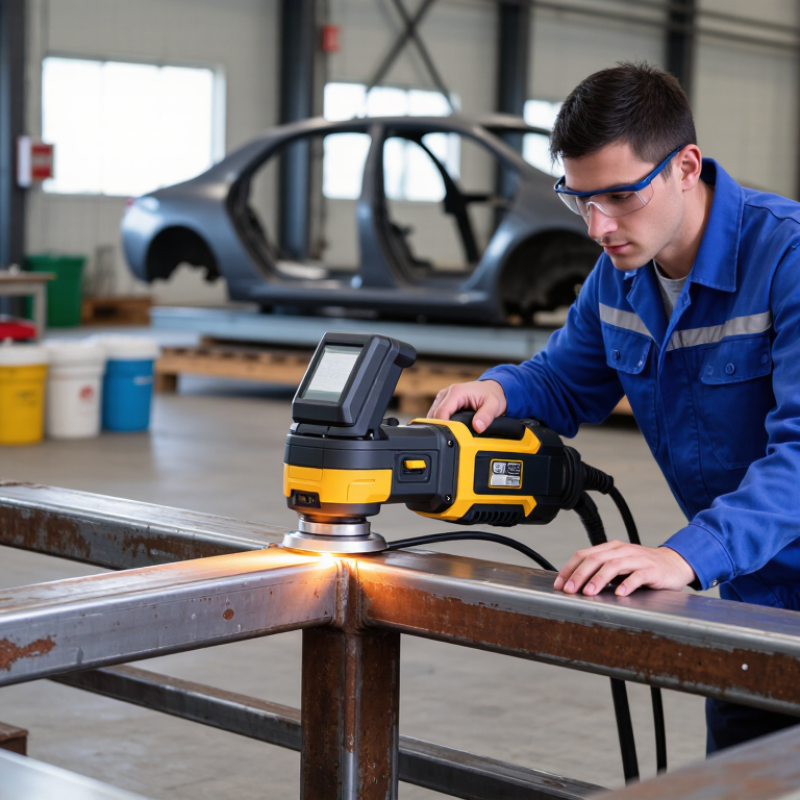
Laser cleaning equipment is a system that removes rust, paint, oil, or surface residue with a focused beam of light. It does not scrub material like sandpaper. Instead, short laser pulses heat unwanted layers until they vaporize or loosen. The operator guides the beam across a metal part, mold, pipe, or tool. The base material should remain cooler and intact when settings are correct. That balance matters.
A typical system includes a laser source, scanning head, control panel, cooling unit, and protective enclosure or barriers. Different surfaces need different power, pulse width, speed, and focus. Stainless steel may respond well to one setting, while aluminum can reflect energy and require careful adjustment. A small test area is essential. I have found that clean-looking results can still hide heat marks or missed residue. Inspection should use suitable lighting, magnification, or a surface test.
For a business, this equipment can reduce abrasive waste and limit chemical use. It may also shorten preparation time between production steps. However, it is not a magic replacement for every cleaning method. Operators need training, eye protection, ventilation, and controlled access. Maintenance also matters, especially for optics and cooling systems. A thoughtful buyer should measure cleaning speed, surface damage, noise, and operating costs before choosing a system. The cheapest machine may become expensive when rework appears.
Laser cleaning equipment is gaining attention because it removes rust, paint, oil, and oxidation without abrasive media.
MarketsandMarkets estimates that the global laser cleaning market could grow at about 12% annually through 2028. That growth reflects stronger demand for controlled, low-waste surface preparation.
A focused laser pulse strikes the contaminated surface. The contaminant absorbs the energy, heats rapidly, and separates through vaporization or micro-expansion.
The base material usually reflects more energy, so it remains comparatively unaffected.
The process is called selective ablation.
It is precise, but not magic.
In a workshop, the difference is visible.
A dark oxide layer disappears in narrow passes, while the metal underneath keeps its texture.
Pulse duration, frequency, scanning speed, and focus distance control the result.
Too much energy can discolor or roughen the substrate.
Too little energy leaves residue behind.
Operators should test a small area first and record the settings. This practical step is often underestimated.
ISO 11553-1 addresses safety requirements for laser processing machines, while workplace assessments should also consider fumes, noise, ventilation, and eye protection.
The American Industrial Hygiene Association emphasizes exposure evaluation when industrial processes generate airborne contaminants.
Laser cleaning reduces consumables, but it does not remove every risk.
Sensible purchasing includes extraction equipment, enclosure design, operator training, and maintenance planning.
Laser cleaning equipment earns attention because it removes contamination without abrasive media. That matters when workers clean delicate molds, machine parts, or historic surfaces. Metals respond especially well. Steel, stainless steel, aluminum, copper, and cast iron can lose rust, oxides, grease, oil, paint, soot, and welding discoloration. Short laser pulses vaporize or loosen the contaminant while limiting contact with the base material.
Stone, brick, concrete, and some ceramics can also be cleaned. Typical targets include smoke marks, surface dirt, carbon deposits, and old coatings. Some plastics, wood, and composite materials are possible, but they require slower settings and careful testing. Heat can darken wood or deform plastic. The machine is not automatically safe.
Surface reflectivity, coating thickness, pulse width, and focus distance change the result. A 2024 MarketsandMarkets assessment projects the laser cleaning market to grow from about USD 587 million in 2023 to nearly USD 1.1 billion by 2028. The forecast is useful, but industry estimates differ. That gap deserves attention.
Tips: Test a hidden area first. Measure surface temperature when possible. Photograph the surface before and after cleaning. Use extraction and appropriate eye protection. Do not assume one setting suits every alloy. In practical work, the hardest mistake is cleaning too aggressively. A slower pass often protects the surface better. Record successful parameters for repeat jobs.
Laser cleaning can improve production control, especially where surfaces contain rust, paint, oil, or oxide layers. The process removes contaminants without blasting media, chemical baths, or direct contact. That can reduce material storage and simplify waste handling. Grand View Research estimated the global laser cleaning market at approximately USD 587.5 million in 2022, with projected growth through 2030. This expansion reflects demand for more precise industrial maintenance.
The business value becomes clearer on the factory floor. Operators can clean molds, weld seams, tools, and machine parts with adjustable power and scanning speed. This precision may reduce rework and protect delicate base materials. A 2023 report from the International Energy Agency notes that energy efficiency remains a major industrial competitiveness issue. Laser systems still consume electricity, but they can reduce recurring costs from abrasives, solvents, water, and disposal.
Less mess.
Maintenance teams also gain better process records. Digital settings can be saved for repeated cleaning tasks, supporting consistent inspections and training. However, payback is not automatic. Equipment costs, extraction systems, safety controls, and operator training require careful budgeting. Contaminant fumes may need capture and testing. Some heavily layered surfaces also require several passes, which can slow production. A small on-site trial is wiser than trusting a sales estimate. Metrics should include cleaning time, consumable use, waste volume, surface damage, and labor hours before purchasing.
Choosing the right laser cleaner starts with the contaminant, not the advertised wattage. Rust, paint, oil, and oxidation absorb different wavelengths and respond differently to pulse energy. A pulsed system often suits delicate molds, while higher average power can improve throughput on large steel frames. The wrong choice can leave heat marks.
Ask suppliers for measured results on your material. Record cleaning speed, surface temperature, residue, and operator distance. A small test panel is useful. A showroom demonstration is not enough. The laser cleaning market is projected to grow at about 5.5% annually through 2030, according to Grand View Research’s 2024 market report. Growth suggests wider adoption, but it does not prove that every machine fits every process.
Safety and service should shape the purchase. Check enclosure design, interlocks, extraction, training, and compliance with IEC 60825-1 and ISO 11553-1. Confirm the cleaner’s duty cycle and replacement-part availability. A compact unit may seem economical, yet slow scanning can increase labor costs. Calculate total cost per cleaned square meter, including electricity, ventilation, maintenance, and downtime.
The first test may disappoint. That is useful evidence, not failure. Reconsider pulse width, scan speed, and focus before increasing power. Ask for independent test data, documented tolerances, and references from similar production environments. Reliable selection comes from repeatable measurements, not confident sales language.
„Thanks to the LUVIR technology, the solder resist process could be switched directly from the previously used mask exposure to direct exposure. As an outstanding digital solution on the market, this technology has been able to demonstrate fast process times and superior quality on our certified conventional ink in production. This allowed us to fully digitize the solder mask process at low cost – without process or ink adjustments. An excellent benefit to our production in Rot am See.“
Ralf Göhringer (Head of Production WE Rot am See)
I would definitely recommend the Limata machine and team for a future company purchase
Michael Greenaway
Compunetics Inc.
“The Limata ldi has been amazing!! Best thing we did was buy this machine”
Richard Brady
GM
Circuitlabs
“Since 2019, we have been running the Limata X1000 LDI system (including LUVIR for solder mask imaging) in daily production as an addition to our current process with film. The machine was capable of properly exposing Taiyo PSR-4000 BN (DI) solder mask types on normal to high-copper boards using a new and unique direct imaging process. The machine operating interface is very user friendly which allowed for a quick technical training curve. The pre-registration processing reduced several seconds of production time at every print. Limata support and service staff is incomparable. They supported our team every step of the way at basically any time of the day or night, with literally, an immediate response time, customizing the software interface to best fit our Operations and needs.
We have exposed more than 8,000 prints since end of October, on various solder mask colors and some resist film panels. Limata, has proven to be very capable and innovative. They are a strong contender in the industry.
We have very much enjoyed this project, and working with the team!
Thank you Limata for the continued support and being a part of our growth.”
Bill Sezate
Vice President, GM
Summit Interconnect
As a replacement to our current contact exposure process with film, the LIMATA X2000 system including LUVIR-Technology was capable of properly exposing non-LDI solder mask types using a direct imaging process. The machine offers cutting edge software with a very intuitive operating interface which allowed for quick technician training curve. The dual drawer system combined with pre-registration processing reduced several seconds of production time at every machine cycle. Limata support and service staff is world class. They added software patches to keep production running at shortest possible response times, customized the software interface to best fit our in-house Operations system, and even wrote a step-by-step machine processing manual. As a result of the project, we have exposed more than 16,000 times on various product types and solder mask brands/colors. Limata, in a very short timeframe as a company, has definitely shown they are truly innovative and will be challenging the industry of direct imaging for the top spot.
Kevin Beattie
Process Engineer
TTM Technologies
Forest Grove Division