For many businesses, infrastructure must grow without consuming valuable floor space. Rack Mounted Devices offer a practical way to organize servers, storage systems, switches, firewalls, and power equipment inside standardized cabinets. A typical 42U rack can place several critical systems within one controlled footprint. This arrangement simplifies cabling, airflow planning, maintenance, and future expansion.
The operational case is becoming stronger. Uptime Institute’s 2024 Global Data Center Survey identifies power capacity, cooling, and rising equipment density as continuing concerns for data center operators. These pressures make predictable rack layouts increasingly important. A clean cabinet can separate hot and cold airflow, reduce loose cables, and help technicians locate failed components faster. The Uptime Institute also continues to report that outages can create serious financial consequences, particularly for organizations with customer-facing digital services. Every minute matters.
Rack Mounted Devices can also support standardization across branch offices and private data centers. IT teams can label each unit, document its position, and replace hardware with less disruption. However, rack deployment is not automatically the best choice. Poor weight distribution, inadequate cooling, or insufficient power capacity can create new risks. The choice requires a measured assessment of workload, redundancy, noise, and maintenance access. Gartner’s research on infrastructure modernization likewise emphasizes aligning technology investment with business outcomes, rather than buying equipment for its own sake. That point deserves reflection. A rack may look efficient, yet efficiency depends on disciplined design, monitoring, and ongoing review.
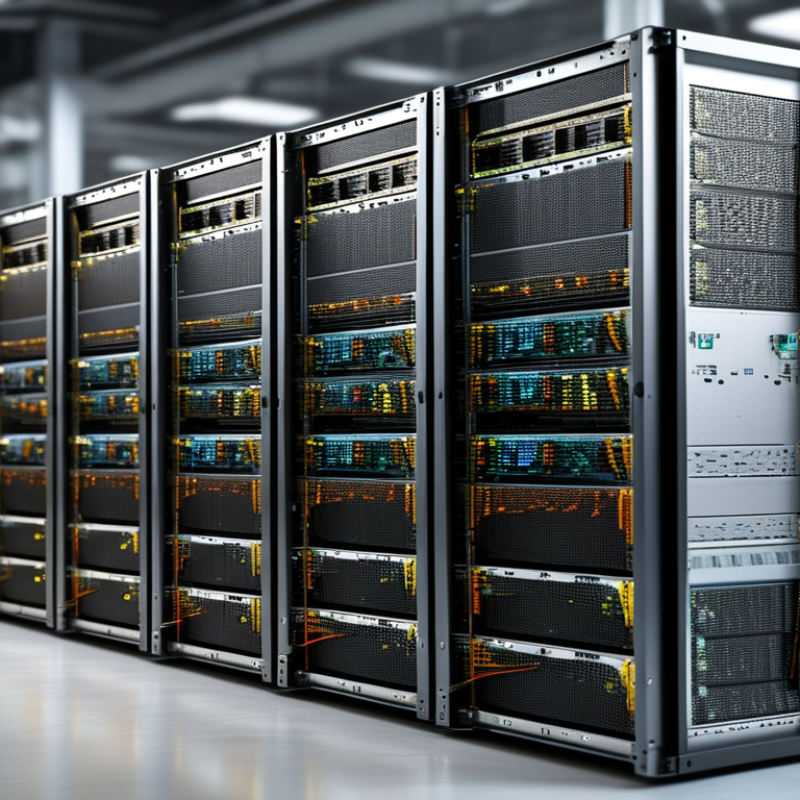
Rack-mounted devices are built to fit inside standardized equipment frames. These frames usually measure 19 inches wide and use vertical units, called U, to define height. A 1U server is compact, while a 4U storage system needs more space.
Technicians attach each device to horizontal rails or mounting brackets. The rails support its weight and allow it to slide forward for inspection. Inside, processors, memory, storage drives, network ports, and power supplies perform separate jobs. A switch directs data between connected systems. A server processes applications and responds to user requests. A storage unit preserves files and system backups.
Airflow is central to how rack-mounted devices work. Cool air enters through the front, moves across hot components, and exits at the rear. Blocked vents or tangled cables can raise temperatures quickly. I have seen a clean rack become difficult to service after one rushed installation. The layout looked acceptable, but the airflow suffered.
Power distribution units feed electricity to multiple devices and help organize connections. Network cables link servers, switches, and other equipment through planned pathways. Monitoring software can report heat, power use, and hardware faults before a failure becomes obvious. Still, monitoring is not perfect. Sensors can miss early problems, and technicians must inspect unusual noise, dust, or rising temperatures. A rack saves floor space, but it demands careful planning, labeling, and regular maintenance.
Why Choose Rack Mounted Devices for Your Business?
Rack-mounted devices turn scattered IT equipment into a visible, serviceable system. Servers, switches, storage units, and power equipment sit in standardized positions. Technicians can trace cables, label ports, and replace failed hardware without disturbing nearby systems. Uptime Institute’s 2024 Global Data Center Survey found that 53% of respondents experienced an outage during the previous three years. Organization cannot prevent every failure. It can reduce confusion during one.
A properly arranged rack also improves airflow and capacity planning. Blank panels close gaps, while front-to-back airflow supports more predictable cooling. Vertical power distribution reduces floor clutter and simplifies load checks. The U.S. Department of Energy identifies airflow management as a core data-center efficiency practice. In a small office, this may free space around the network cabinet. In a larger facility, it helps teams record equipment locations and energy demands. Small details matter.
Rack mounting supports repeatable maintenance. A technician can follow the same inspection route each month, checking temperature, cable tension, power loads, and unused equipment. Asset labels create a clearer audit trail for security and budgeting. Still, a rack is not a magic box. Poor weight distribution, weak grounding, or rushed cabling can create new risks. I have seen tidy cabinets hide unlabeled backup links. That part deserves reflection. A rack should support future growth, not merely fit today’s devices.
| Infrastructure Dimension | Rack-Mounted Approach | Typical Business Value | Practical Planning Data |
|---|---|---|---|
| Space Efficiency | Devices are installed vertically in standardized cabinets instead of occupying separate floor or desk areas. | Creates a compact, organized equipment area and leaves more room for office or operational activities. | A standard rack unit, or 1U, is 1.75 inches (44.45 mm) high. Common cabinets are 24U, 42U, and 48U. |
| Equipment Compatibility | Servers, network switches, storage systems, patch panels, and power distribution units can share a standardized enclosure. | Simplifies installation and makes future equipment additions easier to plan. | The widely used rack mounting width is 19 inches. Device height is measured in U, while cabinet depth must match the equipment. |
| Cable Management | Vertical and horizontal cable managers route power, data, and fiber connections in defined paths. | Improves troubleshooting, reduces accidental disconnections, and supports cleaner airflow. | Use separate pathways for power and data cables where practical, and label both ends of each connection. |
| Cooling and Airflow | Equipment is aligned to support front-to-back airflow through perforated doors, blanking panels, and planned cabinet layout. | Helps reduce hot spots and supports more consistent operating temperatures. | Keep unused rack spaces covered with blanking panels and avoid blocking front or rear ventilation areas. |
| Power Distribution | Rack power distribution units provide multiple outlets and help organize connections for installed equipment. | Makes power connections easier to inspect and can support centralized monitoring when compatible equipment is used. | Calculate total load in watts or amperes, maintain circuit headroom, and balance equipment across available circuits. |
| Physical Security | Lockable cabinets and controlled-access rooms limit unauthorized physical access to critical devices. | Helps protect equipment, network connections, and stored information from tampering. | Use locked doors, access records, and appropriate environmental controls for equipment rooms. |
| Maintenance Access | Sliding rails, removable panels, and front-facing connections can make servicing more systematic. | Reduces the time needed to identify, replace, or inspect individual components. | Leave sufficient front and rear clearance for safe access, cable routing, and equipment removal. |
| Scalability | Additional devices can be installed in unused rack units without redesigning the entire equipment area. | Supports phased growth and more predictable infrastructure planning. | Reserve rack units, power capacity, cooling capacity, and cable pathways for future expansion. |
| Standardization | Uniform mounting positions and labeling conventions create a repeatable installation method. | Improves documentation, staff training, and consistency across multiple equipment areas. | Document rack position, device name, port connections, power source, and maintenance status. |
| Monitoring and Availability | Rack layouts can consolidate environmental sensors, network monitoring, backup power, and service access. | Provides clearer visibility into equipment status and can support faster incident response. | Monitor temperature, humidity, power events, network status, and backup power condition where required. |
Why Choose Rack Mounted Devices for Your Business?
Growing businesses need infrastructure that can expand without consuming valuable floor space. Rack-mounted devices place servers, storage units, and network equipment in a structured cabinet. This arrangement improves organization and simplifies maintenance. Technicians can identify connections faster, label cables clearly, and reduce accidental disconnections during service.
The main benefit is scalability. Businesses can add equipment to available rack units as workloads increase. Standard dimensions also support cleaner upgrades and more predictable installation planning. Better airflow can help manage heat, especially when devices are arranged with suitable spacing and ventilation. Centralized hardware may improve monitoring and physical security too. However, rack mounting is not magic. A poorly measured cabinet can create noise, overheating, or difficult access. I have seen projects fail because power capacity was treated as an afterthought. Reliable planning should include weight limits, cable paths, cooling needs, and future expansion.
Tips: Measure the room and cabinet depth before purchasing. Leave spare rack space for growth. Use labeled cables and documented layouts. Check power distribution and airflow with qualified technical staff. Small oversights become expensive later. Review the design after installation, because real conditions may differ from the original plan.
Rack mounted devices can turn limited floor space into an organized computing environment. Their fixed position also makes cable paths, airflow, and maintenance easier to inspect. However, a neat rack does not guarantee a suitable system.
Compatibility deserves careful testing before purchase. Check rack width, mounting depth, rail type, power input, and available clearance. Measure twice. I once focused on device height and overlooked rear cable space. That mistake complicated installation and restricted airflow. Confirm operating system support, network interfaces, storage connections, and integration with existing monitoring tools. Ask for documented specifications, not vague promises.
Performance should match real workloads, not impressive peak figures. Review processor capacity, memory limits, storage speed, thermal behavior, and expected traffic. Test during busy periods when possible. A device may perform well in a quiet lab but slow down inside a crowded rack. Security requires equal attention. Use encrypted management access, strong authentication, timely firmware updates, and separate administrative networks. Review audit logs and disable unused services. Physical access matters too, especially when racks sit in shared rooms. My evaluation process is still imperfect; compatibility checks can miss unusual legacy equipment. Independent testing and clear vendor documentation reduce that risk. Keep records of every test, exception, and approval.
Why Choose Rack Mounted Devices for Your Business?
Planning installation carefully can prevent expensive changes later. Measure the available rack space, door clearance, floor strength, and cable routes before ordering equipment. A device may fit the rack but block airflow or nearby service access. Leave several rack units open for future expansion. Empty space is useful capacity, not wasted money.
Installation costs include more than hardware. Budget for rails, power distribution, cooling, structured cabling, labeling, and professional labor when needed. In my experience, unclear cable paths create the most avoidable maintenance work. Shorter cables look cleaner, but they can limit relocation options. I once underestimated ventilation needs, and rising temperatures forced an unplanned layout change. That mistake was preventable.
Tips: Keep a simple rack diagram with device locations, power connections, cable labels, and spare capacity. Review it after every change. Schedule inspections for dust, loose connections, fan noise, and temperature readings. Maintenance becomes easier when access is clear and documentation stays current. Choose modular equipment where practical, but do not assume every upgrade will fit existing power or cooling limits. Expansion may require stronger circuits or additional ventilation. Planning those limits early supports safer growth and more predictable operating costs.
Planning installation, costs, maintenance, and future expansion with a five-year infrastructure roadmap.
This planning model uses a standard 42U rack and illustrates how a business can allocate rack capacity and budget over five years. Starting with 24U of installed equipment leaves 18U available for structured cabling, airflow, maintenance access, and future expansion. The estimated five-year budget includes equipment, installation, power and cooling, maintenance, and expansion capacity.
„Thanks to the LUVIR technology, the solder resist process could be switched directly from the previously used mask exposure to direct exposure. As an outstanding digital solution on the market, this technology has been able to demonstrate fast process times and superior quality on our certified conventional ink in production. This allowed us to fully digitize the solder mask process at low cost – without process or ink adjustments. An excellent benefit to our production in Rot am See.“
Ralf Göhringer (Head of Production WE Rot am See)
I would definitely recommend the Limata machine and team for a future company purchase
Michael Greenaway
Compunetics Inc.
“The Limata ldi has been amazing!! Best thing we did was buy this machine”
Richard Brady
GM
Circuitlabs
“Since 2019, we have been running the Limata X1000 LDI system (including LUVIR for solder mask imaging) in daily production as an addition to our current process with film. The machine was capable of properly exposing Taiyo PSR-4000 BN (DI) solder mask types on normal to high-copper boards using a new and unique direct imaging process. The machine operating interface is very user friendly which allowed for a quick technical training curve. The pre-registration processing reduced several seconds of production time at every print. Limata support and service staff is incomparable. They supported our team every step of the way at basically any time of the day or night, with literally, an immediate response time, customizing the software interface to best fit our Operations and needs.
We have exposed more than 8,000 prints since end of October, on various solder mask colors and some resist film panels. Limata, has proven to be very capable and innovative. They are a strong contender in the industry.
We have very much enjoyed this project, and working with the team!
Thank you Limata for the continued support and being a part of our growth.”
Bill Sezate
Vice President, GM
Summit Interconnect
As a replacement to our current contact exposure process with film, the LIMATA X2000 system including LUVIR-Technology was capable of properly exposing non-LDI solder mask types using a direct imaging process. The machine offers cutting edge software with a very intuitive operating interface which allowed for quick technician training curve. The dual drawer system combined with pre-registration processing reduced several seconds of production time at every machine cycle. Limata support and service staff is world class. They added software patches to keep production running at shortest possible response times, customized the software interface to best fit our in-house Operations system, and even wrote a step-by-step machine processing manual. As a result of the project, we have exposed more than 16,000 times on various product types and solder mask brands/colors. Limata, in a very short timeframe as a company, has definitely shown they are truly innovative and will be challenging the industry of direct imaging for the top spot.
Kevin Beattie
Process Engineer
TTM Technologies
Forest Grove Division
